Clear Sky Science · en
HLA-DPA1 as a diagnostic biomarker differentiating early- and late-onset preeclampsia
Why this matters for mothers and babies
Preeclampsia is a dangerous pregnancy complication that can threaten the lives of both mother and child. Doctors know that cases starting very early in pregnancy tend to be more severe than those that appear later, but it has been hard to predict who is at risk. This study looks inside the placenta and the immune system to search for a simple biological clue that could help tell apart early and late forms of the disease, with the long-term goal of improving screening and treatment.
Two faces of the same pregnancy disorder
Preeclampsia is marked by high blood pressure after 20 weeks of pregnancy and can damage the heart, liver, kidneys, and other organs. Clinicians divide it into early-onset cases, which begin before 34 weeks, and late-onset cases, which start afterward. Early-onset preeclampsia is usually more dangerous, often forcing extremely premature delivery and leading to poor outcomes for newborns. Mounting evidence suggests that these two forms are not just different stages of the same illness, but distinct conditions with different roots in the placenta and the mother’s immune response.
Hunting for a molecular fingerprint
To uncover what sets early-onset apart, the researchers combined modern gene-reading technologies with machine learning. They pulled together several public datasets of placental tissue from women with early- and late-onset preeclampsia and corrected for technical differences between studies. From thousands of genes, they first identified 17 that were expressed differently between the two groups. They then narrowed their focus to genes already known to be involved in immunity, ending up with seven immune-related candidates. Using two complementary computer systems that are designed to pick out the strongest predictors, they further trimmed this list to three promising markers: LEP, PROK2, and a gene called HLA-DPA1.
One key immune gene stands out
HLA-DPA1 belongs to a family of genes that help immune cells display protein fragments to one another, a process that normally allows the mother’s immune system to tolerate the fetus while still fighting infections. In the placentas from early-onset cases, HLA-DPA1 was consistently turned down compared with late-onset cases. When the team tested how well each candidate gene could distinguish early- from late-onset preeclampsia, HLA-DPA1 performed best, with a diagnostic accuracy that suggests real clinical promise. The authors built a simple risk scoring tool that combines HLA-DPA1 with the two other genes and showed that this model could separate the two disease types in independent patient groups.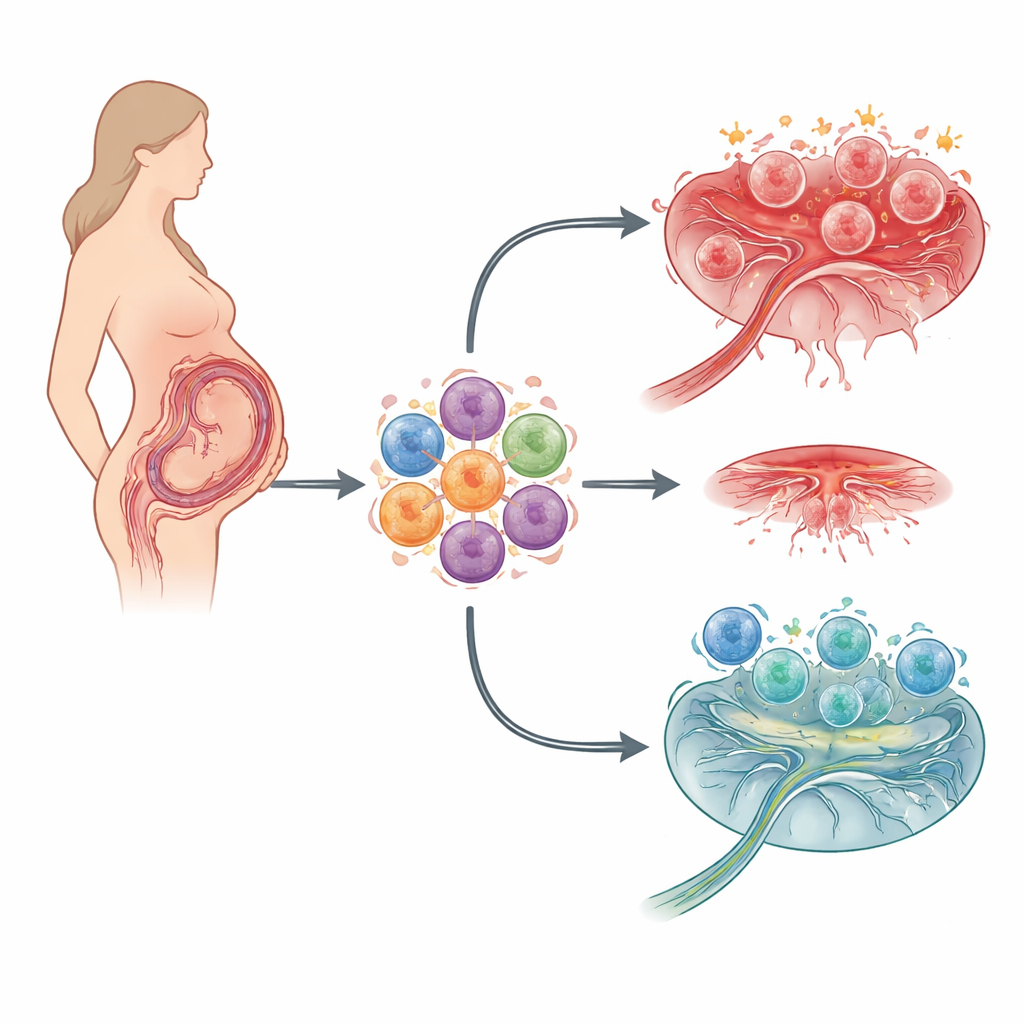
Immune imbalance at the mother–baby border
Because HLA-DPA1 is central to immune communication, the researchers next asked how its levels related to the mix of immune cells in the placenta. By using a computational method that estimates cell types from gene activity patterns, they mapped out 22 kinds of immune cells in the tissue. Early-onset placentas showed more aggressive immune cells, such as activated killer T cells and natural killer cells, and fewer calming cells like certain monocytes and neutrophils. Low HLA-DPA1 went hand-in-hand with fewer regulatory T cells and activated dendritic cells, but more inflammatory macrophages and resting mast cells. Under the microscope, early-onset placentas also showed structural damage and less HLA-DPA1 protein, confirming the gene-level findings. Together, these patterns point to a disturbed immune environment at the boundary between mother and fetus when HLA-DPA1 is reduced.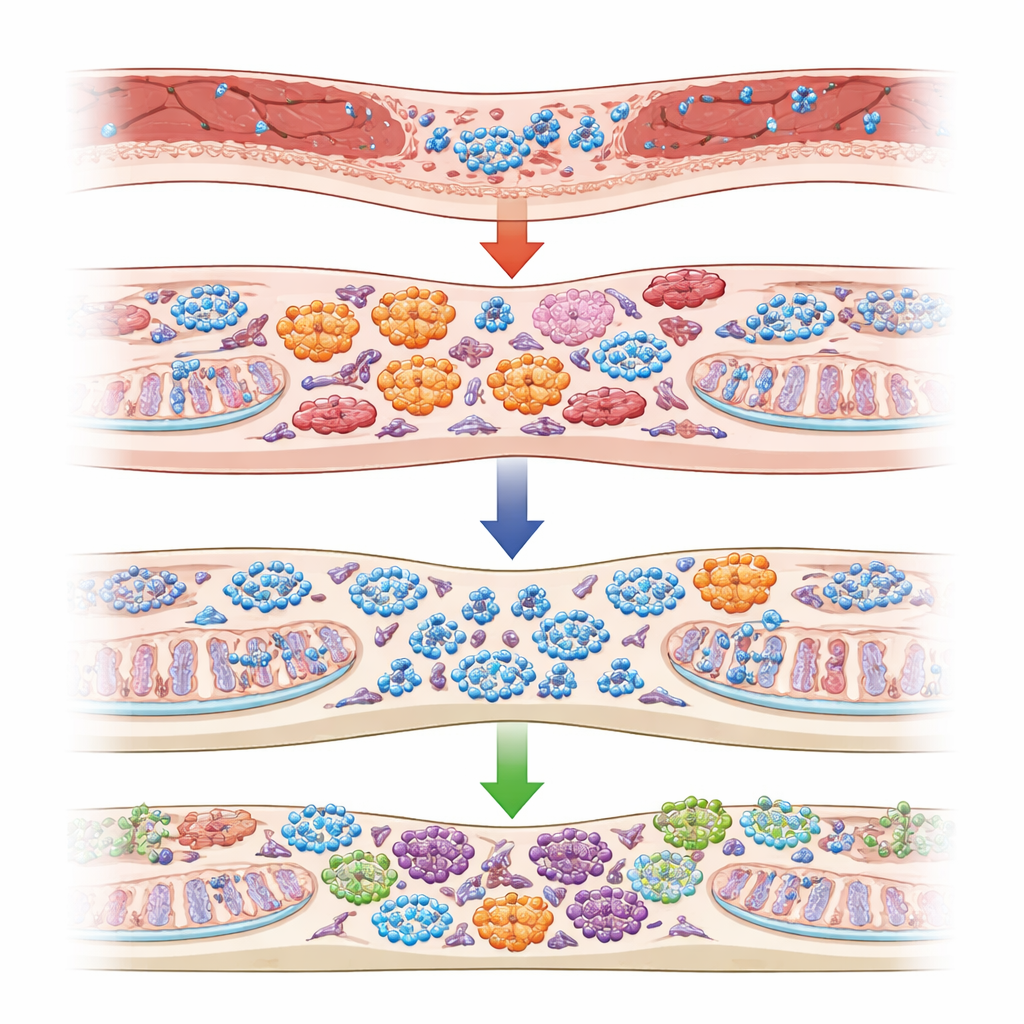
What this means for future care
In plain terms, the study suggests that early-onset preeclampsia is closely tied to a misfiring immune signal in the placenta, with HLA-DPA1 acting as a central switch. When this switch is turned down, the immune system at the mother–baby interface appears to lose its balance, favoring inflammation and damaging the placenta’s fine structure. While larger and more diverse studies are needed before this marker can be used in clinics, HLA-DPA1 now stands out as a promising diagnostic signpost and a window into how early-onset preeclampsia develops. Better understanding and measuring this signal could eventually help doctors identify high-risk pregnancies sooner and design treatments that restore a healthier immune balance.
Citation: Wu, Z., Xie, Y., Chen, W. et al. HLA-DPA1 as a diagnostic biomarker differentiating early- and late-onset preeclampsia. Sci Rep 16, 8206 (2026). https://doi.org/10.1038/s41598-026-39050-0
Keywords: preeclampsia, pregnancy complications, placenta, immune system, biomarkers