Clear Sky Science · en
Seasonal variation, heavy metal pollution indices and health risk assessment in the Esa-Odo reservoir, Nigeria
Why this reservoir matters to everyday life
In southwestern Nigeria, the Esa-Odo Reservoir is more than a stretch of water on a map. Local families drink from it, wash in it, water their crops with it, and catch fish from it. This study asks a simple but vital question: as farms, small gold mines, and other activities expand around the reservoir, is the water quietly loading up with toxic metals in ways that threaten people’s health—especially during the rainy season?
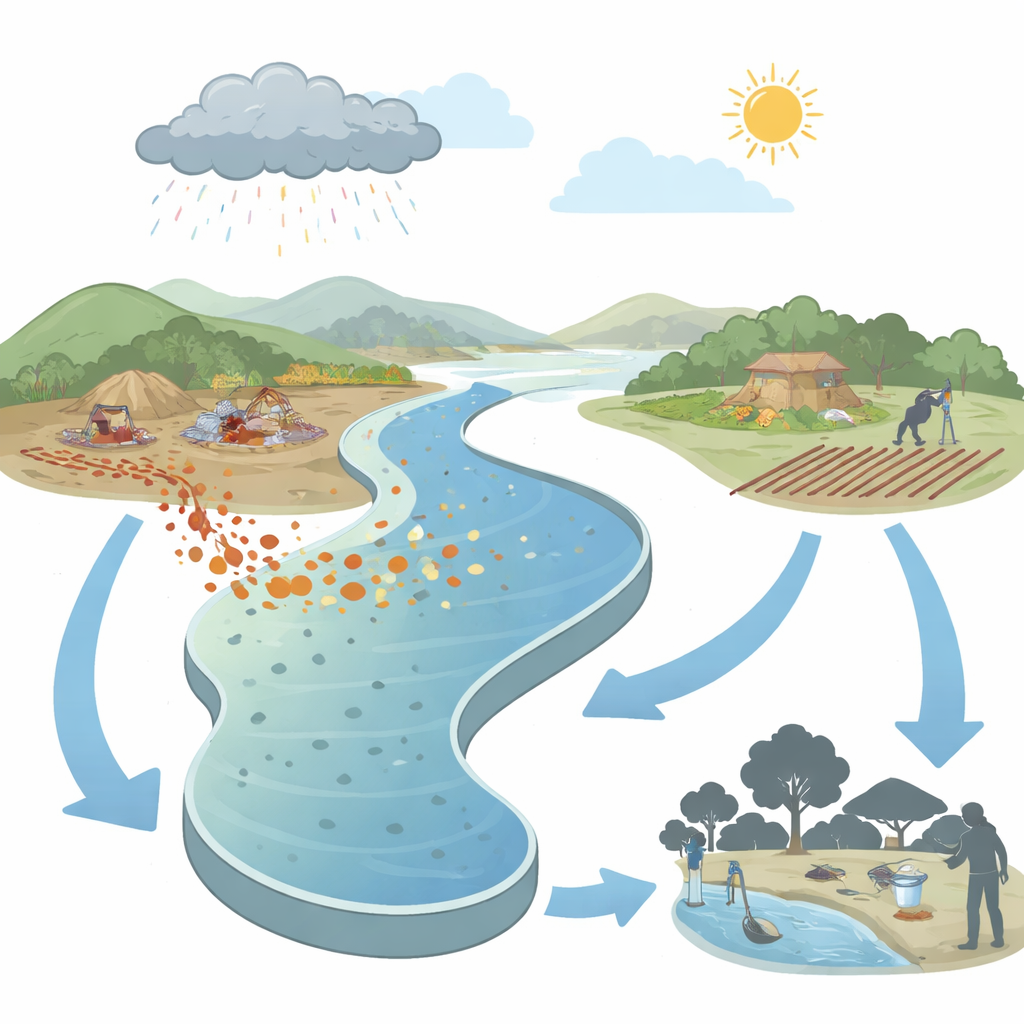
Where the metals come from
The researchers focused on eight metals often linked to pollution: chromium, manganese, iron, copper, zinc, arsenic, cadmium, and lead. Around Esa-Odo, small-scale gold mining leaves behind waste piles rich in metals that rain can wash into streams. Farmers apply fertilizers and other agrochemicals that can also carry metal traces. All of this runoff drains into the reservoir, which serves as a collecting bowl for the wider landscape. Because nearby communities rely heavily on this water, especially when tap supplies fail in the dry season, changes in metal levels are not just an environmental issue but a direct concern for public health and food safety.
How the water was tested
To track these metals over time, scientists collected surface water from three parts of the reservoir—a river-like inlet, the open middle, and the dam area—between March 2018 and December 2019. Sampling spanned two full wet and dry seasons. In the laboratory, the team used a sensitive instrument called an atomic absorption spectrophotometer to measure very low metal concentrations. They then compared the results with Nigerian and international safety guidelines and applied several combined indices that summarize overall pollution and potential health risk from both swallowing the water and having it touch the skin.
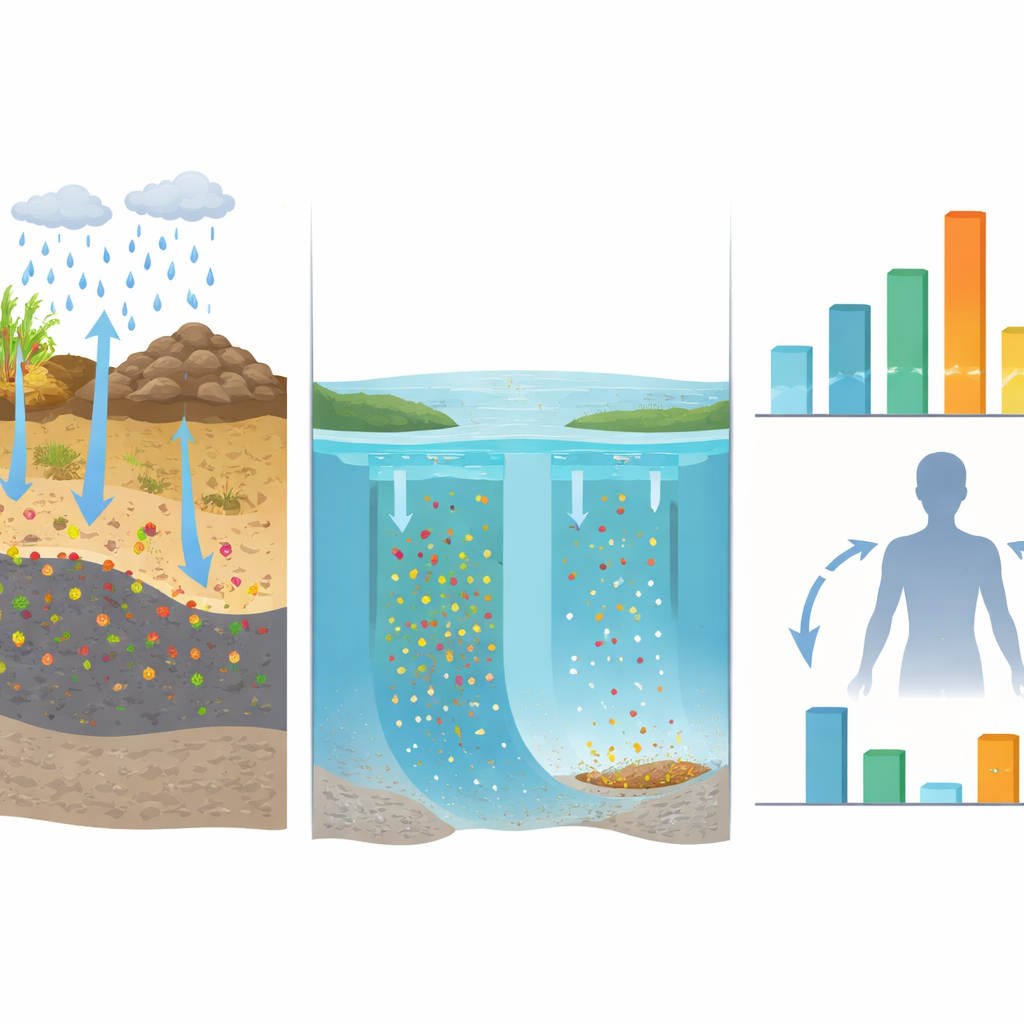
What they found in the water
Zinc turned out to be the most abundant metal in the reservoir, followed by iron and copper, while arsenic occurred only in small amounts. For five metals—chromium, manganese, iron, copper, and zinc—levels stayed within recommended limits for surface and drinking water. By contrast, cadmium and lead frequently exceeded guideline values, especially during the wet season when heavy rains flushed more contaminants into the reservoir. Overall, there was little difference from one location to another across the reservoir, but clear seasonal swings: most metals were noticeably higher in the rainy months and dipped when water levels rose and diluted them later in the season.
Making sense of complex pollution
Simply listing metal amounts does not easily show whether the water is safe, so the researchers used pollution indices that fold multiple metals into single scores. The heavy metal pollution index was above its “critical” value at all three stations, in both wet and dry seasons, signaling that the water fails conservative quality benchmarks. A separate metal index highlighted that iron and lead contributed most strongly to this overall burden. Statistical tools revealed that some metals tend to rise and fall together, implying common sources such as mining waste or agricultural runoff. Maps created with geographic information software showed how concentrations shift along the reservoir’s length, reinforcing the picture of a system heavily influenced by activities in its catchment.
Health risk: warning signs but no immediate alarm
To translate these measurements into health terms, the team estimated how much metal an adult or child might take in by drinking the water or through skin contact during bathing or religious and cultural use. They then calculated a “hazard index” for non-cancer effects and a “target cancer risk” for lifetime cancer chances. Despite the high pollution scores, all hazard index values stayed below the standard threshold of concern, and the estimated cancer risks for both adults and children fell within widely accepted safety ranges. In other words, the reservoir currently poses a low measured health risk—yet the persistent exceedance of cadmium and lead limits, especially in the rainy season, is an early warning that this could change if pollution continues unchecked.
What this means for people and policy
For residents who depend on the Esa-Odo Reservoir, the study offers cautiously reassuring news: the water’s metal content does not yet imply serious direct health danger, but it is far from pristine. Elevated cadmium and lead, combined with consistently high pollution indices, show that the reservoir is under stress from mining and farming in its catchment. The authors conclude that regular monitoring, better control of mine waste and agricultural runoff, and stronger local management are urgently needed. These steps can keep an important water source from sliding into a more hazardous state and help safeguard both community health and the aquatic life that supports local fisheries.
Citation: Ayodeji, O.A., Adewole, H.A., Obayemi, O.E. et al. Seasonal variation, heavy metal pollution indices and health risk assessment in the Esa-Odo reservoir, Nigeria. Sci Rep 16, 8443 (2026). https://doi.org/10.1038/s41598-026-39049-7
Keywords: heavy metal pollution, reservoir water quality, artisanal mining, seasonal runoff, health risk assessment