Clear Sky Science · en
Integrative transcriptomic and metabolomic analysis of Drynaria roosii reveals genes involved in the biosynthesis of medicinal compounds
Why a Healing Fern Matters
Drynaria roosii is a fern whose underground stem, or rhizome, has been used in Chinese medicine for centuries to strengthen bones, ease pain, and support recovery from fractures. Yet until recently, scientists did not know exactly which parts of the plant were richest in these helpful substances, or which genes help the plant make them. This study combines modern chemistry and genetics to map where key medicinal compounds are found inside the fern and to uncover the internal recipe the plant uses to produce them.
Looking Inside Different Plant Parts
The researchers grew D. roosii plants under carefully controlled greenhouse conditions so that differences between samples would mostly reflect the plant’s own biology, not shifting weather or soil. They collected leaves, stems, and the tuber-like rhizomes, then rapidly froze them to lock in their chemical makeup. Using a powerful technique called mass spectrometry, they scanned these tissues for hundreds of small molecules at once, building a detailed chemical profile for each plant part.
They detected 1,151 different compounds, including 203 related to flavonoids—a large family of plant pigments well known for their antioxidant and bone-protective effects. The data showed clear contrasts between tissues: some groups of compounds were more common in leaves, others in stems, and a distinctive set in the rhizome. Notably, 31 flavonoids, such as forms of quercetin and naringenin, were especially abundant in the rhizome, aligning with its traditional role as the medicinal portion of the plant. 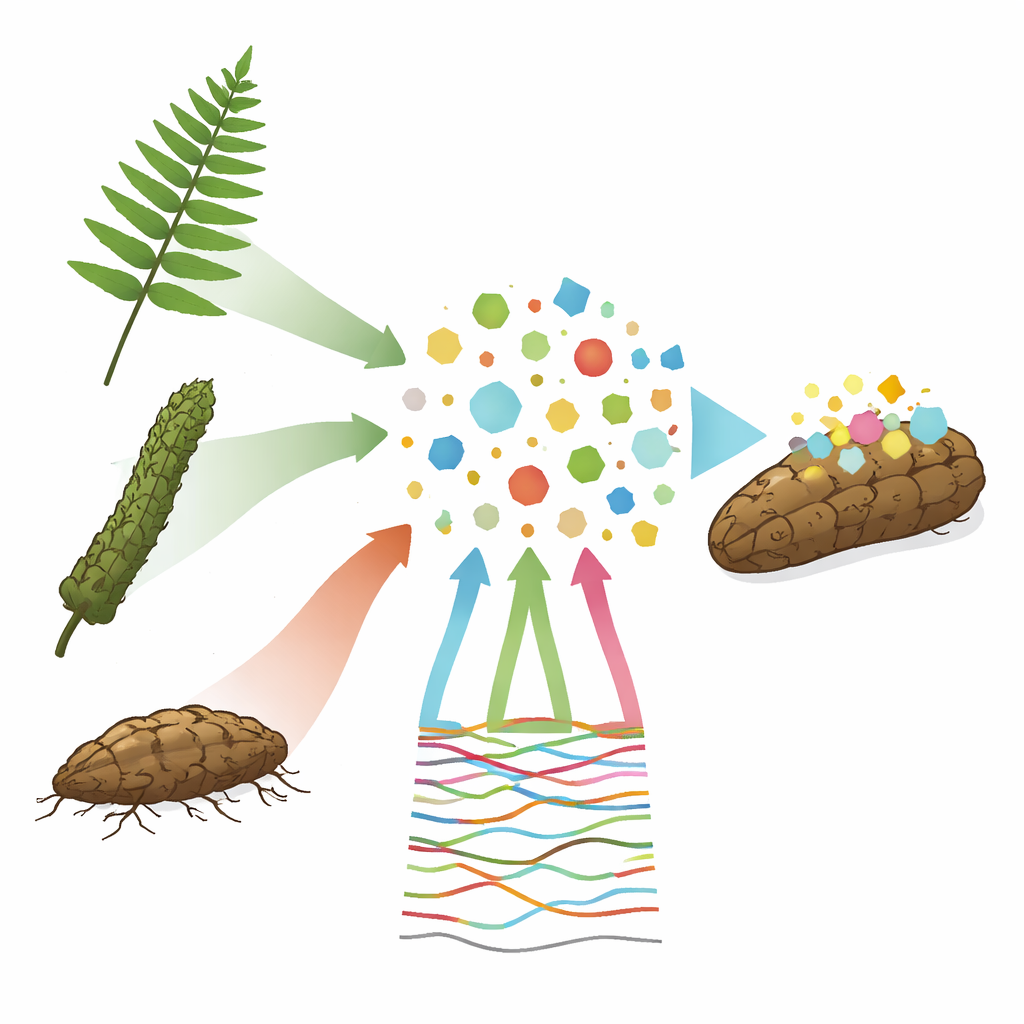
Reading the Plant’s Instruction Manual
To understand how the fern makes these compounds, the team also examined which genes were switched on in each tissue. They used long-read sequencing technology to build a high-quality reference of the plant’s RNA—the working copies of genes used to make proteins. From millions of sequencing reads, they assembled more than 56,000 distinct transcripts, capturing many versions of genes and the molecular machinery that controls them. This reference then served as a map to interpret faster, high-throughput measurements of gene activity from multiple leaf, stem, and rhizome samples.
When the researchers compared tissues, they found tens of thousands of genes that changed their activity between rhizomes and the above-ground parts. Groups of genes involved in processes such as pigment formation, steroid production, and other specialized plant chemicals were especially active where certain metabolites were enriched. This pattern hinted that the same pathways responsible for plant color and defense are also shaping the fern’s medicinal chemistry.
Linking Genes to Healing Molecules
The key step was to connect shifts in chemistry with shifts in gene activity. The team focused on several molecules related to naringenin, a core building block for many flavonoids. Using network analysis, they grouped genes into modules whose activity tracked with the levels of particular naringenin derivatives. In some modules, genes were most active in leaves or stems; in others, they were strongest in the rhizome, mirroring where certain flavonoids accumulated.
Within these modules, the scientists highlighted candidate “hub” genes that may help drive the production and fine-tuning of flavonoids. These included enzymes that attach sugar units to flavonoid cores (glycosyltransferases), enzymes that form the carbon backbone of these molecules (such as 4CL), and regulators that influence how other genes respond to signals (like DELLA proteins). Many of these genes showed strong statistical links to rhizome-enriched flavonoids such as naringenin 7-rutinoside, suggesting they are central players in crafting the fern’s medicinal ingredients. 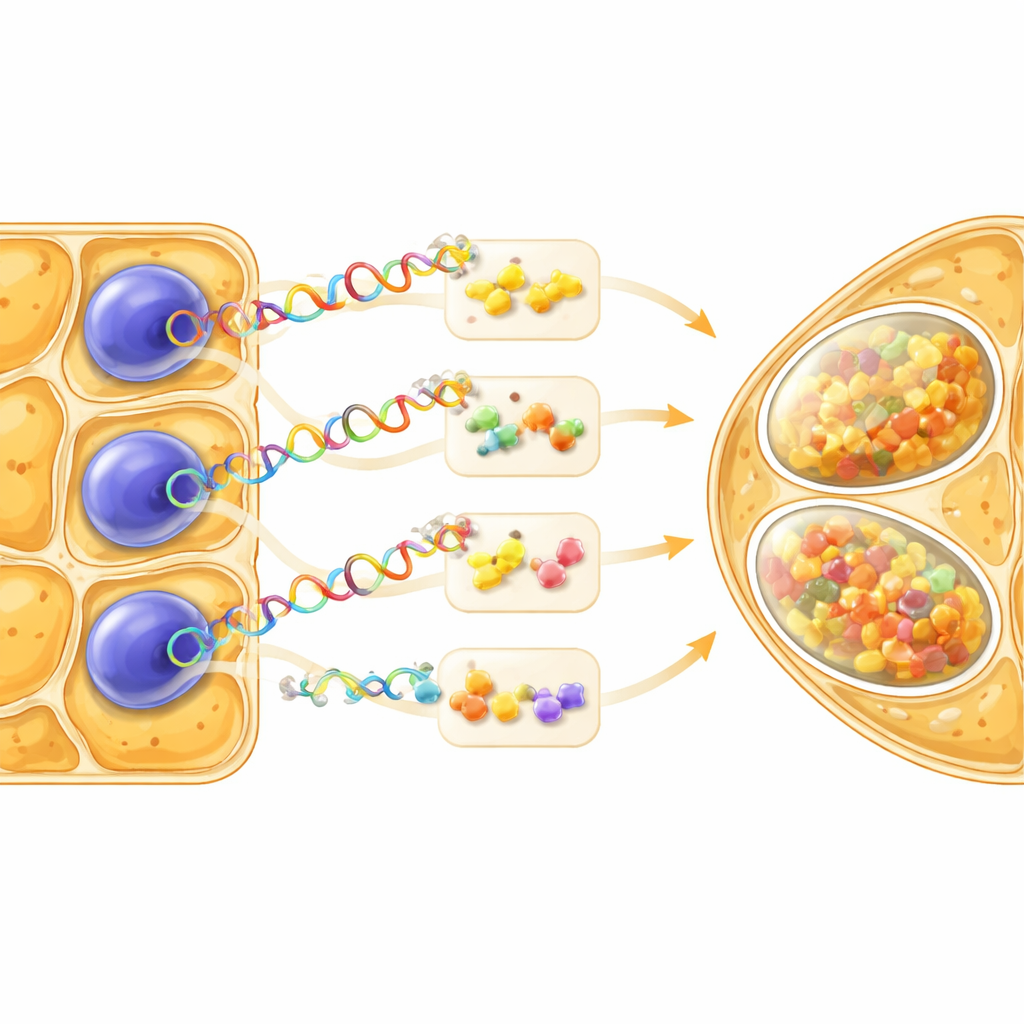
What This Means for Medicine and Agriculture
By pairing a chemical survey of plant tissues with a deep readout of gene activity, this study shows not only that the rhizome of D. roosii is a hotspot for health-related flavonoids, but also points to the internal genetic switches and enzymes that help the plant make and store them. For non-specialists, the takeaway is that we now have a clearer map of where the fern’s healing power comes from and which genes are likely responsible. In the future, this knowledge could guide better cultivation practices, help breeders select lines richer in desired compounds, or even support efforts to produce key flavonoids in other crops or biotechnological systems, making traditional remedies more reliable and widely available.
Citation: Zhang, X., Chen, X., Wang, Y. et al. Integrative transcriptomic and metabolomic analysis of Drynaria roosii reveals genes involved in the biosynthesis of medicinal compounds. Sci Rep 16, 9047 (2026). https://doi.org/10.1038/s41598-026-39037-x
Keywords: medicinal plants, flavonoids, plant transcriptomics, metabolomics, bone health