Clear Sky Science · en
Natural selection and language genes in humans
Why this story about language and genes matters
Spoken language is one of the traits that most clearly separates modern humans from other animals, yet we still do not fully understand how our brains became capable of it. This study digs into the DNA of humans and other primates to ask a simple question with profound implications: which changes in our genes might have helped build the brain wiring that ultimately made language possible? Rather than hunting for a single “language gene,” the authors show that clusters of genes affecting tiny junctions between brain cells—synapses—went through bursts of evolutionary change in our ancestors, setting the stage for faster, more flexible thinking.
Tracing language back through our family tree
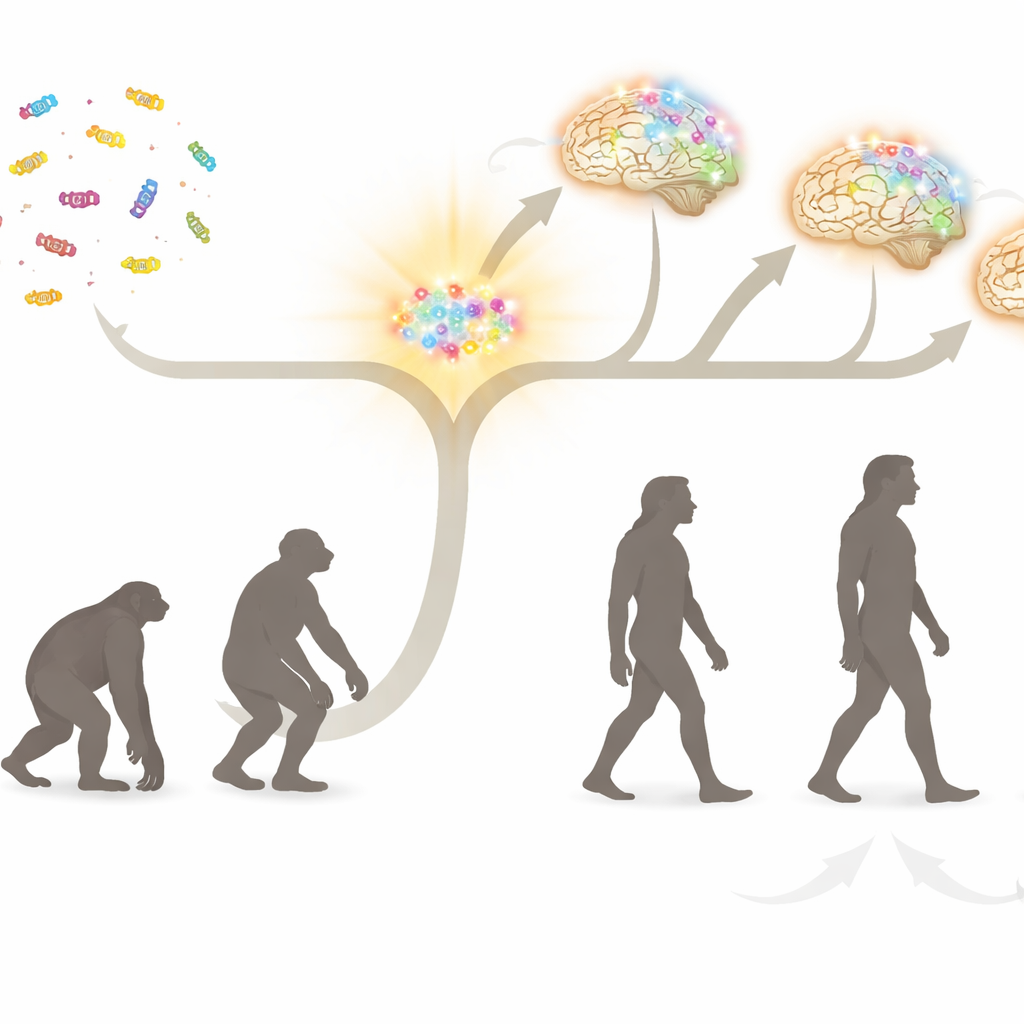
The researchers began with nearly a thousand genes known to be active in key regions of the human brain. From decades of prior work, around a hundred of these had already been suggested as candidates for involvement in language or related thinking skills. The team focused on the parts of these genes that actually code for proteins, comparing DNA from more than thirty nonhuman primate species along with modern humans, Neanderthals, and Denisovans. By looking at patterns of harmless versus function-changing mutations, they could test where in the primate family tree natural selection had pushed some gene versions to spread while keeping others rare.
Bursts of change before and beyond modern humans
The analyses revealed that fewer than fifty of the candidate genes show clear signs of positive selection—evolutionary pressure favoring new protein variants—on branches of the primate tree that lead toward humans. Strikingly, many of these shifts cluster at the ancestral node shared by Homo sapiens, Neanderthals, and Denisovans. In other words, a major bout of genetic fine-tuning appears to have occurred before these three lineages split. After that, additional bursts of selection affected Neanderthals and Denisovans in particular, while the direct modern human branch shows surprisingly little further tweaking in these same genes.
Brain cell junctions in the spotlight
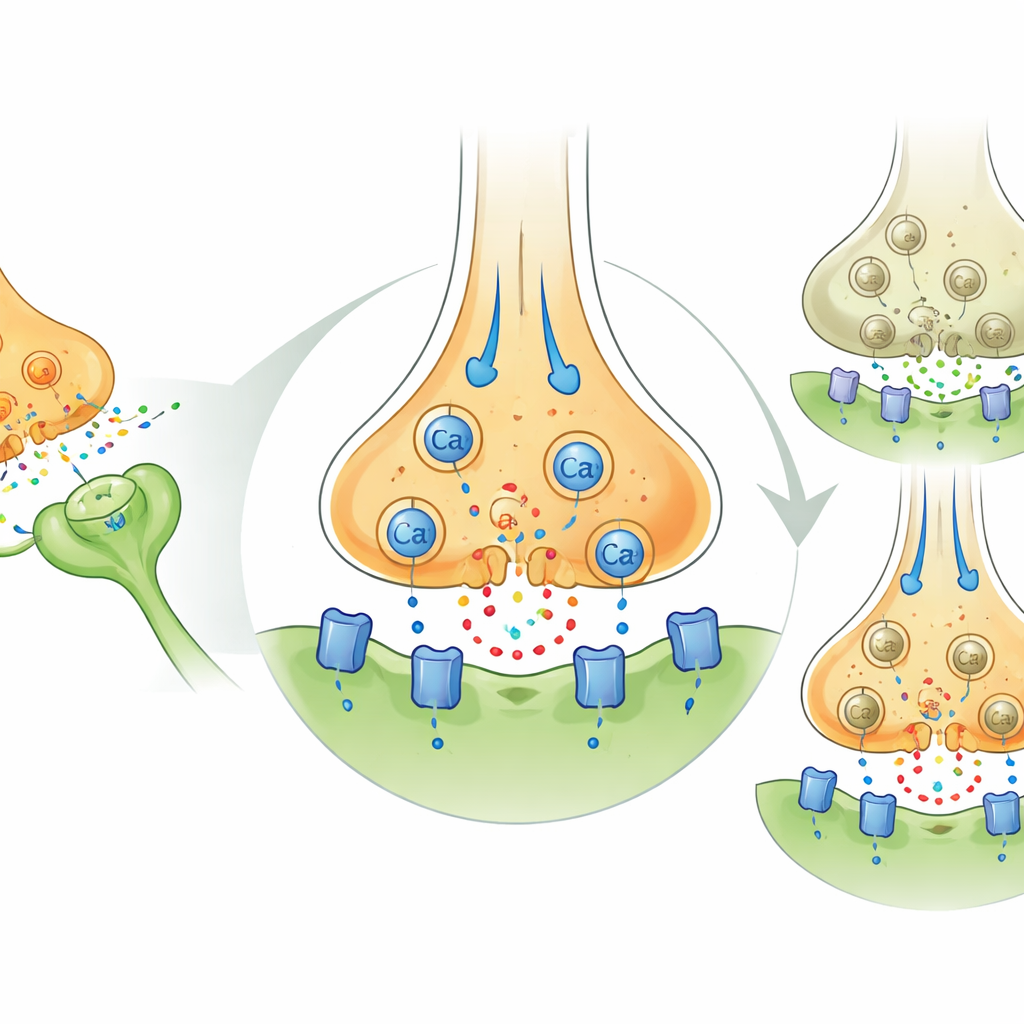
When the team mapped how the selected genes interact with each other, a clear theme emerged. Many of them help build or regulate synapses—the connection points where one neuron passes signals to another. Some genes affect channels that let calcium ions flow into nerve endings, a key step for releasing chemical messengers across the synaptic gap. Others shape the growth of dendrites, the branching structures that receive signals, or help organize the network of proteins that keep synapses stable yet adaptable. The most connected genes in these networks, such as those controlling high-voltage calcium channels and synapse scaffolding, sit at critical hubs where small changes could ripple through many aspects of brain signaling.
From faster synapses to sharper thought
Building on these patterns, the authors propose that evolution did not simply “switch on” language with one dramatic mutation. Instead, a suite of gene changes gradually made synapses more efficient—speeding up and refining how neurons communicate. Even a modest reduction in the delay at each synapse, multiplied across roughly a quadrillion connections in the brain, could significantly boost overall processing power. The study suggests that by the time our own species emerged, much of the neural machinery for rapid, flexible, symbolic thinking was already present in our wider Homo family, even if full-fledged language appeared only later in modern humans.
What this work means for our place in nature
For non-specialists, the key takeaway is that language likely grew out of deeper changes in how brains handle information, rather than from a single magic gene or a sudden leap unique to us. Neanderthals and Denisovans probably shared many of the same enhanced synaptic tools, supporting rich vocal communication even if their language skills did not match ours. This study offers a glimpse of language as an emergent property of a faster, more integrated brain network—a byproduct of upgraded synapses that allowed our ancestors to juggle symbols and ideas in ways no other species can.
Citation: DeSalle, R., Lepski, G., Arévalo, A. et al. Natural selection and language genes in humans. Sci Rep 16, 9382 (2026). https://doi.org/10.1038/s41598-026-39032-2
Keywords: language evolution, synaptic plasticity, human ancestry, neurogenetics, primates