Clear Sky Science · en
Accurate forecasting of photovoltaic optimal points and efficiency using advanced hybrid machine learning models
Why Smarter Solar Forecasts Matter
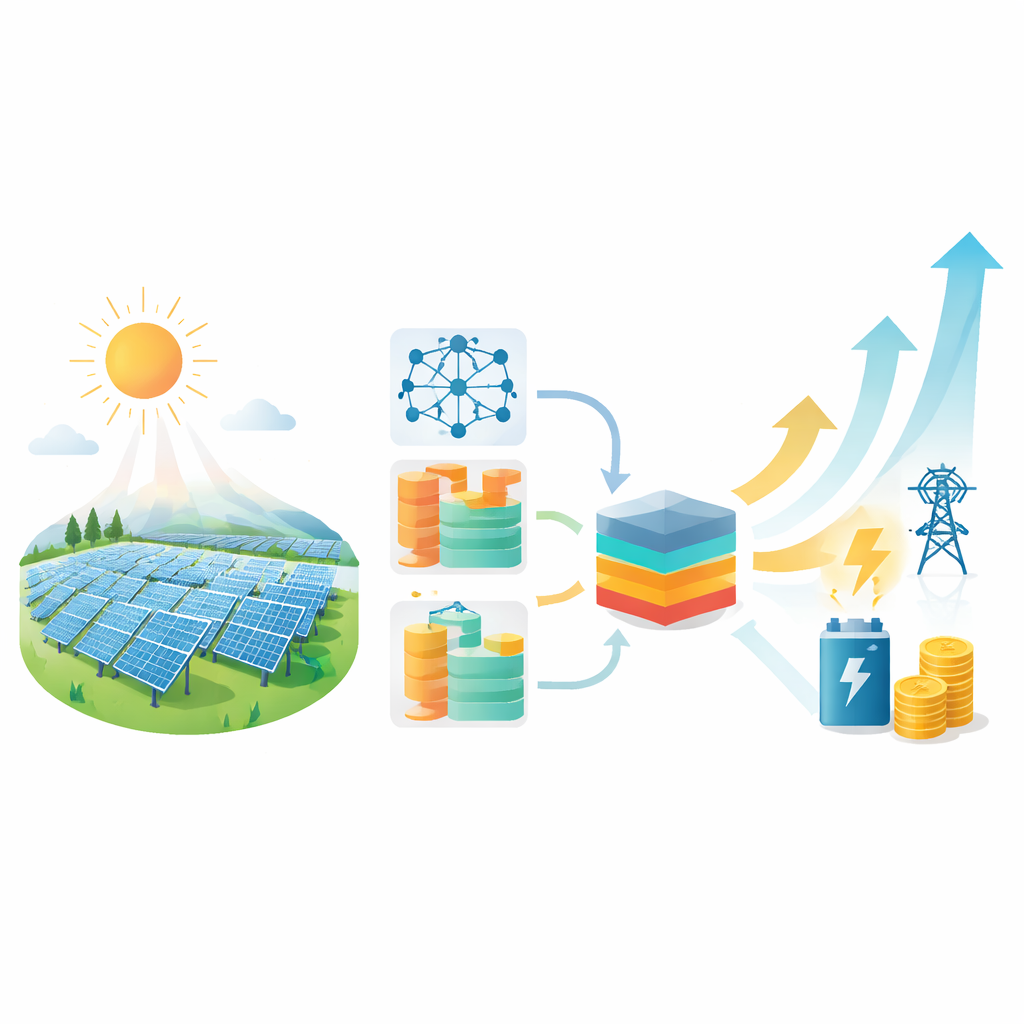
Solar power plants are spreading across rooftops and deserts, but the sun is anything but predictable. Clouds, seasons, and shifting temperatures all change how much electricity panels produce from hour to hour. This paper explores a new way to forecast not just how much power a solar system will generate, but also when it will reach its best operating periods and how efficiently it will run. By sharpening these forecasts, plant operators and investors can squeeze more energy and value from every ray of sunlight.
Making Sense of a Noisy Sun
Solar panels respond to a web of changing conditions: how strong the sunlight is, how it varies over the day, and how well the system converts that light into electricity. The authors focus on two especially important outcomes. One is how many times a system reaches its peak performance during a given period, called optimal peak operating times. The other is power conversion efficiency, a measure of how much of the incoming sunlight becomes usable electrical energy. Both are influenced by optical and energy-related measurements that capture how light is absorbed and emitted and how much electrical energy is ultimately produced.
Teaching Machines to Read Solar Signals
To forecast these outcomes, the researchers assembled a carefully curated dataset of 305 records that describe real solar systems under a variety of conditions. Each record includes seven input features that summarize sunlight behavior and resulting energy output, along with the two targets to be predicted. Before any modeling, the data were cleaned, normalized to a common scale, and split into separate training, validation, and testing sets to avoid overestimating performance. This structured handling ensures that any gains in accuracy come from genuine learning rather than accidental data leakage.
Blending Different Learning Styles
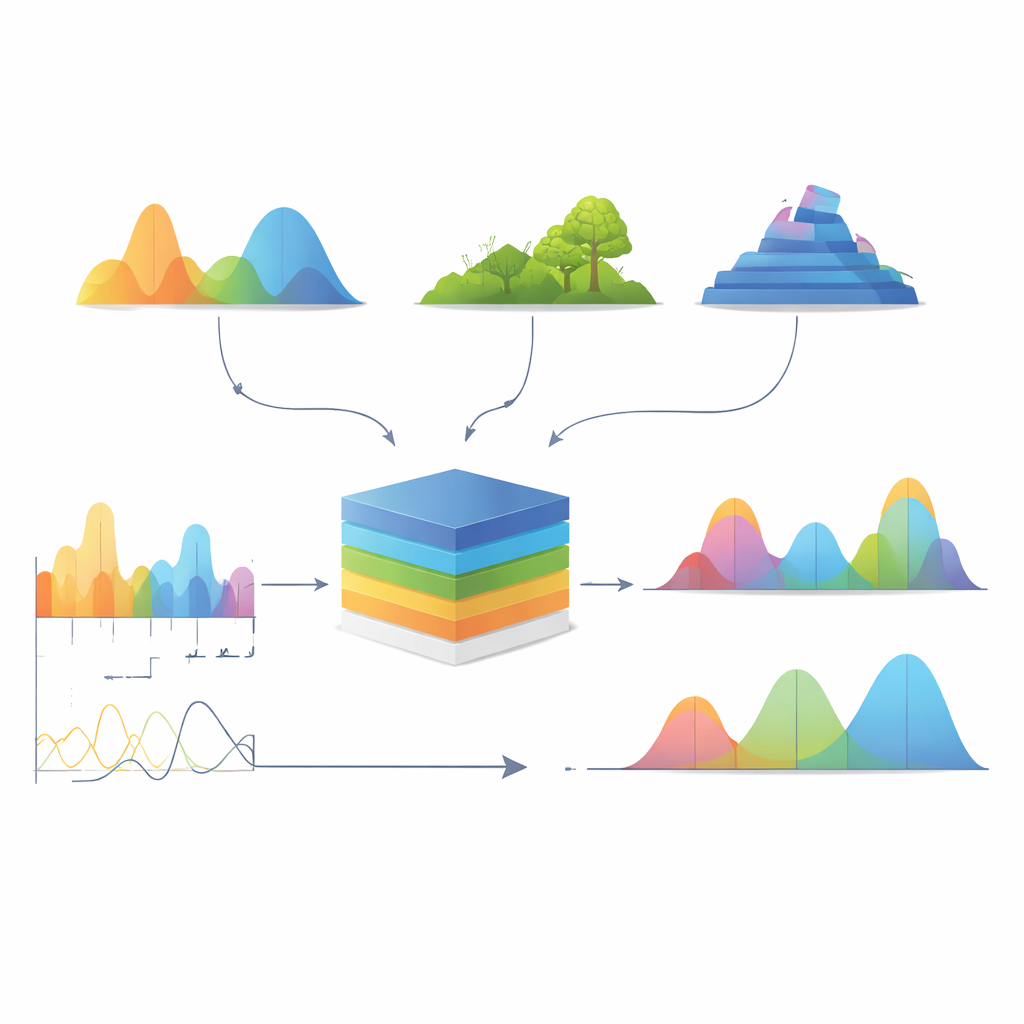
The heart of the study is a family of hybrid machine learning models that cooperate rather than compete. The authors start with strong individual learners, including a neural network type called a radial basis function model, random forests made of many decision trees, and a powerful tree-based method known as gradient boosting. They then tune and combine these models using an optimization scheme inspired by bat echolocation. In this algorithm, virtual “bats” explore different combinations of model settings, gradually homing in on those that deliver the most accurate forecasts. This meta-approach reduces the risk that any single model will latch onto quirks in the data while missing the deeper patterns.
Revealing What Drives Solar Performance
The study goes beyond raw accuracy by asking which inputs matter most and how stable the predictions really are. Using statistical tools that probe both global and local influences, the authors find that extreme energy values and direct solar irradiance are especially important for both peak times and efficiency. In other words, when the system experiences its lowest and highest levels of energy generation, those extremes strongly shape how often it reaches its best operating windows and how efficiently it runs overall. Carefully designed uncertainty measures and cross-checks show that the best hybrid model, dubbed XGBA, performs reliably across training, validation, and unseen test data, with errors so small that it captures nearly all of the real variation in system behavior.
From Better Predictions to Better Decisions
For non-specialists, the key message is that this hybrid modeling framework delivers highly trustworthy forecasts of when a solar plant will perform best and how efficiently it will operate. That information can feed directly into real-world decisions: when to schedule maintenance, how to charge or discharge batteries, how much power to commit to the grid, and how to estimate future revenues. By pinpointing the conditions that most strongly affect performance, the approach also guides system design and upgrades. In practical terms, the work shows that thoughtfully blended machine learning methods can turn messy sunlight and energy data into a clear, actionable picture, helping solar power become a more reliable cornerstone of the clean energy transition.
Citation: Kumar, A., Asif, M., Naji, M. et al. Accurate forecasting of photovoltaic optimal points and efficiency using advanced hybrid machine learning models. Sci Rep 16, 8197 (2026). https://doi.org/10.1038/s41598-026-39031-3
Keywords: solar forecasting, photovoltaic efficiency, hybrid machine learning, renewable energy planning, solar power optimization