Clear Sky Science · en
Cost-effectiveness of cabozantinib versus placebo for advanced neuroendocrine tumors from crossover-adjusted analysis in the United States and China
Why this study matters to patients and health systems
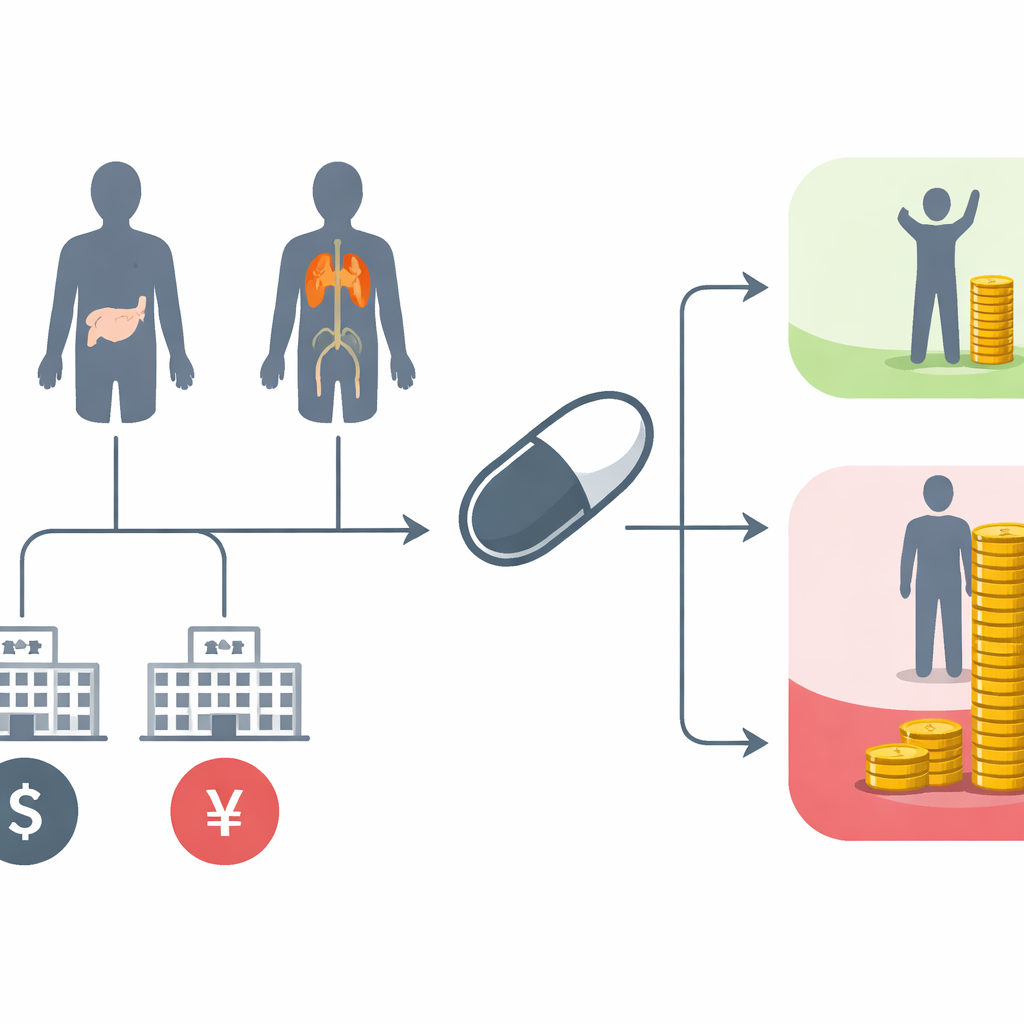
Modern cancer drugs can add months or years of life, but they often come with breathtaking price tags. This study asks a simple, real-world question: when is an expensive drug actually worth the money? Focusing on cabozantinib, a targeted pill for rare neuroendocrine tumors, the researchers examine whether the health gains it brings are large enough to justify its cost in both the United States and China.
Two related cancers, one shared challenge
Neuroendocrine tumors are unusual growths that arise from hormone-producing cells. They can appear in many organs, but this study concentrates on two groups: tumors that start in the pancreas and those that develop in other parts of the body, such as the intestine or lungs. As more people are being diagnosed with these cancers, doctors are turning to newer drugs like cabozantinib when standard treatments stop working. Yet these medicines are far more expensive than older chemotherapies, raising tough questions for patients, insurers, and governments about which drugs should be funded.
A virtual patient journey to track costs and benefits
To explore value for money, the authors built a computer model that follows patients with advanced neuroendocrine tumors over ten years. Each “virtual patient” moves through three health stages: living with stable disease, living with disease that has grown or spread, and death. At every step, the model keeps track of drug costs, hospital care, tests, and the impact on quality of life. This impact is summarized using a measure called a quality-adjusted life year, or QALY, which combines how long people live with how well they feel. The key comparison is between patients receiving cabozantinib and those receiving a placebo, using real survival and quality-of-life data from a large clinical trial.
When a powerful drug does not pay off
Among patients whose tumors began outside the pancreas, cabozantinib clearly slowed the cancer’s growth compared with placebo. However, the model found that the extra months of better health came at a very high price. In China, each additional quality-adjusted year of life cost nearly twice the level considered affordable by national standards. In the United States, the cost per added year was almost three times higher than the commonly used threshold. In both countries, alternative measures that combine costs and health gains into a single “net benefit” also showed that, for these extrapancreatic tumors, cabozantinib does not offer good value at current prices.
A different picture for pancreatic tumors
Results were more encouraging for patients with pancreatic neuroendocrine tumors. Here, cabozantinib still increased treatment costs, but the extra spending was modest and the health gains, though small, were enough to tip the balance in its favor. In both China and the United States, the cost per quality-adjusted year of life stayed well below the thresholds that policymakers typically regard as acceptable. Simulations that repeatedly varied key assumptions suggested that cabozantinib had about a fifty–fifty chance of being the better value choice in this group, indicating a borderline but broadly positive economic case.
How trial design and price shape real-world decisions
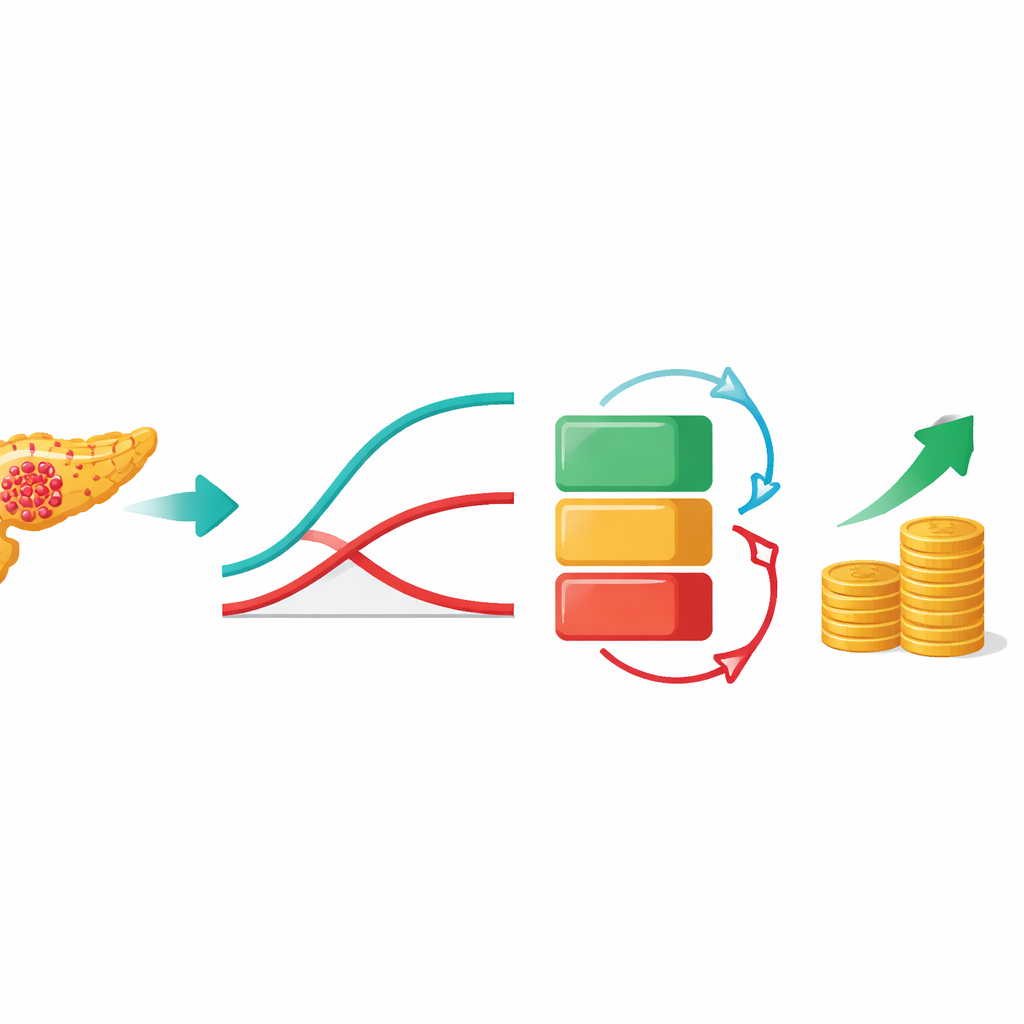
An important twist in this analysis is that many patients who started on placebo in the original trial were later allowed to switch to cabozantinib. This crossover makes it harder to separate the long-term survival benefit of the drug from the effect of simply receiving some treatment later on. The authors show that high crossover rates add noise to economic models and can mask the true value of a therapy. They also explore how changing the price of cabozantinib would affect its cost-effectiveness and find that large price cuts would be needed for it to become good value for non-pancreatic tumors in either country.
What this means for patients and policymakers
In plain terms, the study concludes that cabozantinib offers reasonable value for people with pancreatic neuroendocrine tumors in both China and the United States, but not for those whose tumors arise elsewhere in the body—unless the drug’s price is substantially reduced. The work highlights that proving a drug can slow cancer is only half the story; it must also deliver enough benefit for the money spent. By quantifying this trade-off, the study provides a roadmap for health authorities deciding whether, and for whom, to fund cabozantinib, and underlines the growing need to match life-extending therapies with prices that health systems and patients can sustainably bear.
Citation: Lang, W., Huang, B., Zhang, G. et al. Cost-effectiveness of cabozantinib versus placebo for advanced neuroendocrine tumors from crossover-adjusted analysis in the United States and China. Sci Rep 16, 9369 (2026). https://doi.org/10.1038/s41598-026-39026-0
Keywords: neuroendocrine tumors, cabozantinib, cost-effectiveness, pancreatic cancer, health economics