Clear Sky Science · en
HACE1 alleviates intervertebral disc degeneration by inhibiting ferroptosis in nucleus pulposus cells
Why Back Pain Starts in the Spine’s Cushions
Low back pain is one of the most common reasons people miss work or visit a doctor, and a major culprit is the slow wearing out of the spine’s shock‑absorbing cushions, called intervertebral discs. This study explores a natural protective gene, HACE1, that helps disc cells resist a recently discovered form of cell damage linked to iron and oxidation. Understanding how this built‑in defense works could open new paths to prevent or slow disc degeneration and the back pain that comes with it.
The Hidden World Inside Spinal Discs
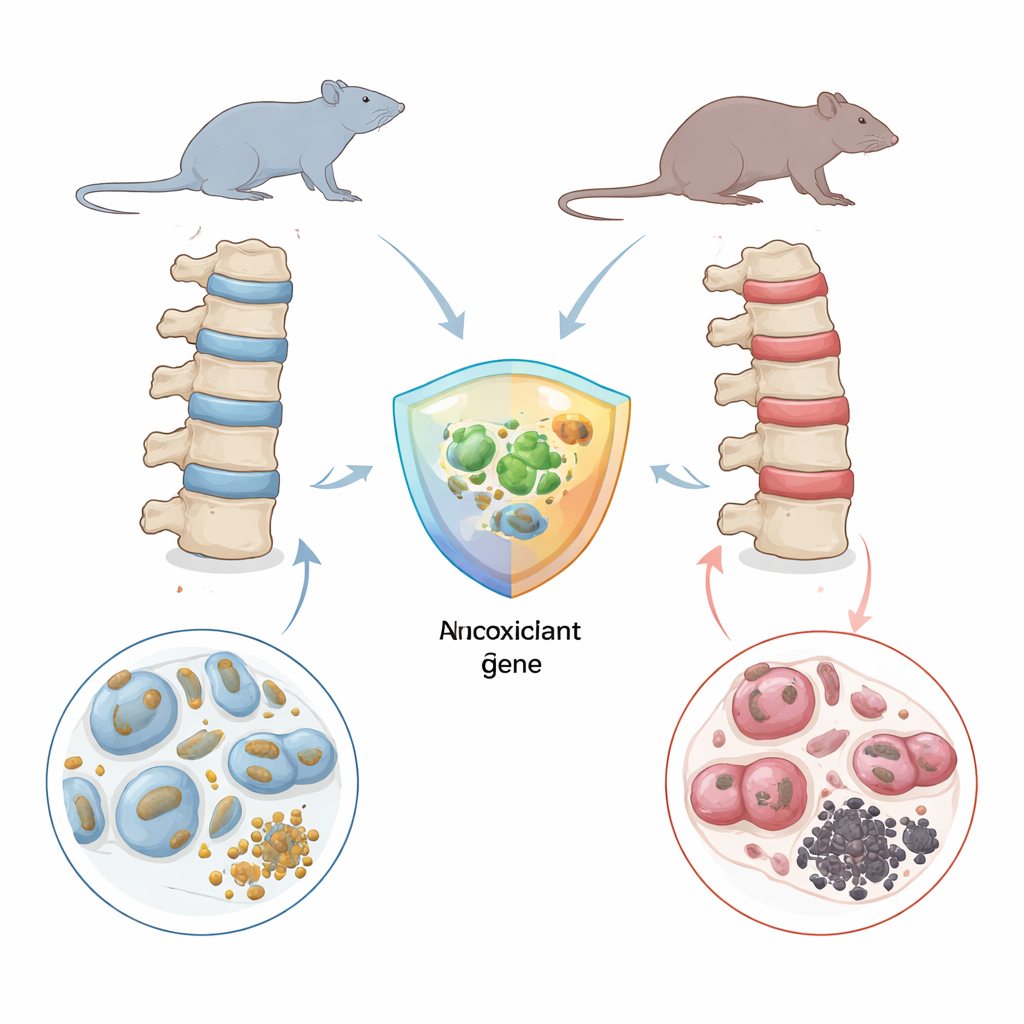
Each disc in the spine has a soft, gel‑like center called the nucleus pulposus, surrounded by tougher tissue. The cells inside this gel produce a springy mesh of proteins that lets discs absorb pressure. With age and stress, these cells can die off and the supporting mesh breaks down, causing discs to flatten and crack. The authors focused on a type of cell death called ferroptosis, which is driven by iron buildup and runaway reactions with oxygen, and is tightly linked to malfunctioning mitochondria—the cell’s power plants. They suspected that ferroptosis might be an important missing piece in why discs wear out and that HACE1, an antioxidant gene, could act as a brake on this damage.
What the Researchers Saw in Animals and Cells
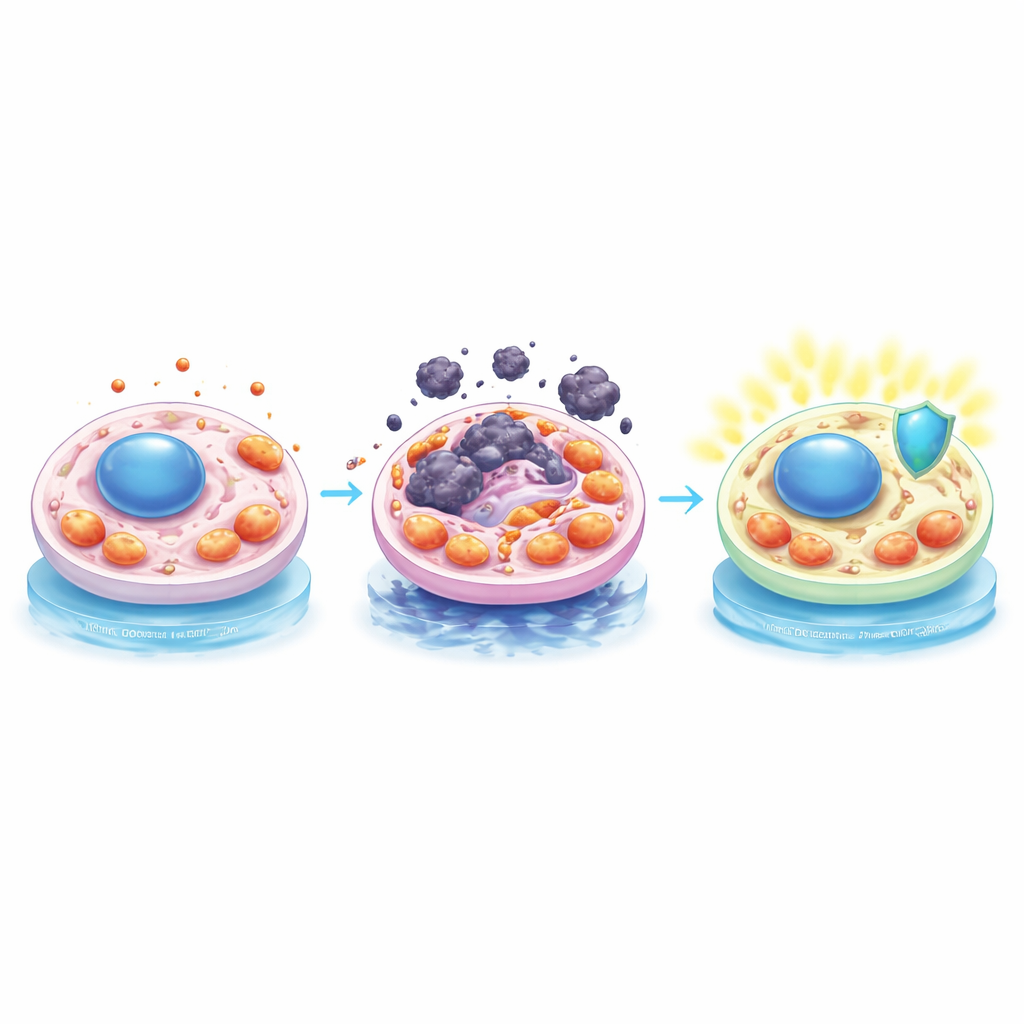
In rats, the team compared young animals to older ones and found that older discs looked much more worn on imaging scans and under the microscope. At the same time, levels of HACE1 and several key protective proteins inside disc cells were markedly lower. In dishes, they exposed rat disc cells to an inflammatory signal called IL‑1β, which is known to mimic the harsh environment of a damaged disc. Under this stress, cells lost viability, broke down the cushioning matrix they normally build, accumulated iron, and showed classic signs of mitochondrial injury and ferroptosis. When the researchers artificially increased HACE1 in these stressed cells, many of these harmful changes were reversed: mitochondria looked healthier, iron overload eased, and fewer cells died.
Putting the Gene to the Test in Living Spines
To see if HACE1 could protect whole discs, the team created a disc‑injury model in rats by puncturing tail discs to trigger degeneration. Some animals received a harmless control virus, while others received a virus engineered to boost HACE1 throughout the body. After several weeks, X‑rays showed that injured discs had collapsed compared with sham‑operated animals, but discs in rats with extra HACE1 kept more of their height. Tissue staining revealed that HACE1‑boosted discs had less structural disruption and retained more of the gel‑like core. Molecular tests confirmed that these discs had lower signs of oxidative stress and ferroptosis, and higher levels of proteins that maintain the cushioning matrix.
How the Protective Signal Chain Works
The study links HACE1’s benefits to a broader cellular safety system centered on a protein called Nrf2. Under normal conditions, Nrf2 is kept in check, but when oxidative stress rises, it moves into the nucleus and switches on a suite of detoxifying and antioxidant genes. The authors show that raising HACE1 levels enhances this Nrf2 pathway, boosting enzymes that neutralize damaging molecules and support anti‑ferroptosis proteins such as GPX4 and SLC7A11, both crucial for keeping lipid and iron‑driven damage under control. As this defensive network ramps up, disc cells are better able to survive inflammation, protect their mitochondria, and keep producing the springy matrix that preserves disc structure.
What This Could Mean for Aching Backs
In everyday terms, this work suggests that HACE1 acts like a built‑in fire‑suppression system for disc cells, damping down harmful iron‑ and oxygen‑driven reactions before they burn through the tissue. By strengthening this system—likely through the Nrf2 pathway—researchers were able to keep rat discs healthier after injury and reduce the chain of events that leads to degeneration. While much remains to be done before this can translate into human treatments, the study highlights HACE1 and its oxidative‑stress defenses as promising starting points for future drugs or gene‑based therapies aimed at preventing or slowing age‑related disc breakdown and the low back pain it causes.
Citation: Xia, J., Zhang, W., Jiang, Y. et al. HACE1 alleviates intervertebral disc degeneration by inhibiting ferroptosis in nucleus pulposus cells. Sci Rep 16, 8996 (2026). https://doi.org/10.1038/s41598-026-39017-1
Keywords: intervertebral disc degeneration, oxidative stress, ferroptosis, HACE1 gene, Nrf2 pathway