Clear Sky Science · en
Associations of chronic rhinosinusitis and allergic rhinitis with tinnitus
Why nose and ear problems matter together
Tinnitus—the phantom ringing, buzzing, or hissing in the ears—can be deeply upsetting, disturbing sleep, concentration, and mood. Separately, stuffed or inflamed noses from allergies or chronic sinus trouble are extremely common complaints. This study asks a simple but important question for millions of people: are ongoing nose and sinus problems linked to a higher chance of developing tinnitus, and if so, how strong is that link in everyday life?
Looking at health records for a whole nation
The researchers used Taiwan’s single‑payer health insurance database, which captures nearly all medical visits for the country’s residents. They identified more than 138,000 adults who were newly diagnosed with tinnitus between 2011 and 2021. For each of these patients, they selected three similar people without tinnitus—over 384,000 controls—matched on age, sex, income, where they lived, and a range of other health conditions that might also influence tinnitus, such as diabetes, high cholesterol, hearing loss, obesity, mood disorders, and asthma. This matching helps ensure that differences in nose and sinus disease, rather than other factors, are more likely to explain any gap in tinnitus risk.
Comparing allergy and sinus problems in people with and without ringing ears
The team focused on two widespread conditions: allergic rhinitis, often experienced as seasonal or year‑round nasal allergies, and chronic rhinosinusitis, in which the nose and sinuses stay inflamed for at least 12 weeks. They counted people as having these problems if they had at least two medical visits with the relevant diagnosis codes before their tinnitus diagnosis (or a similar date for the control group). They then compared how common past allergies or long‑lasting sinus disease were in people with tinnitus versus those without, and used statistical models to estimate how much each condition increased the odds of developing tinnitus after accounting for many other health and social factors.
Stronger odds of tinnitus when the nose and sinuses are inflamed
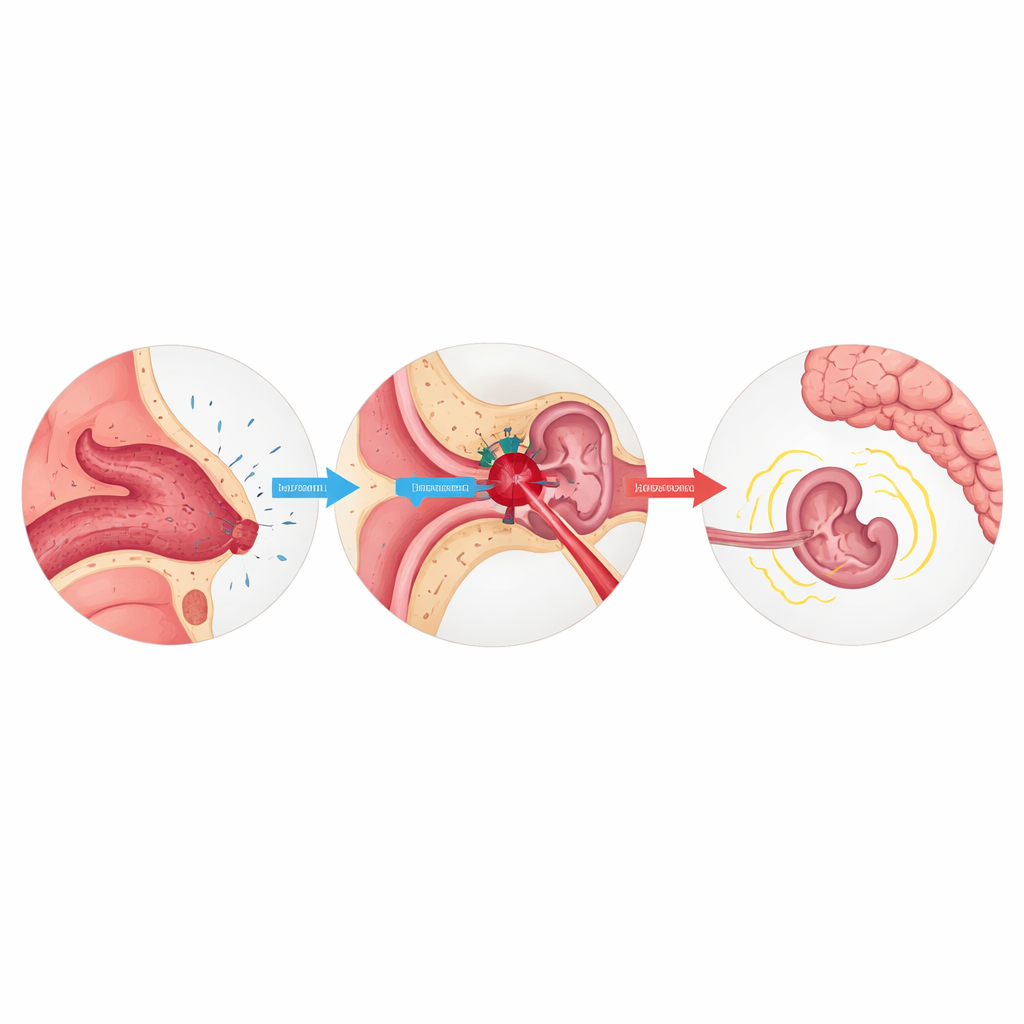
Allergic rhinitis and chronic rhinosinusitis were both clearly more frequent among patients with tinnitus. Around one in three tinnitus patients had prior nasal allergies, compared with about one in five controls. Chronic rhinosinusitis was also nearly twice as common in the tinnitus group. When the researchers adjusted for differences in age, sex, income, living environment, hearing loss, mood and anxiety disorders, asthma, ear infections, and other medical issues, they found that allergies were associated with about an 80% increase in the odds of having tinnitus, while chronic rhinosinusitis alone raised the odds by about 60%. People who had both conditions faced an even higher risk than those with either one alone. The association held even after extra checks to rule out hidden statistical problems, such as overlap among related medical conditions.
Possible pathways linking a stuffy nose to a noisy head
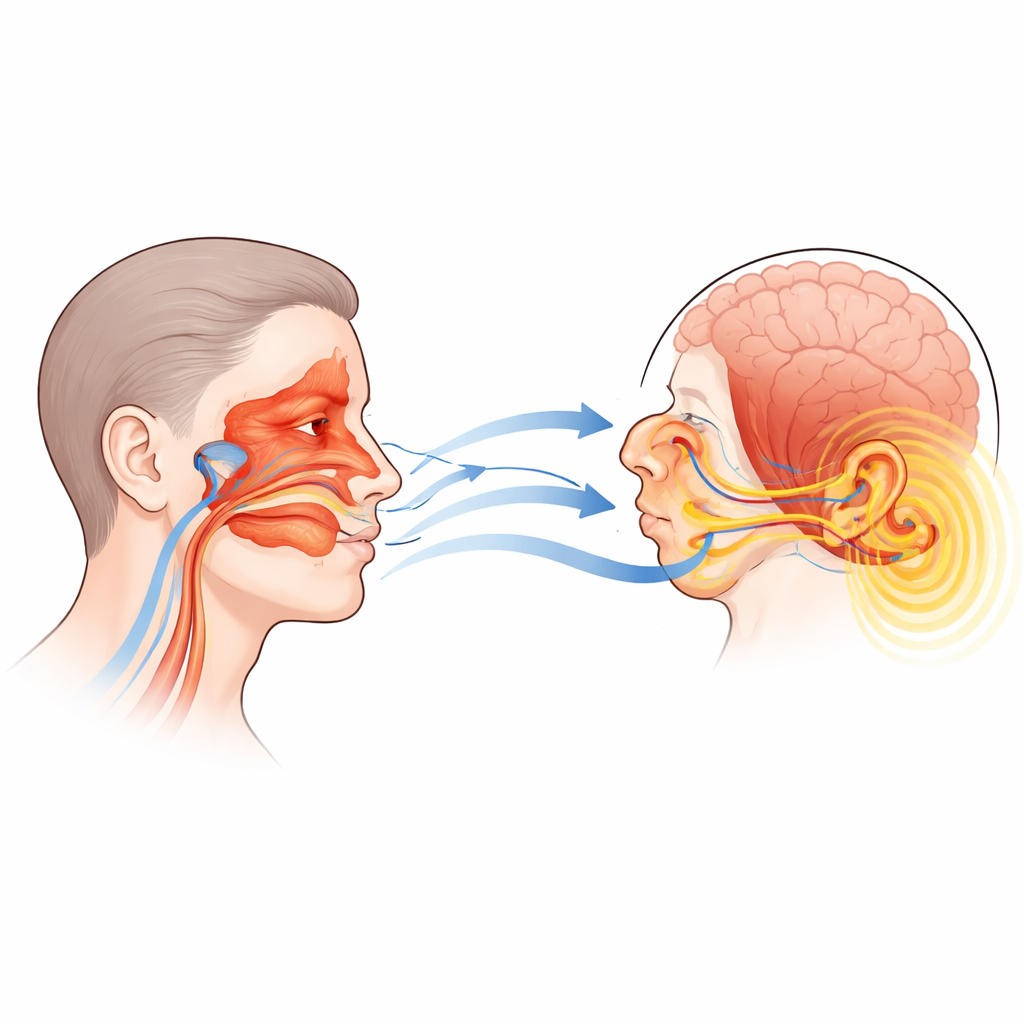
How could nose and sinus troubles influence phantom sounds in the ears? The authors outline several likely pathways. Persistent congestion and inflammation can interfere with the Eustachian tube, the narrow channel that equalizes pressure between the middle ear and the back of the nose. When this tube does not work well, pressure changes and fluid buildup can disturb how sound is carried to the inner ear. Both nasal allergies and chronic sinus disease are also tied to poor sleep and obstructive sleep apnea, which can reduce oxygen delivery to delicate hearing structures and alter brain processing of sound. Long‑lasting inflammation in the nose may send a steady stream of immune signals into the bloodstream, subtly affecting blood vessels and nerve cells, including those in the hearing pathways and brain regions that color sound with emotion. When allergies and sinus disease occur together, these mechanical, sleep‑related, and inflammatory effects appear to compound one another.
What this means for patients and doctors
For people troubled by tinnitus, this large, real‑world study suggests that chronic nasal allergies and long‑lasting sinus inflammation are more than just background annoyances—they may be important pieces of the puzzle. The work does not prove that these conditions directly cause tinnitus, because it relies on past medical records rather than tracking people forward in time with detailed testing. Still, the strong and consistent links across more than half a million adults imply that recognizing and treating nasal and sinus disease earlier might help lower tinnitus risk or lessen its impact for some patients. Future studies that follow diverse groups of people over time, while measuring hearing, sleep, and immune activity, will be needed to confirm whether calming inflamed noses and sinuses can also quiet ringing ears.
Citation: Yang, TH., Chung, SD., Lin, HC. et al. Associations of chronic rhinosinusitis and allergic rhinitis with tinnitus. Sci Rep 16, 8169 (2026). https://doi.org/10.1038/s41598-026-39016-2
Keywords: tinnitus, allergic rhinitis, chronic rhinosinusitis, ear and sinus connection, sleep and hearing