Clear Sky Science · en
Intensity-dependent lipidomic dynamic regulation following acute swimming exercise
Why How You Swim Matters
Most of us know that both gentle laps and all-out sprints in the pool are good for health, but what actually happens inside the body when we push harder? This study looks under the hood at the fats circulating in our blood—thousands of different lipid molecules—to find out how a brief bout of high-intensity interval swimming compares with moderate, steady swimming. By tracking these microscopic shifts minute-by-minute, the researchers show that exercise intensity, not just calories burned, reshapes our metabolism in surprisingly precise ways.
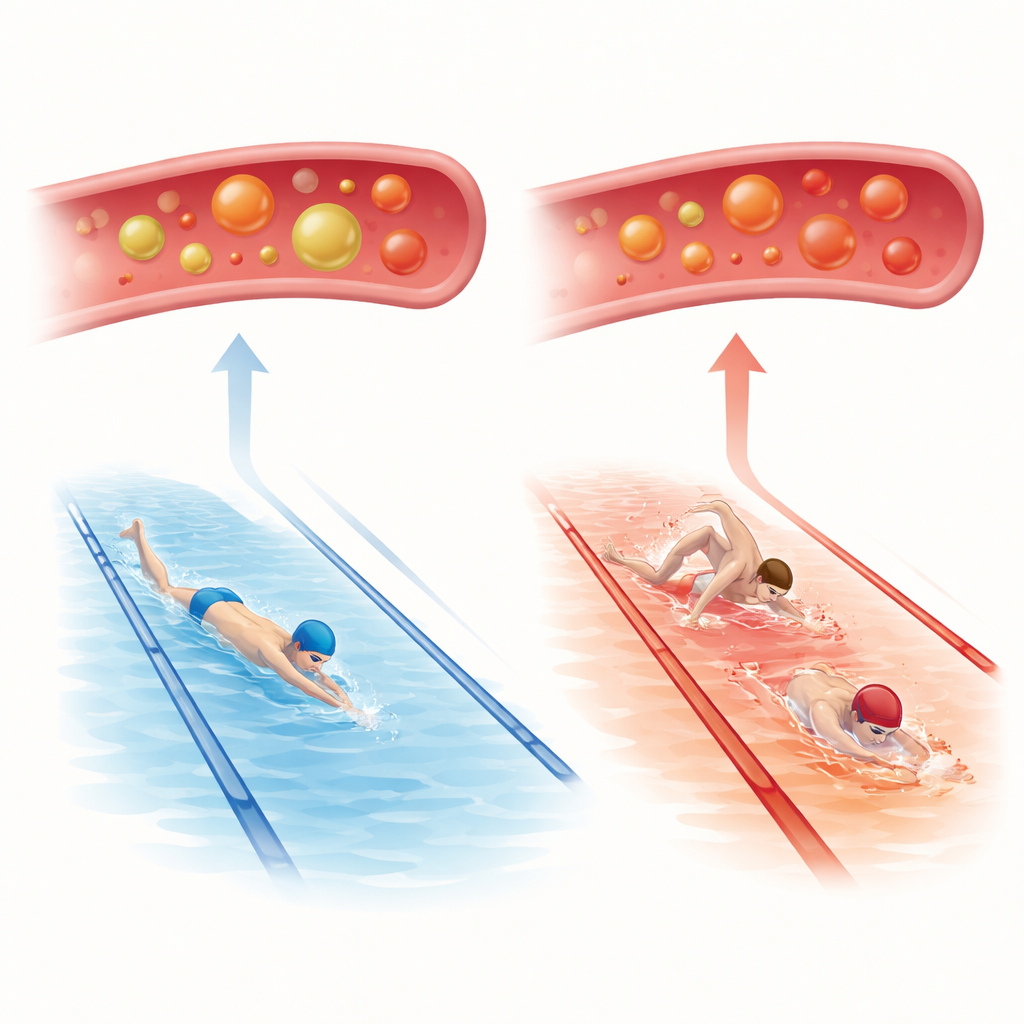
Two Ways to Work Out in the Pool
The research team recruited 42 healthy college students who were used to being active but were not competitive athletes. Everyone completed a week of familiarization, then was randomly assigned to one of two 30‑minute swimming sessions done after an overnight fast. One group swam continuously at a comfortable but brisk pace, similar to steady lap swimming. The other group did high‑intensity intervals: repeated 50‑meter all‑out sprints with short rests in between. Importantly, special heart‑rate based calculations showed that both groups burned roughly the same amount of energy overall, allowing the scientists to focus on intensity rather than total work.
Taking a Molecular Snapshot of Blood Fats
To capture how blood fats changed in real time, the researchers drew blood before swimming and then at 0, 15, and 30 minutes after getting out of the pool. They used a powerful technique called lipidomics to measure over 600 distinct lipid molecules, far beyond standard cholesterol or triglyceride tests. Sophisticated statistics and clustering methods helped them see patterns: which lipids went up or down, how long changes lasted, and whether those patterns differed between the high‑intensity and moderate sessions. They also measured a small set of key energy‑related molecules, such as lactic acid and intermediates from the cell’s main energy‑producing cycles, and examined how these related to changes in lipids.
Hard Effort, Bigger and Deeper Lipid Shifts
Even though both workouts burned similar calories, the high‑intensity intervals produced far larger shifts in the blood lipid landscape. At every time point, many more lipid molecules dropped in concentration after the sprint session than after the steady swim, and this gap widened over the 30‑minute recovery period. One major group of storage fats, triacylglycerols, was especially affected. The analysis also revealed three broad “behavior patterns” among lipids: some stayed low after exercise, some dipped then recovered, and others rose then fell. High‑intensity swimming influenced more lipids in every pattern, and some response types were almost exclusive to that tougher workout, pointing to distinct layers of metabolic stress and recovery that mild exercise never fully activates.
Selective Use of Specific Fat Types
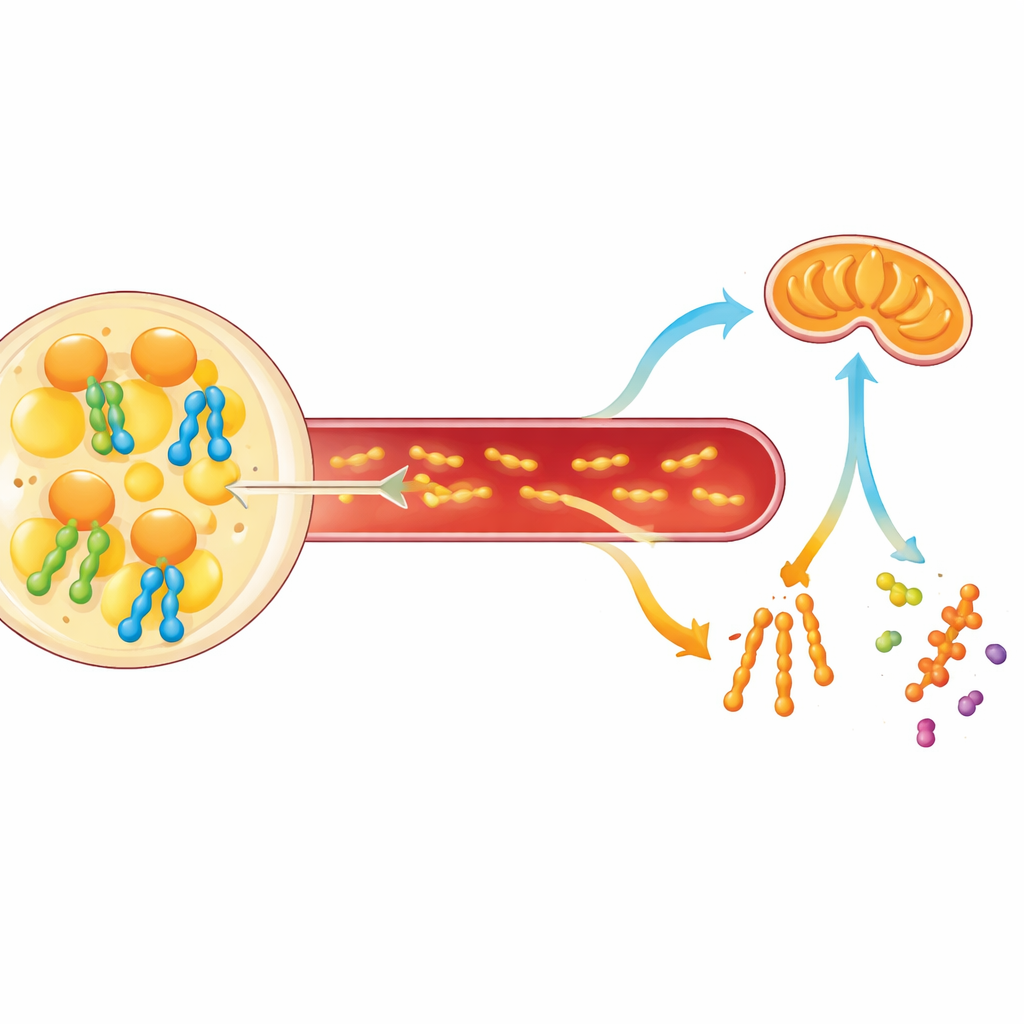
Looking more closely, the team found that not all fats are treated equally when intensity ramps up. During the most demanding efforts, the body seemed to preferentially draw on shorter and more saturated triacylglycerols as fuel, while moderate exercise leaned more on longer, more unsaturated versions. Several individual molecules stood out as consistent markers of intensity differences, including one common membrane fat (PC32:2), a signaling fat (LPA18:2), and three triacylglycerols containing the fatty acid linoleic acid. Linoleic acid is an essential omega‑6 fat found in many plant oils and foods. Its recurring appearance in key lipids, together with strong links to energy‑related metabolites, suggests that intense exercise channels this fatty acid toward both energy use and the production of signaling molecules that help coordinate inflammation, repair, and adaptation.
Linking Blood Fats to the Body’s Fuel Mix
When the researchers compared lipids with the small set of energy metabolites, about three‑quarters of the responsive lipids were negatively related to these energy markers: as compounds like lactic acid and certain cycle intermediates rose, many fats fell. This pattern fits with the idea that as exercise intensity climbs, muscles lean more on quick‑burning carbohydrates and less on fat, while still mobilizing specific fatty acids for later use and signaling. Triacylglycerols and free fatty acids dominated these relationships, reinforcing their central role as a flexible fuel reservoir. The prominence of linoleic acid, along with palmitic and oleic acids, hints that the body does not just “burn fat” in general; it taps particular molecular species in a targeted way depending on how hard we exercise.
What This Means for Everyday Exercise
For non‑scientists, the take‑home message is that how hard you work out can change not only how many calories you burn, but also which microscopic fuel and signaling molecules your body chooses to use. In this study, brief high‑intensity interval swimming, even when matched for total energy cost with easier continuous swimming, triggered broader and more specific rearrangements of blood fats, especially those containing linoleic acid. These detailed lipid fingerprints could eventually help doctors and coaches verify how hard someone has actually exercised and design more tailored programs—for example, choosing intensity ranges that best support heart health, blood sugar control, or recovery. While more work is needed in different age groups and over longer timeframes, the findings underscore that, in metabolism, exercise intensity is its own powerful lever, not just a way to burn calories faster.
Citation: Qian, J., Wu, B., Ren, Z. et al. Intensity-dependent lipidomic dynamic regulation following acute swimming exercise. Sci Rep 16, 8073 (2026). https://doi.org/10.1038/s41598-026-39013-5
Keywords: high-intensity interval training, swimming exercise, lipid metabolism, blood lipids, precision exercise medicine