Clear Sky Science · en
Phylogenomic analysis shows underestimated species within Cupriavidus and the new species Cupriavidus phytohabitans sp. nov
Hidden helpers in plant roots
Legume plants like beans and mimosa often team up with bacteria that live in tiny bumps on their roots, called nodules. These microscopic partners can help plants grow without chemical fertilizers by tapping into nitrogen from the air. In this study, scientists went hunting in Mexican soils and plant roots and discovered that an entire group of these bacteria had been hiding in plain sight, including a brand‑new species that quietly inhabits plant roots but does not behave exactly as expected.
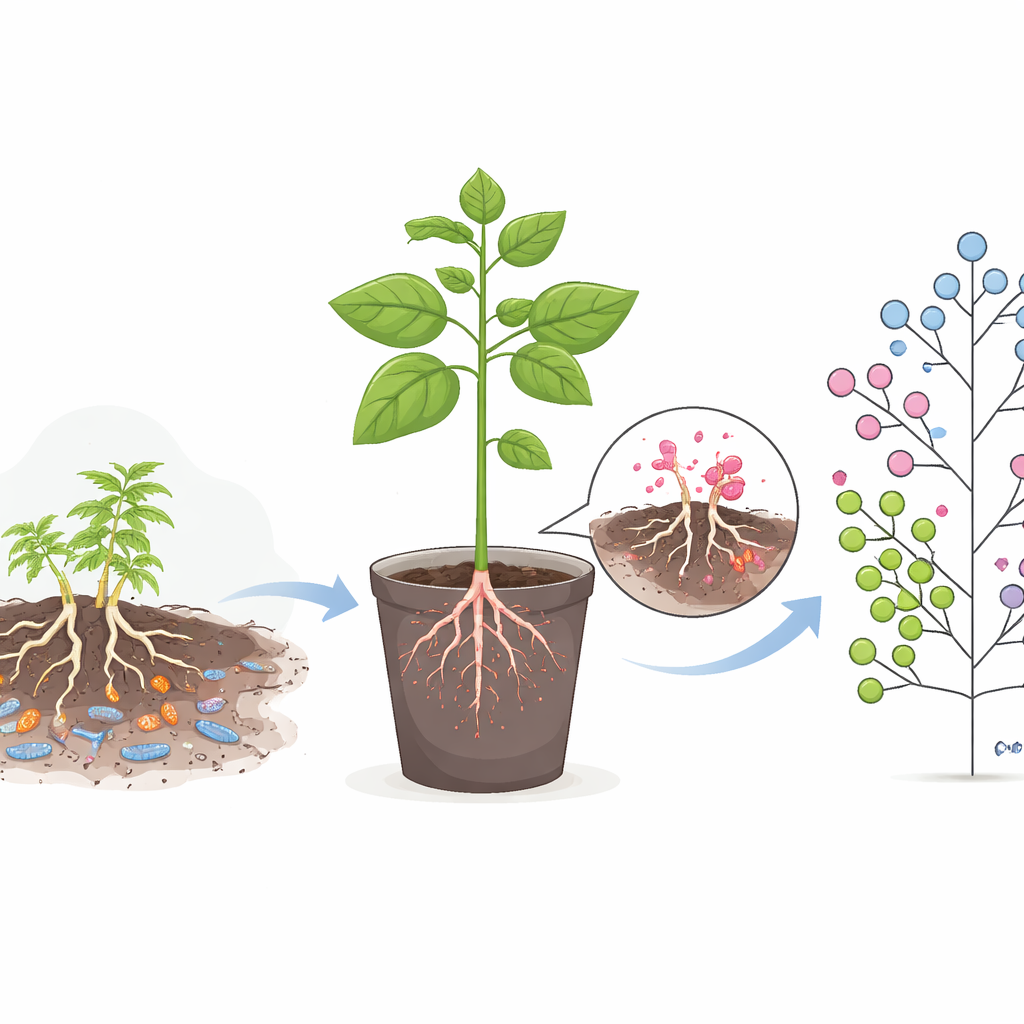
Searching for new life in the soil
The team collected soil from around wild Acacia trees in Veracruz, Mexico, and used common bean plants grown in pots as “bait” to attract root‑dwelling bacteria. From the nodules that formed on these bean roots, they isolated several bacterial strains and compared a standard genetic marker used for bacterial identification. This first test placed the strains firmly in the genus Cupriavidus, a group of bacteria known both from soils and from some legume nodules. But this marker alone could not say whether the strains belonged to a known species or represented something new.
Reading whole genomes to sort out names
To go further, the researchers sequenced the complete DNA (genomes) of the key strains and compared them to every Cupriavidus genome available in public databases. They used two widely accepted measurements of overall genetic similarity to decide whether two strains should count as the same species. The new isolates, together with one strain previously found in mimosa nodules in Texas, formed a tight genetic cluster that was clearly separated from all known species. This cluster had high similarity within itself, but was below the accepted cutoffs when compared to its closest relatives, confirming that it represents a distinct species, which the authors name Cupriavidus phytohabitans—literally, “plant‑dwelling copper bacterium.”
What the new bacterium can and cannot do
The scientists then looked at how this bacterium behaves. Under the microscope, the cells are short rods that grow well in laboratory media over a range of temperatures, salt levels, and acidity, and they show a characteristic pattern of cell proteins and membrane lipids that differs from related species. Its genome carries the full sets of genes usually needed to infect legume roots and build nodules, as well as the genes for the nitrogen‑fixing enzyme system that can turn atmospheric nitrogen into plant‑usable form. In greenhouse tests, different strains of C. phytohabitans did form nodules on bean and on the small tropical plant Mimosa pudica. However, these nodules remained white rather than the healthy pink typical of active nitrogen fixation, and careful gas measurements showed no nitrogen was being converted, either in the plant or in laboratory culture.
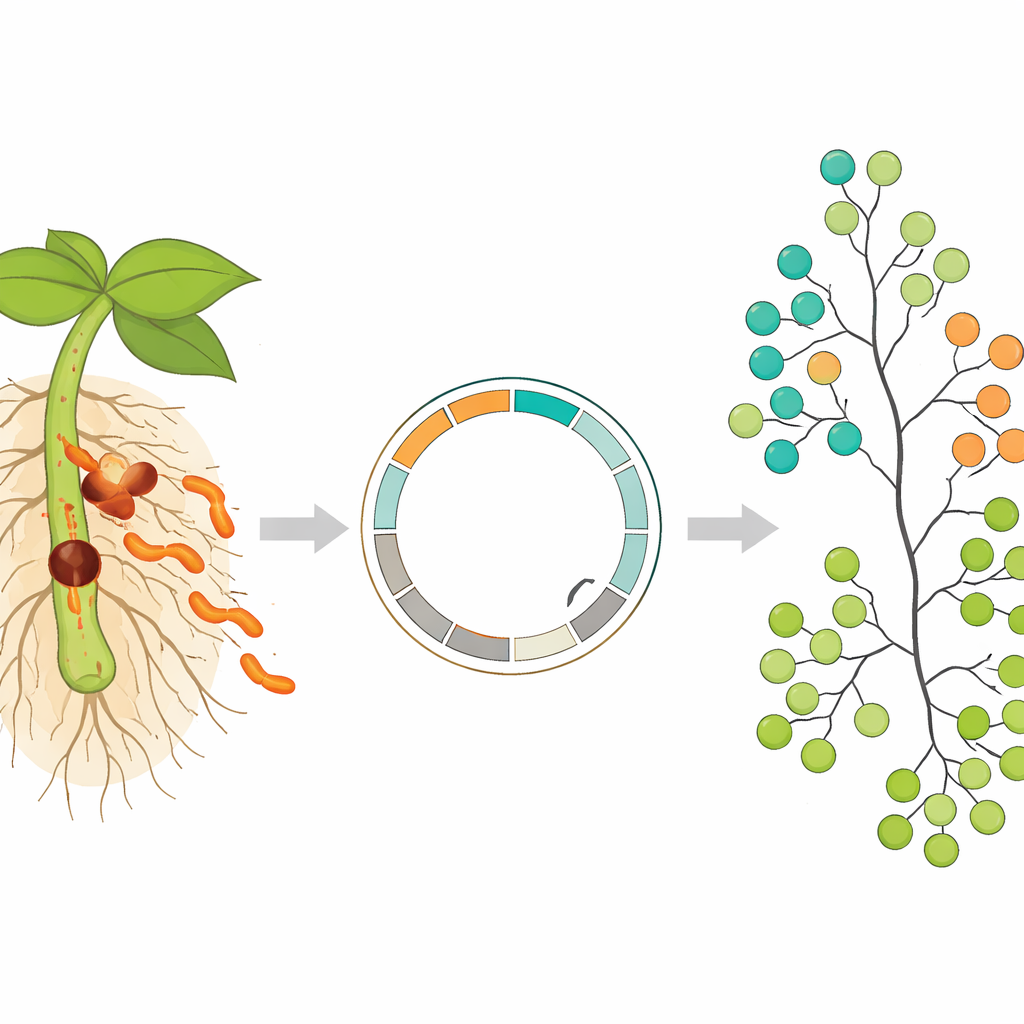
Clues from missing pieces and a crowded family tree
To understand why a bacterium that carries the right genes fails to fix nitrogen, the team compared the detailed arrangement of its nodulation and nitrogen‑fixation genes with those of effective partners in other species. They found that while most key genes were present and intact, some accessory genes were missing, including one called nifZ in two of the strains, which in other bacteria helps assemble a working nitrogen‑fixing enzyme. They suggest that such missing pieces may block the final step that turns nodules into true nutrient factories. At the same time, by extending their genome comparisons to more than 250 Cupriavidus strains, the researchers showed that many entries in genetic databases are misnamed and that at least 18 additional, undescribed genomic species exist within this genus.
Why this matters for plants and people
For non‑specialists, the work highlights two big ideas. First, even well‑studied groups of bacteria important for agriculture still contain many unrecognized species, some of which may later prove useful as natural fertilizers or, in a few cases, as opportunistic pathogens that merit monitoring. Second, simply having the genetic recipe for a task like nitrogen fixation does not guarantee that a microbe actually performs it in real life; the arrangement, completeness, and regulation of those genes—and the plant partner—also matter. By naming Cupriavidus phytohabitans and mapping the tangled family tree of its relatives, this study lays groundwork for improving how we classify these root‑associated bacteria and for better harnessing or controlling them in future farming and environmental applications.
Citation: Tapia-García, EY., Chávez-Ramírez, B., Morales-Ruíz, LM. et al. Phylogenomic analysis shows underestimated species within Cupriavidus and the new species Cupriavidus phytohabitans sp. nov. Sci Rep 16, 8774 (2026). https://doi.org/10.1038/s41598-026-39004-6
Keywords: Cupriavidus phytohabitans, root nodules, nitrogen fixation, plant microbiome, bacterial taxonomy