Clear Sky Science · en
BUB1 promotes cell stem-like properties and serves as a diagnostic biomarker for lung cancer
Why Some Lung Cancers Keep Coming Back
Lung cancer often returns or resists treatment even after surgery, chemotherapy, or targeted drugs. A major reason is a small but dangerous group of cells with stem-like abilities that can regrow tumors and shrug off therapy. This study focuses on a protein called BUB1 and shows that it helps lung cancer cells behave more like these stubborn "seed" cells. The work suggests BUB1 could be used to better detect lung cancer, predict which patients will do poorly, and design new treatments that strike at the tumor’s roots. 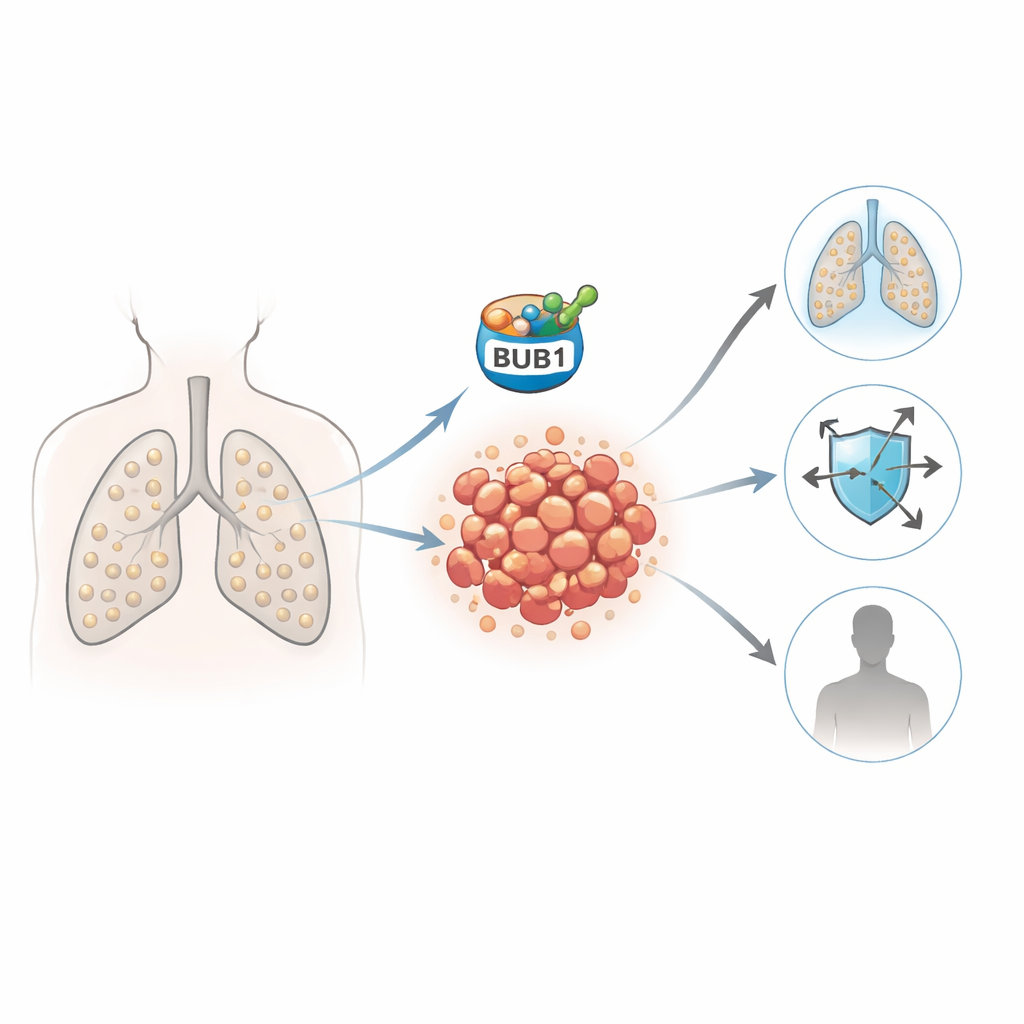
Hidden Seeds Inside Lung Tumors
Not all cancer cells are equally dangerous. A fraction behave like stem cells: they can renew themselves, survive harsh conditions, and restart tumor growth after treatment. The authors used large genetic databases from hundreds of people with two common forms of non-small cell lung cancer—adenocarcinoma and squamous cell carcinoma—to look for genes linked to this stem-like behavior. By applying network-style computer analyses, they identified groups of genes whose activity rose and fell together with a numerical "stemness" score. Among several candidates, BUB1 stood out as a central player repeatedly connected to stem-like traits in lung tumors.
A Marker That Lights Up in Lung Cancer
The team next examined how strongly BUB1 is switched on in cancers compared with normal tissues. Across many tumor types, and especially in both major subtypes of lung cancer, BUB1 levels were consistently higher than in noncancerous samples. This pattern was confirmed using multiple independent public datasets and real patient samples from a hospital, where both the gene’s activity and the amount of BUB1 protein were elevated in tumor tissue. When the researchers tested how well BUB1 levels could separate cancer from non-cancer using standard diagnostic curves, BUB1 showed high accuracy, sensitivity, and specificity—suggesting it could become a useful laboratory marker to help flag lung cancer.
A Clue to Who Does Worse
BUB1 also helped explain differences in patient outcomes. People with lung adenocarcinoma whose tumors had lower BUB1 levels tended to live longer and remain free of relapse for more time than those with higher levels. Statistical models that considered age, sex, and tumor stage still found BUB1 to be an independent predictor of poor prognosis in adenocarcinoma, though not in squamous cell carcinoma. This means that, at least for one major lung cancer subtype, measuring BUB1 might help doctors estimate risk and tailor treatment intensity more precisely.
Turning Down BUB1 Weakens the Tumor’s Roots
To test whether BUB1 is just a marker or actually helps drive stem-like behavior, the researchers reduced its levels in lung cancer cell lines grown in the laboratory. When BUB1 was silenced, the cells formed fewer and smaller free-floating spheres, a hallmark of stem-like growth. Key molecules often associated with stem-like cells also dropped. At the same time, signals related to a molecule called IL-17, part of an inflammatory pathway, became weaker. Blocking IL-17 together with lowering BUB1 further reduced the stem-like traits, suggesting these two routes cooperate to maintain the most resilient cancer cells. The study also examined how BUB1 levels related to immune cells infiltrating tumors, hinting that this protein may influence how the immune system and cancer interact. 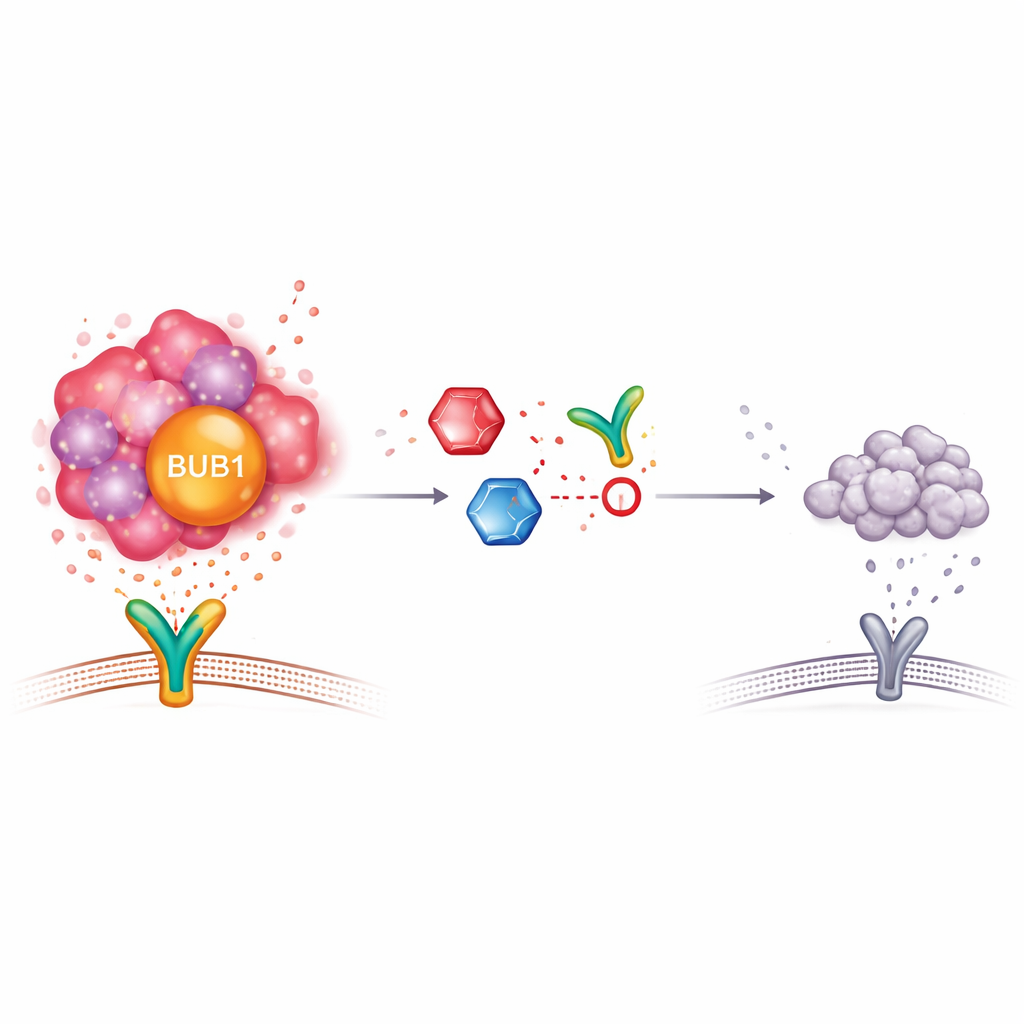
New Drug Ideas from Old Compounds
Because BUB1 appears so central, the authors searched existing chemical databases for compounds that might bind and inhibit it. Using computer docking simulations, they identified three drugs—quercetin, cryptolepine, and etoposide—that fit stably into the BUB1 protein’s structure, with quercetin showing the strongest predicted binding. All three already have reported anticancer activities in other settings, which could speed future testing. The idea is that combining BUB1-targeting agents with IL-17 blockade or standard treatments might strip tumors of their stem-like core and make therapies more durable.
What This Means for Patients
In simple terms, this work argues that BUB1 is both a warning light and a control switch in lung cancer. High levels signal tumors that are more stem-like, harder to treat, and more likely to return, especially in lung adenocarcinoma. Experimentally turning BUB1 down makes cancer cells less stem-like and less able to form new tumor clusters, particularly when combined with blocking IL-17 signals. Together, these findings position BUB1 as a promising tool for earlier and more accurate diagnosis, for judging which patients need aggressive care, and as a potential target for new drugs that aim to prevent relapse by attacking the tumor’s most stubborn cells at their source.
Citation: Liu, M., Zhu, S., Zheng, Q. et al. BUB1 promotes cell stem-like properties and serves as a diagnostic biomarker for lung cancer. Sci Rep 16, 8572 (2026). https://doi.org/10.1038/s41598-026-38997-4
Keywords: lung cancer, cancer stem cells, BUB1, biomarkers, targeted therapy