Clear Sky Science · en
Prognostic significance of heart rate trajectories on organ failure in predicted severe acute pancreatitis: secondary analysis of a randomized trial
Why Your Pulse Matters in a Sudden Belly Illness
When people are rushed to the hospital with a sudden, severe belly pain caused by acute pancreatitis, doctors watch many numbers on the monitor. This study asks a simple question with big consequences: if a patient’s heart keeps beating fast for days, does that signal a higher risk that their organs will struggle to recover? By tracking how heart rate changes over the first week of illness, the researchers show that the pattern over time—not just a single reading—may reveal who is headed for serious trouble and who is on the mend.
A Sudden Inflammation With Hidden Dangers
Acute pancreatitis is a rapid inflammation of the pancreas, a small organ that helps digest food and control blood sugar. Many people recover within days, but a minority develop a dangerous form called severe acute pancreatitis. In these cases, lungs, kidneys, or the circulation can fail, and the longer this organ failure lasts, the higher the risk of death. Doctors know early inflammation drives this damage but still lack easy bedside tools to predict which patients will suffer lasting organ problems. Heart rate is already watched around the clock and reflects how stressed the body is, including how strongly the “fight-or-flight” nerves are firing. The team wondered whether the way heart rate rises and falls during the first few days might mirror the course of the disease.
Two Different Heartbeat Paths
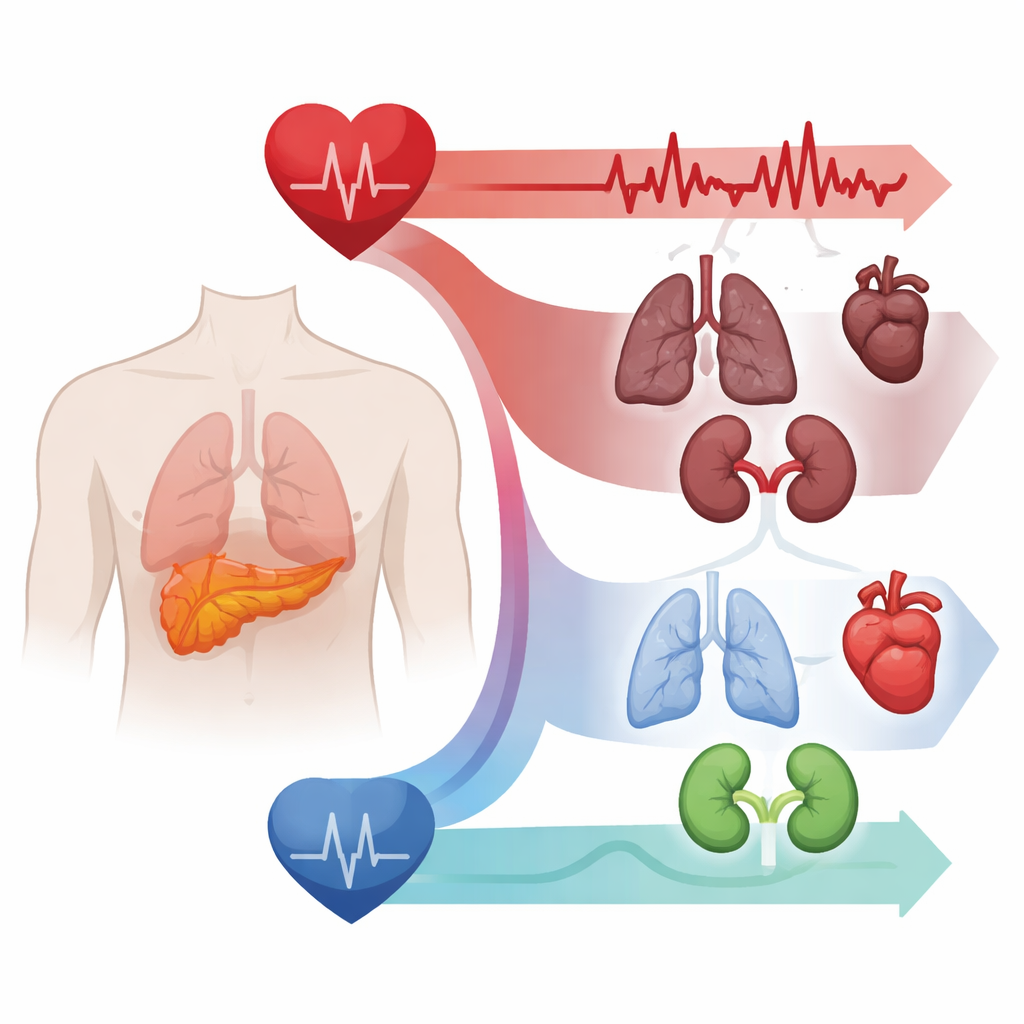
The researchers reanalyzed data from a large trial of patients across 11 hospitals in China who were judged to be at high risk for severe pancreatitis. From 259 people originally enrolled, they focused on 183 who stayed in the hospital at least a week. For each of the first five days, they recorded the highest heart rate reached. Using a statistical method that groups patients with similar patterns, they identified two clear paths. In one path, called the persistent high group, heart rate stayed at or above about 90 beats per minute during all five days. In the other path, the transient high group, patients started out fast but their heart rate dropped below this level within a short time, suggesting their bodies were calming down.
Fast Beats, Slower Organ Recovery
Staying in the persistent high group proved to be a bad sign. By day seven, more than half of these patients still had organ failure or had died, compared with just under a quarter of those whose heart rates came down. Even after accounting for age, sex, body weight, the cause of pancreatitis, and signs of dead pancreatic tissue on scans, patients with persistently high heart rates were nearly four times as likely to have ongoing organ problems. They also had fewer days in that first week and the second week when all organs were working, and they were more likely to need intensive care. Blood tests on day seven showed higher white blood cell counts and higher levels of C‑reactive protein—both signs that inflammation was still smoldering.
A Closer Look at Inflammation and Nerve Signals
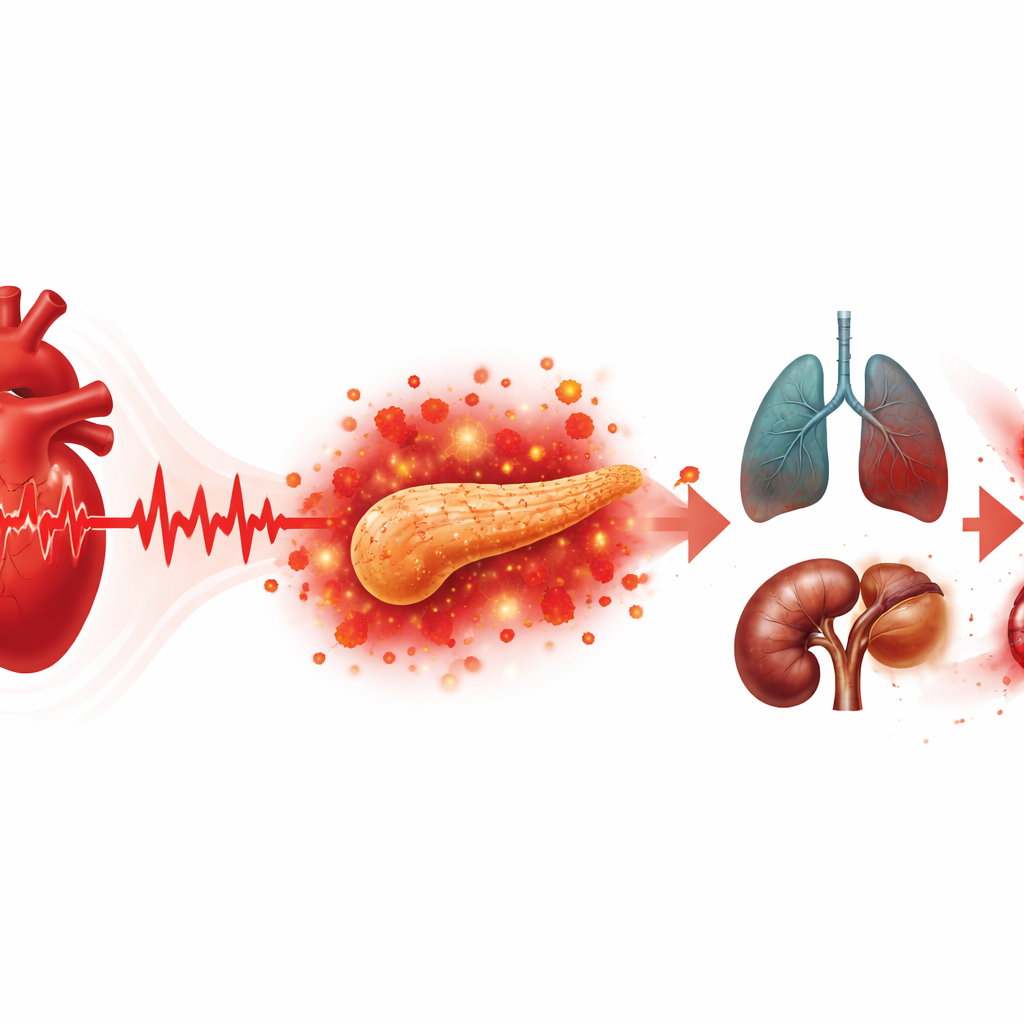
These findings fit with what scientists know about the body’s stress wiring. A high, unrelenting heart rate is a sign that the sympathetic nervous system—the same one that speeds your pulse when you are scared—is locked in overdrive. In short bursts this system helps the heart pump enough blood during illness, but when switched on for days it can fan the flames of inflammation. In pancreatitis, that means more chemical messengers are released, more immune cells surge into tissues, and more damage accumulates in organs like the lungs and kidneys. In this study, people whose heart rate eased off seemed to escape some of this spiral, with less lingering inflammation and quicker organ recovery, even though they looked similar to the other group when they first arrived at the hospital.
What This Could Mean for Future Care
The study does not prove that a fast heartbeat itself is the direct cause of organ failure; it may be part warning light, part driver of harm. The work also cannot say whether drugs that slow the heart will help, because it simply observed what happened under usual care. Still, the pattern is clear: among patients with predicted severe acute pancreatitis, those whose heart rates stayed high over the first several days were much more likely to have prolonged organ failure than those whose heart rates settled down. For patients, this suggests that the humble pulse—something measured countless times a day—may offer early clues about who needs the most aggressive monitoring and treatment, and it raises the possibility that carefully controlling heart rate could one day become part of protecting other organs in this dangerous illness.
Citation: Huang, M., Wang, G., Zhang, Z. et al. Prognostic significance of heart rate trajectories on organ failure in predicted severe acute pancreatitis: secondary analysis of a randomized trial. Sci Rep 16, 9238 (2026). https://doi.org/10.1038/s41598-026-38992-9
Keywords: acute pancreatitis, heart rate, organ failure, critical care, inflammation