Clear Sky Science · en
Interdependency between oxytocin and dopamine in trust-based learning in mice
Why this mouse study matters for everyday trust
We constantly decide whether to trust what other people tell us, from restaurant tips to medical advice. This study asks a similar question in mice: how does the brain decide that food recommended by another is safe, and what happens when that trust is broken? By zooming in on two key brain chemicals, oxytocin and dopamine, the researchers uncover how social signals can make us feel safe—or keep us clinging to old beliefs even when they turn sour.
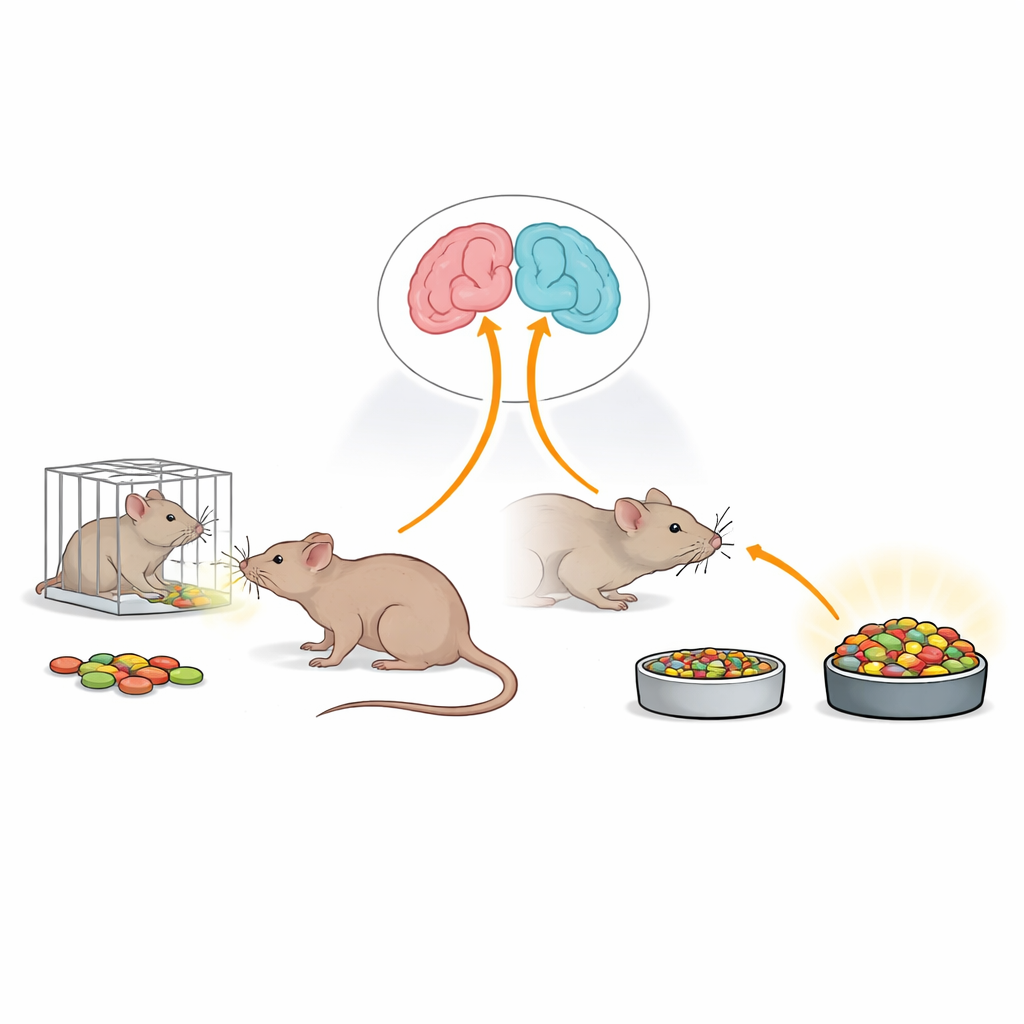
Learning to eat what a friend eats
The team used a classic rodent task called social transmission of food preference. Mice are naturally wary of new foods, but they relax when they smell that another mouse has safely eaten a novel flavor. In this experiment, “observer” mice met “demonstrator” mice that had eaten flavored food. Later, observers chose between that demonstrated flavor and a different, unfamiliar one. The researchers treated some observers with oxytocin, some with a drug that temporarily drains dopamine, some with both, and compared them with untreated controls. They framed this as a simple form of “trust-based” learning: relying on another’s experience to guide what is safe to eat.
When trust is confirmed versus broken
The scientists created two situations. In the trust acquisition condition, the demonstrated food really was safe, and they asked whether oxytocin would strengthen the observers’ preference for it. In the trust violation condition, they quietly flipped the script: after the social interaction, observers were injected with lithium chloride, a compound that causes nausea and makes the just-demonstrated flavor unpleasant. This surprise sickness mimicked a broken promise—what the social cue predicted (safe food) no longer matched reality. The key question was how oxytocin and dopamine together shaped whether mice updated their preferences after this negative experience.
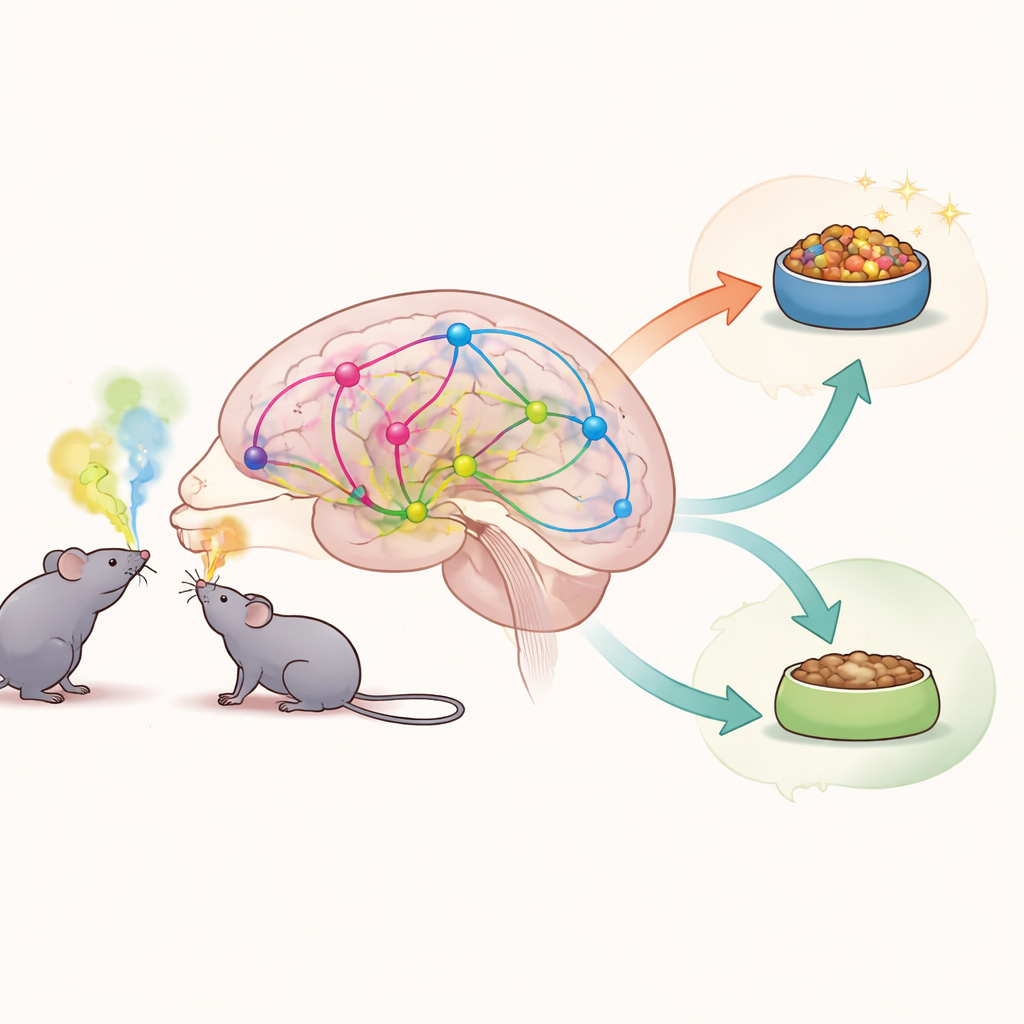
How oxytocin and dopamine work together
Results showed that oxytocin and dopamine are tightly intertwined in social safety learning. When dopamine signaling was intact, oxytocin made mice more likely to choose the demonstrated food in the trust acquisition condition, especially if they had spent only a short time interacting with the demonstrator. In other words, oxytocin seemed to boost the impact of brief, possibly weak social experiences, making the “your food is safe” message stand out. But when dopamine was pharmacologically depleted, this enhancing effect of oxytocin on actual food consumption disappeared, even though mice still spent time near the demonstrated food. This pattern fits with the idea that oxytocin can increase how pleasant or socially meaningful a cue feels, while dopamine is needed to turn that feeling into motivated action.
Clinging to a choice after bad news
In the trust violation condition, oxytocin again played a striking role. When dopamine was available, mice that received oxytocin continued to prefer the demonstrated food even after it had been paired with nausea, suggesting that oxytocin dampened the brain’s “error signal” that would normally drive learning from this bad outcome. Under dopamine depletion alone, mice showed only a weak tendency to hold on to the old preference; and when both oxytocin and dopamine were disrupted, this resistance to updating vanished. These findings support a view in which oxytocin can both heighten the pull of social safety signals and blunt the impact of unexpected negative experiences—but only if dopamine circuits are functioning.
What this means for trust and mental health
Together, the work suggests that oxytocin does not simply make animals more trusting. Instead, it selectively amplifies social cues and, through its interaction with dopamine, can either strengthen learning that something is safe or make animals slower to abandon that belief when things go wrong. Because similar brain chemicals help humans decide whom to believe and when to revise those beliefs, these results may help explain why oxytocin-based treatments show mixed success in conditions like autism, where dopamine systems can be altered. In such cases, boosting oxytocin alone may not restore healthy social learning if the dopamine machinery that translates trust signals into updated behavior is not working properly.
Citation: Budniok, S., Callaerts-Vegh, Z., Bakermans-Kranenburg, M. et al. Interdependency between oxytocin and dopamine in trust-based learning in mice. Sci Rep 16, 7992 (2026). https://doi.org/10.1038/s41598-026-38976-9
Keywords: oxytocin, dopamine, social learning, trust, mouse behavior