Clear Sky Science · en
Next-generation photo-Fenton treatment using MIL-100(Fe) synthesized through a green route for sustainable remediation of pharmaceutical wastewater
Why Cleaning Drug-Tainted Water Matters
Many of us take painkillers like paracetamol (also known as acetaminophen) without a second thought. After our bodies use what they need, the rest is flushed away and eventually reaches rivers, lakes, and even drinking water sources. Because these drug molecules are tough to break down, they can harm aquatic life and may pose long-term risks to human health. This study explores a new, greener way to scrub paracetamol from wastewater using a specially designed porous material and simple light-driven chemistry, aiming for cleaner water without heavy energy or chemical costs.
A New Sponge-Like Cleaner for Tough Pollutants
The researchers focused on a class of materials called metal–organic frameworks, which are like ultra-porous sponges built from metal clusters and organic linkers. They used a well-known iron-based version, MIL-100(Fe), and created a modified form called RTG-MIL-100(Fe). Unlike many advanced materials that require high temperatures and toxic solvents to make, this one was produced at room temperature, without solvent, using a simple grinding step assisted by ordinary potassium iodide (a common salt). The result is a material that is easier and greener to manufacture while still offering many tiny pores and reactive iron sites well suited for cleaning contaminated water. 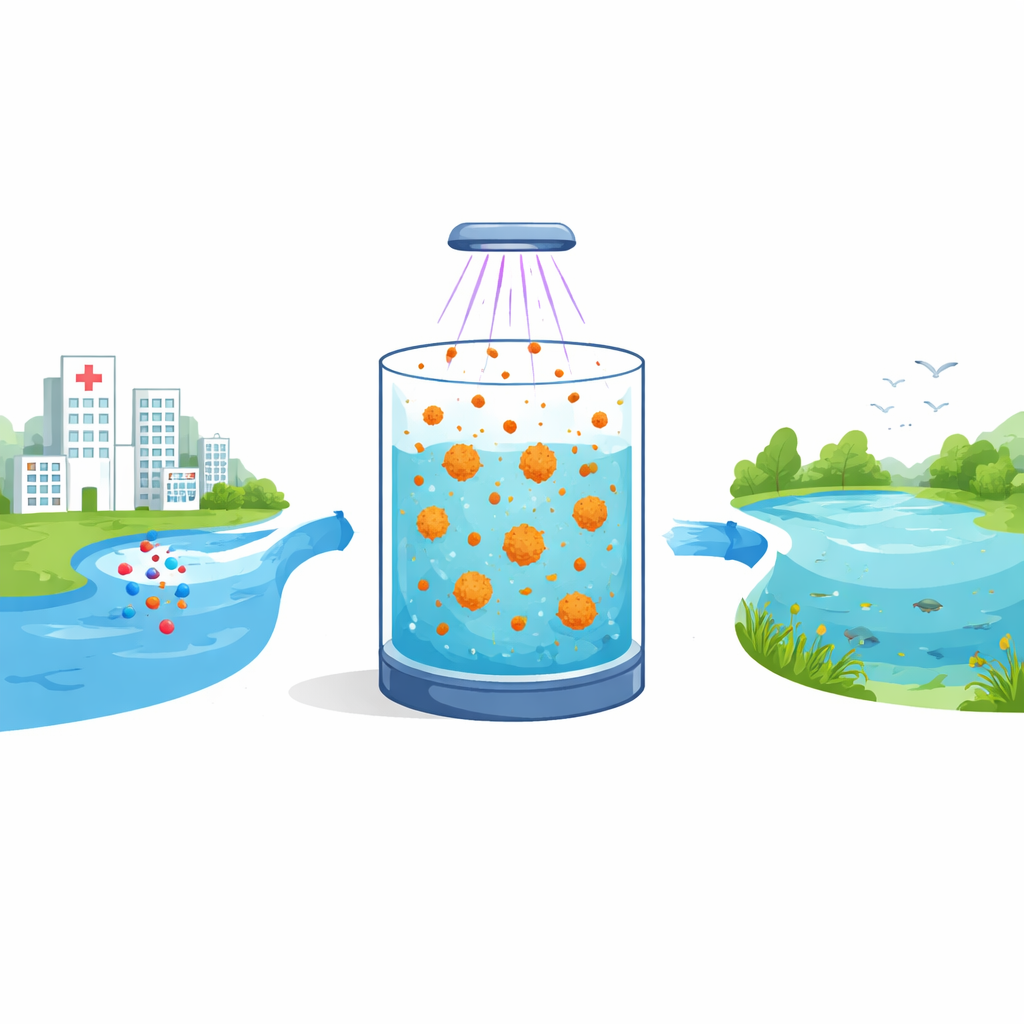
How Light and Peroxide Team Up to Destroy Drug Residues
To remove paracetamol, the team combined their new material with hydrogen peroxide and ultraviolet (UV) light in a process known as a photo-Fenton reaction. In this system, the iron in the material repeatedly switches between two charge states, helping peroxide generate very aggressive short-lived species that tear apart pollutant molecules down to carbon dioxide and water. Potassium iodide plays a crucial supporting role: iodide ions help convert more of the iron into its most active form and create additional reactive intermediates under light, keeping the system cycling rapidly. Tests showed that, under carefully chosen conditions, almost all of the paracetamol in water—about 99.6%—could be removed within two hours at ordinary room temperature.
Finding the Sweet Spot for Real-World Use
Because practical treatment plants must operate reliably, the researchers systematically tuned the working conditions. They found that the process works best at the water’s natural mildly acidic pH of about 5.5, avoiding costly pH adjustment. An optimal balance of catalyst amount and hydrogen peroxide dose was essential: too little and the water stayed polluted, too much and the extra peroxide actually “quenched” the useful reactive species. The system handled realistic paracetamol concentrations well, particularly at low to moderate levels, and followed predictable first-order reaction behavior, meaning the cleaning rate scales in a straightforward way with pollutant concentration. Simple heating brought little advantage, underscoring that the process is already efficient at ambient temperature. 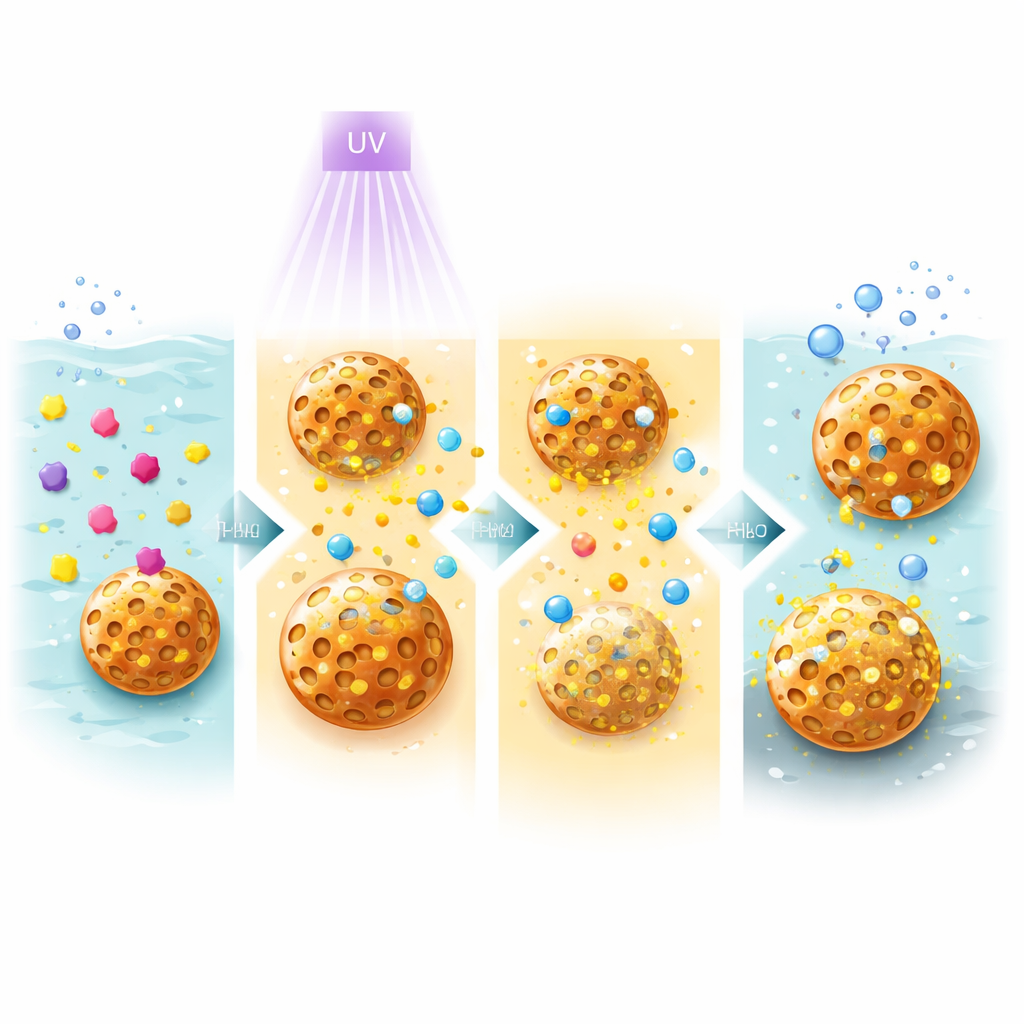
Staying Strong Through Reuse
For any treatment technology to be sustainable, the cleaning material must last. The RTG-MIL-100(Fe) catalyst was used repeatedly over several cycles with only a moderate drop in performance, indicating that its structure remains largely intact. Measurements of dissolved iron in the treated water showed that only a small fraction of the metal leached out, far below many similar systems and within typical industrial discharge limits. Compared with earlier iron–framework catalysts for other drugs, this material stands out by achieving nearly complete removal at lower doses, under gentler conditions, and without elaborate light sources, making it more realistic for scale-up.
What This Means for Safer Water
In simple terms, this work demonstrates a promising way to turn a finely engineered powder, a common disinfectant (hydrogen peroxide), and UV light into a powerful yet relatively gentle water-cleaning tool. By cleverly using iodide to boost the activity of an iron-based porous framework, the researchers created a catalyst that can almost completely destroy paracetamol in wastewater under near-natural conditions. With its green synthesis, strong performance, and good stability, the RTG-MIL-100(Fe) material could help future treatment plants strip persistent medicines from hospital and factory effluents, offering a practical step toward safer, more sustainable water supplies.
Citation: Abou-Elyazed, A.S., Genena, E.E., El-Sayed, I.E.T. et al. Next-generation photo-Fenton treatment using MIL-100(Fe) synthesized through a green route for sustainable remediation of pharmaceutical wastewater. Sci Rep 16, 7837 (2026). https://doi.org/10.1038/s41598-026-38975-w
Keywords: pharmaceutical wastewater, paracetamol removal, photo-Fenton catalyst, metal-organic frameworks, advanced oxidation