Clear Sky Science · en
Leveraging zeta potential as a surface charge metric for trapping and killing of airborne bacteria
Why cleaner air matters now
Hospitals and homes share an invisible threat: germs that float through the air and can cause serious lung infections. As antibiotics lose their power against many of these bacteria, simply treating sick patients is no longer enough—we also need to stop dangerous microbes from ever reaching them. This study explores a new way to clean indoor air by exploiting a basic property that almost all bacteria share: their natural surface charge.
An invisible electrical fingerprint
Every bacterium carries tiny electrical charges on its outer surface. Together, these charges create what scientists call a “zeta potential,” a kind of electrical fingerprint that affects how microbes move, stick to surfaces, and clump together. Crucially, this charge is present whether the bacterium is harmless or highly drug resistant. The researchers reasoned that, if this surface charge is both widespread and fairly stable, it could be used as a universal handle to grab and kill many different airborne pathogens at once.
Turning charge into a trap
To test this idea, the team studied a commercial air-sterilization technology called ZeBox, which is built specifically to exploit bacterial surface charge. Air is drawn through a chamber where a carefully tuned electric field nudges charged microbes toward special collector plates. These plates are coated with a three-dimensional material laced with a germ-killing chemical. When bacteria are pulled out of the air and forced onto this surface, the combined effect of the electric field and the coating damages their outer membrane and inactivates them, turning the zeta potential from a liability for infection into a tool for protection. 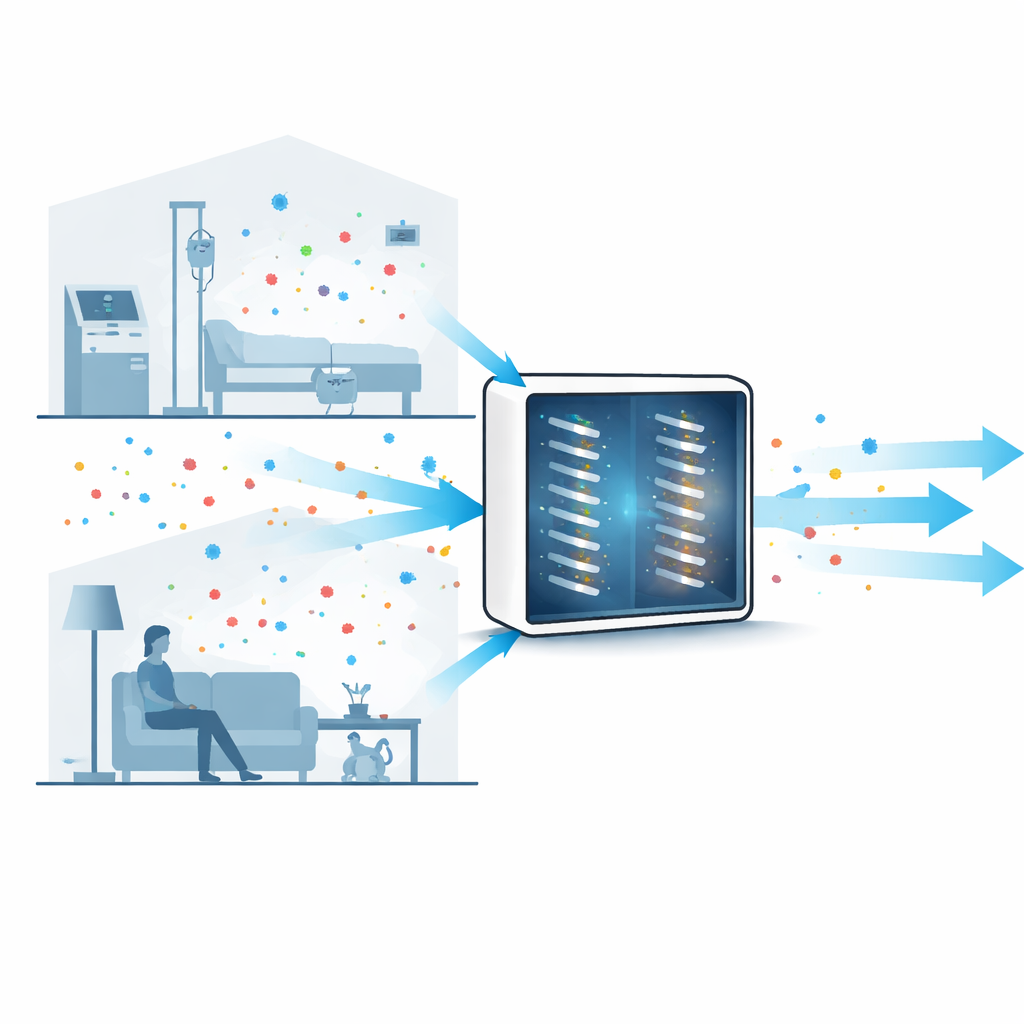
Putting tough hospital germs to the test
The researchers assembled a demanding panel of 27 bacterial strains, including notorious hospital troublemakers such as Escherichia coli, Klebsiella pneumoniae, Pseudomonas aeruginosa, Acinetobacter baumannii, and Staphylococcus aureus. Many of these belonged to the ESKAPE group—organisms famous for their ability to “escape” common antibiotics—and several were multi-drug resistant strains taken directly from patients. The team measured each strain’s zeta potential, its ability to form protective biofilms, and its resistance pattern, then compared these traits to how easily ZeBox could remove and kill them from a stream of airborne droplets in a controlled chamber.
Fast, broad, and largely independent of resistance
The zeta potential values varied across species, but they did not track with how many antibiotics a strain could resist or how strong a biofilm it formed. In other words, drug resistance and slimy protective layers did not meaningfully change the basic surface charge signature. When the bacteria were aerosolized and passed through the miniaturized ZeBox device, most strains showed dramatic reductions: about a hundredfold drop in one minute, a thousandfold in three minutes, and roughly a millionfold (around 99.9999% removal) within five minutes. The stronger the negative surface charge, the more thoroughly the bacteria were removed, revealing a tight link between zeta potential and the device’s killing power. Only strains with specially altered outer membranes that reduce their surface charge—such as certain colistin-resistant bacteria—required longer exposure for comparable cleanup. 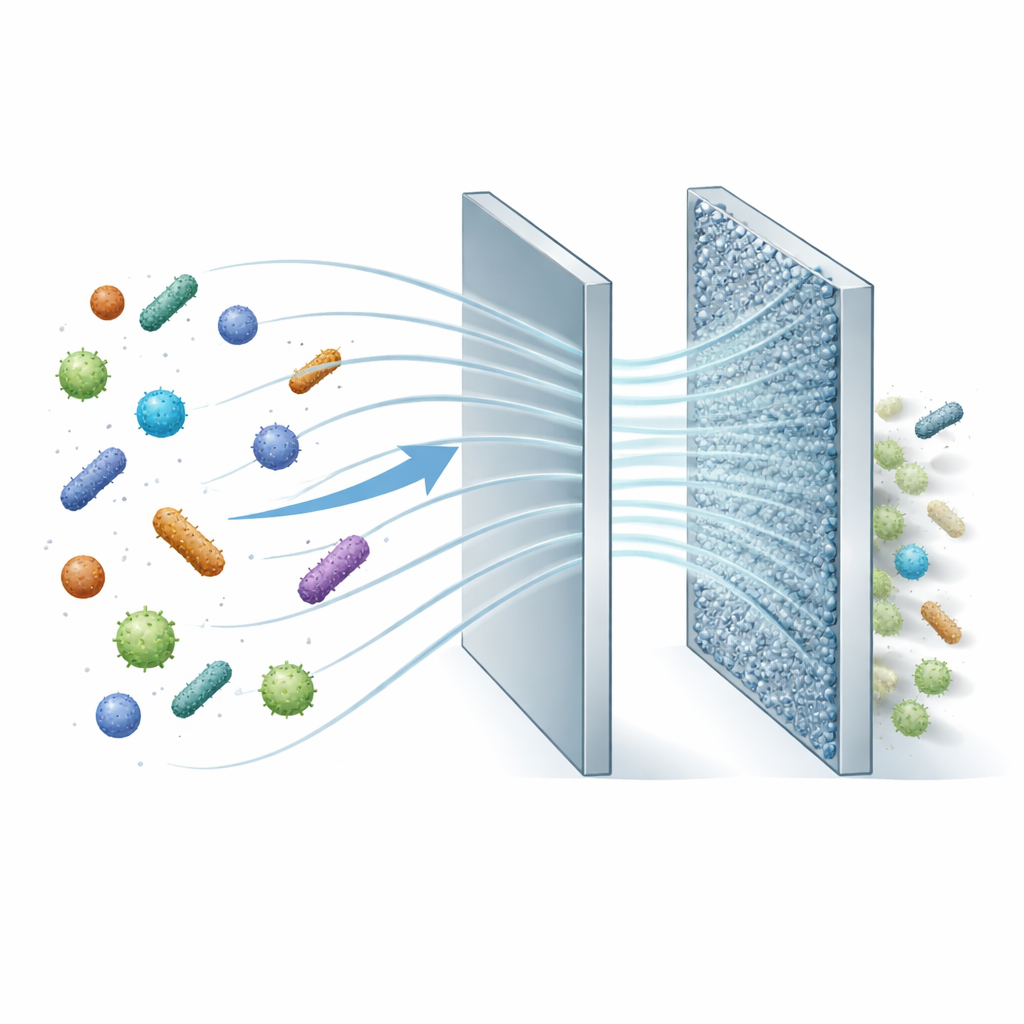
What this could mean for everyday air
This work suggests that bacterial surface charge is a stable, universal feature that can be harnessed to clean the air, even when microbes have evolved to shrug off many drugs. By targeting zeta potential rather than specific genes or toxins, technologies like ZeBox can sidestep the usual arms race between antibiotics and resistance. While the current tests were done under controlled laboratory conditions and some fastidious species remain to be fully evaluated, the results point toward a future in which hospitals—and possibly homes—can continuously strip airborne bacteria from indoor spaces using their own electrical fingerprints, helping to reduce infections in a world where antibiotics alone are no longer enough.
Citation: Peketi, A.S.K., SVL, S., P, K.K. et al. Leveraging zeta potential as a surface charge metric for trapping and killing of airborne bacteria. Sci Rep 16, 8115 (2026). https://doi.org/10.1038/s41598-026-38958-x
Keywords: airborne bacteria, hospital infections, air sterilization, drug-resistant pathogens, zeta potential