Clear Sky Science · en
Youth stress, happiness, and life satisfaction across morbidity status: a gender-stratified analysis
Why teen health and happiness matter together
Parents, teachers, and policymakers often worry about teenagers’ mental health, but less attention is paid to how ongoing health problems of any kind shape how teens feel about their lives. This study uses a large, nationally representative survey of Canadian youth to ask a simple but powerful question: how does living with different kinds of long‑term health conditions relate to teens’ everyday stress, happiness, and satisfaction with life—and does this look different for boys and girls?
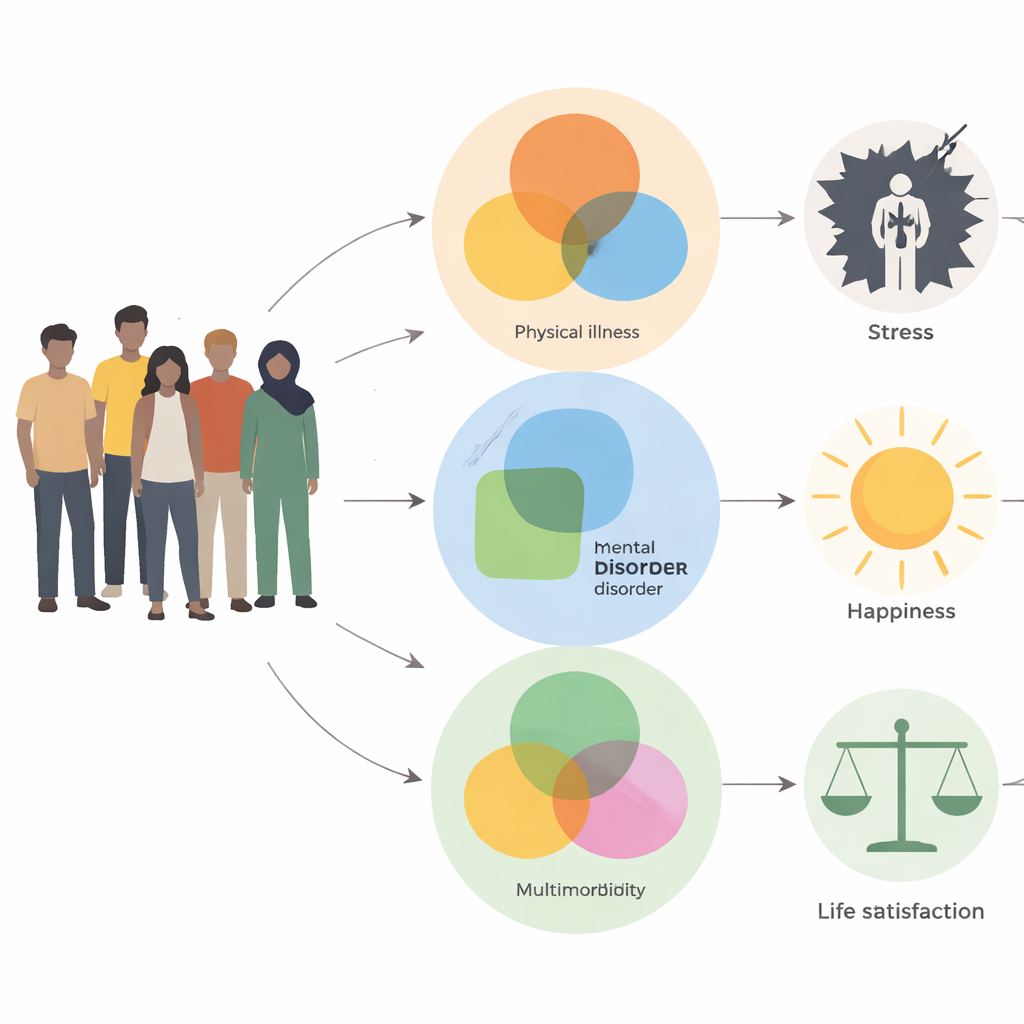
Many teens live with long‑term health conditions
The researchers analyzed data from more than 13,500 Canadian youth aged 12 to 17 who took part in the 2019 Canadian Health Survey on Children and Youth. Parents reported whether their child had any long‑lasting physical illnesses (such as asthma, diabetes, epilepsy, frequent headaches, allergies, or weight problems), mental disorders (such as anxiety, depression, bipolar disorder, or eating disorders), or neurodevelopmental conditions (including learning disabilities, ADHD, autism, or fetal alcohol spectrum disorder). Using this information, the team grouped teens into five categories: no chronic condition, physical illness only, mental disorder only, neurodevelopmental disorder only, and “multimorbidity,” meaning at least one physical illness plus at least one mental or neurodevelopmental condition.
How teens rated their stress and life satisfaction
The teens themselves answered questions about their daily lives. They rated how stressful most days felt, how they usually felt about life (from very happy and engaged to feeling that life is not worthwhile), and how satisfied they were with life overall on a scale from very dissatisfied to very satisfied. These are brief, straightforward questions, but decades of research show that such ratings capture important aspects of well‑being and even predict risks like suicidal thoughts and attempts later on. The researchers also took into account age, family income, parent education, immigration status, and neighborhood size to reduce the chance that these factors alone could explain the patterns they observed.
Teens with mental disorders or multiple conditions struggle most
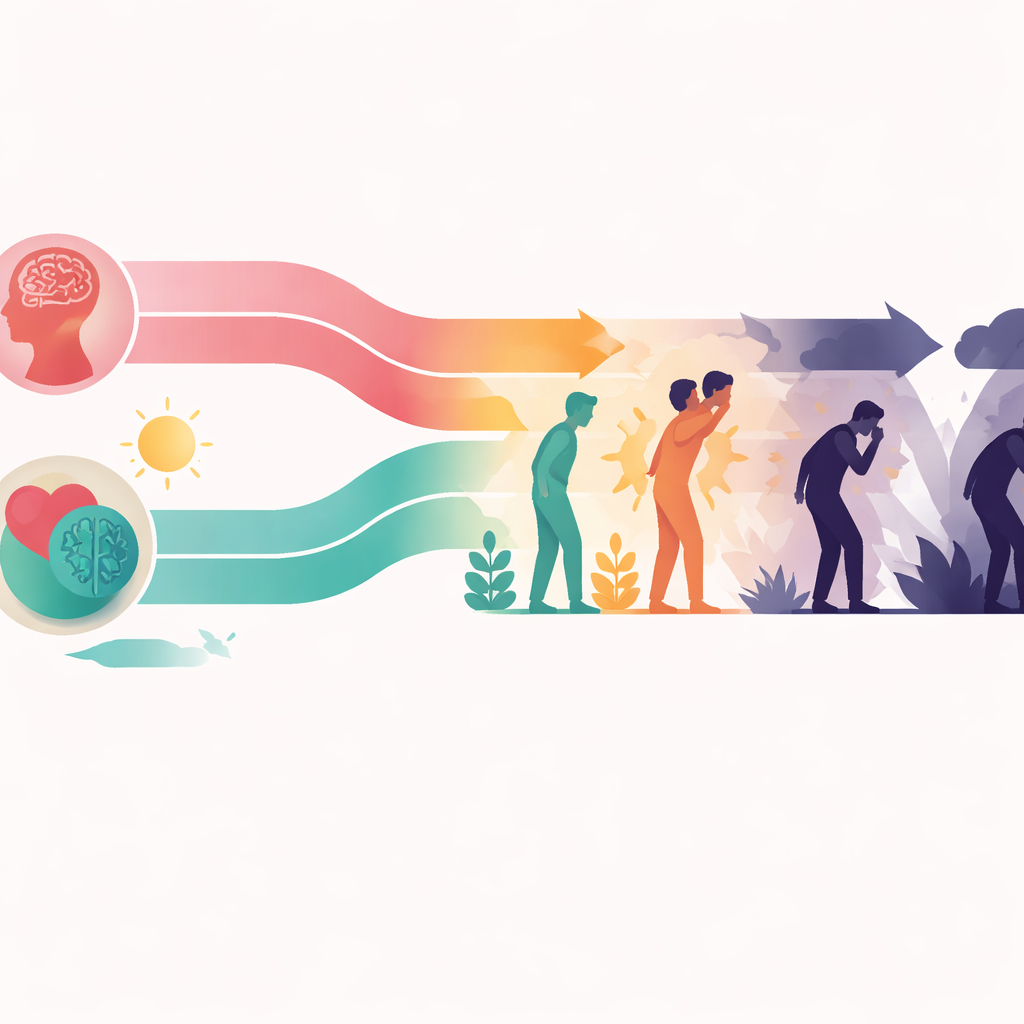
Across the country, most youth reported relatively low stress, felt happy and interested in life, and rated their life satisfaction highly. However, outcomes varied sharply by health status. Teens with no chronic conditions reported the lowest stress and highest happiness and life satisfaction. Youth with only physical illnesses or only neurodevelopmental conditions reported somewhat worse well‑being, but their scores were still closer to those of healthy teens. The most concerning results came from youth with mental disorders alone and those with multimorbidity. These teens were far more likely to say their lives were quite a bit or extremely stressful, to describe themselves as unhappy or feeling that life is not worthwhile, and to give lower scores for life satisfaction. In many analyses, the size of the disadvantage for mental disorder or multimorbidity was clearly larger than for physical or neurodevelopmental conditions alone, suggesting that emotional disorders and combinations of conditions place a particularly heavy burden on day‑to‑day well‑being.
Similar patterns for boys and girls, with some extra burden on girls
The study also explored whether these links between health conditions and well‑being differed for boys and girls. Overall, girls reported more stress and slightly lower happiness and life satisfaction than boys, echoing other research on adolescent well‑being. Yet the basic pattern—poorer psychosocial health among teens with mental disorders or multiple conditions—was seen in both genders. In most cases, the size of the effect was similar for boys and girls, but for a few key comparisons the impact appeared stronger for girls. For example, girls with physical illness only or with multimorbidity were especially likely to report very high stress, and girls with multimorbidity showed a noticeably larger drop in life satisfaction than boys with the same combination of conditions. The authors suggest that differences in body image, social pressures, exposure to depression, and forms of peer conflict may help explain why girls, on average, feel the strain more intensely.
What this means for families and services
To a lay reader, the central message is straightforward: many Canadian teens live with chronic health conditions, and those with mental disorders or multiple overlapping conditions are at particularly high risk of feeling stressed, unhappy, and dissatisfied with life. These emotional burdens are not minor—they may affect treatment adherence, school performance, relationships, and long‑term mental health. The findings highlight the need for health, education, and social services that do not just treat symptoms or diseases in isolation but also support teens’ overall well‑being, with special attention to girls and to youth juggling more than one health challenge. Early, family‑centered, and gender‑sensitive supports could help these young people manage their conditions while still building satisfying, hopeful lives.
Citation: Ferro, M.A., Luther, A., Fearon, D. et al. Youth stress, happiness, and life satisfaction across morbidity status: a gender-stratified analysis. Sci Rep 16, 8991 (2026). https://doi.org/10.1038/s41598-026-38955-0
Keywords: adolescent mental health, chronic illness, life satisfaction, multimorbidity, gender differences