Clear Sky Science · en
Direct preference optimization-based adaptive control for minimizing total harmonic distortion in photovoltaic-powered electric drives
Why cleaner solar power for motors matters
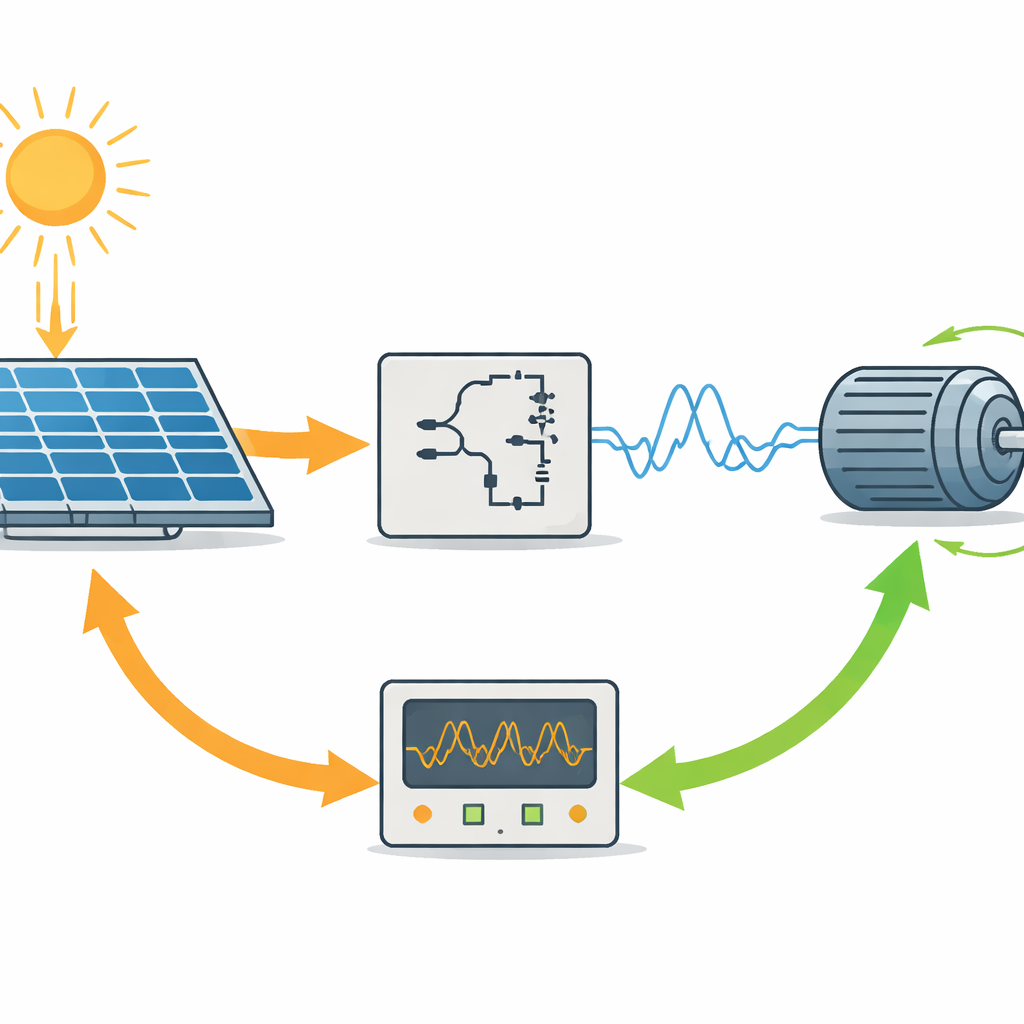
As factories, water pumps, and electric vehicles increasingly tap into solar panels for their energy, a hidden problem rides along the wires: electrical “noise” that can waste power, stress equipment, and shorten the life of motors. This study explores a new way to let the control system of a solar-powered electric drive effectively teach itself how to keep those unwanted ripples in check, using ideas borrowed from modern artificial intelligence.
From bumpy electricity to smooth motion
Solar panels produce direct current that must be converted into the alternating current used by most motors. That job falls to an electronic device called an inverter, which rapidly switches the current on and off. This switching unavoidably introduces distortions into the voltage and current—extra wiggles at higher frequencies—collectively known as harmonic distortion. Too much of it can make motors run hot, vibrate, and waste energy. Traditional control schemes rely on fixed settings or painstaking tuning to keep these harmonics in check, but they tend to struggle when sunlight or motor load changes quickly, as it often does in real-world solar systems.
Letting the controller learn from its own choices
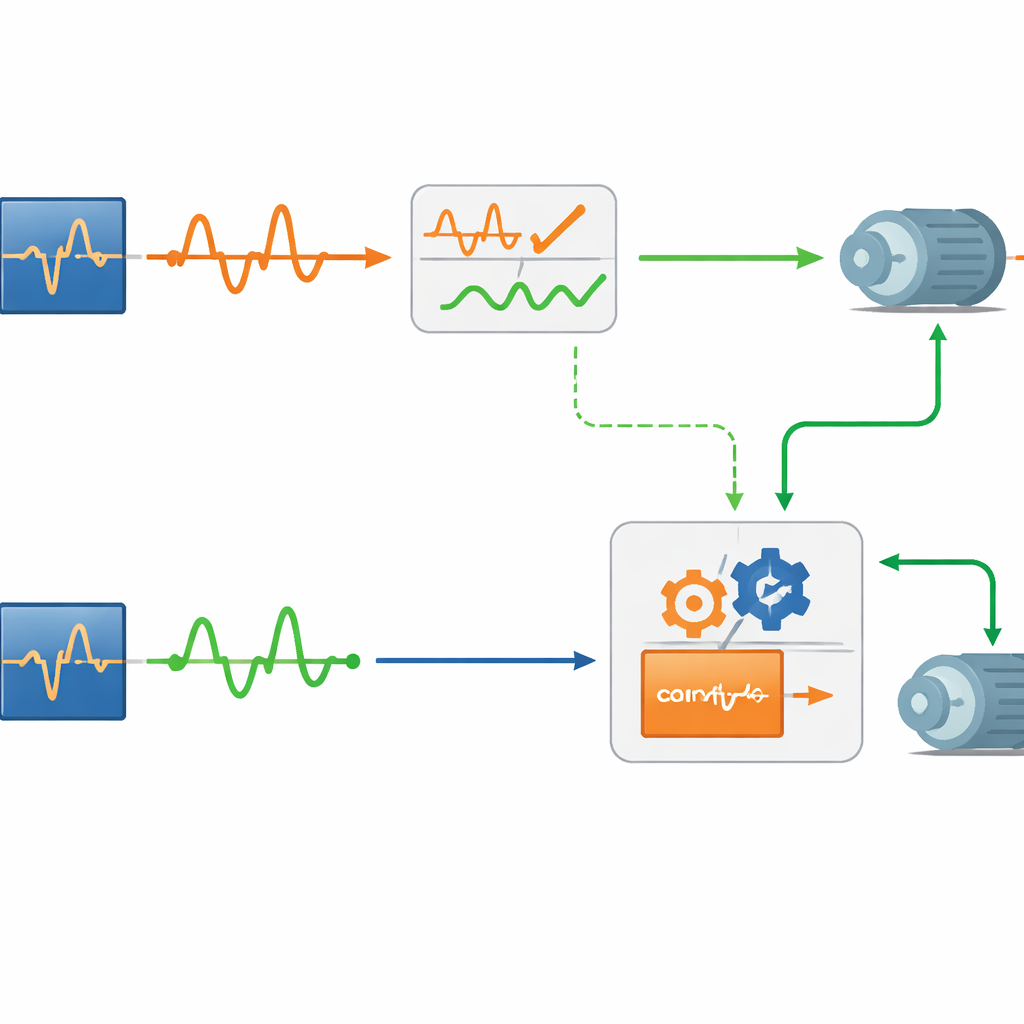
The authors propose a new control framework called Direct Preference Optimization–based Photovoltaic Voltage Control (DPO-PVC). Instead of judging each control setting by an exact numerical “score,” the system simply decides which of two options did better—much like choosing a preferred photo out of a pair. In practice, the controller generates two different ways of driving the inverter, runs them under the same solar and load conditions, and measures the resulting electrical distortion in the motor. Whichever option yields lower distortion is marked as the preferred one. Over many such comparisons, a learning module inside the controller discovers patterns in which kinds of settings consistently lead to smoother, cleaner power.
Testing with real sunlight and demanding drives
To make sure this approach is realistic, the researchers built a detailed digital twin of a solar-powered drive system: a photovoltaic array, a high-frequency inverter, and an electric motor model, all driven by minute-by-minute sunlight and temperature data from the U.S. National Renewable Energy Laboratory’s PVDAQ database. They tested the controller across a wide range of scenarios, including clear skies, fast-moving clouds, sudden shading, and abrupt changes in the motor’s mechanical load. In each case, a built-in harmonic analyzer kept track of how “noisy” the electrical waveforms were, feeding that information back into the preference-learning loop.
Beating standard controllers on all fronts
The DPO-PVC controller was compared with three common alternatives: a standard proportional–integral–derivative (PID) controller, a fuzzy-logic-enhanced PID, and a PID tuned by a genetic algorithm. Across these benchmarks, the new method cut voltage distortion down to about 2.9% and current distortion to about 2.6%, roughly halving or bettering the levels achieved by the others. It also brought the motor up to speed faster, with smaller speed errors and less overshoot, while converting solar power into useful mechanical work with an efficiency of about 94.6%. Importantly, these gains held up when the researchers introduced sensor noise, aging effects in the solar panels and motor, and small imperfections in the inverter hardware. The learning process itself proved stable: after around 50 training cycles, the controller correctly picked the better option in more than 95% of comparisons.
What this means for future solar-powered machines
For non-specialists, the takeaway is that the authors have shown how a solar-powered motor drive can be given a kind of “taste” for clean electricity and let it refine that taste over time. By focusing on simple better-or-worse decisions instead of fragile numerical scores, the controller stays robust when the weather is erratic, hardware drifts with age, or sensors are a bit noisy. The result is smoother motor operation, less wasted energy, and potentially longer equipment life. Approaches like DPO-PVC could help make the next generation of solar-powered pumps, fans, and industrial drives not just greener, but also smarter and more resilient.
Citation: Ragavapriya, R.K., Perumal, M. Direct preference optimization-based adaptive control for minimizing total harmonic distortion in photovoltaic-powered electric drives. Sci Rep 16, 8173 (2026). https://doi.org/10.1038/s41598-026-38950-5
Keywords: photovoltaic electric drives, harmonic distortion, adaptive control, preference learning, solar inverter