Clear Sky Science · en
Design, synthesis, and antitumor evaluation of new functionalized spiroindenopyridotriazinepyrans
Why New Cancer Medicines Matter
Cancer treatments have saved many lives, but they often come with two big problems: tumors can stop responding to drugs, and healthy tissues can be harmed along with cancer cells. This study explores a new family of carefully shaped small molecules designed to hit cancer cells hard while going easier on normal cells. By building these compounds in a smart, efficient way and testing them on aggressive breast and pancreatic cancer cells, the researchers look for early signs of safer and more selective future medicines.
Building Better Drug Shapes
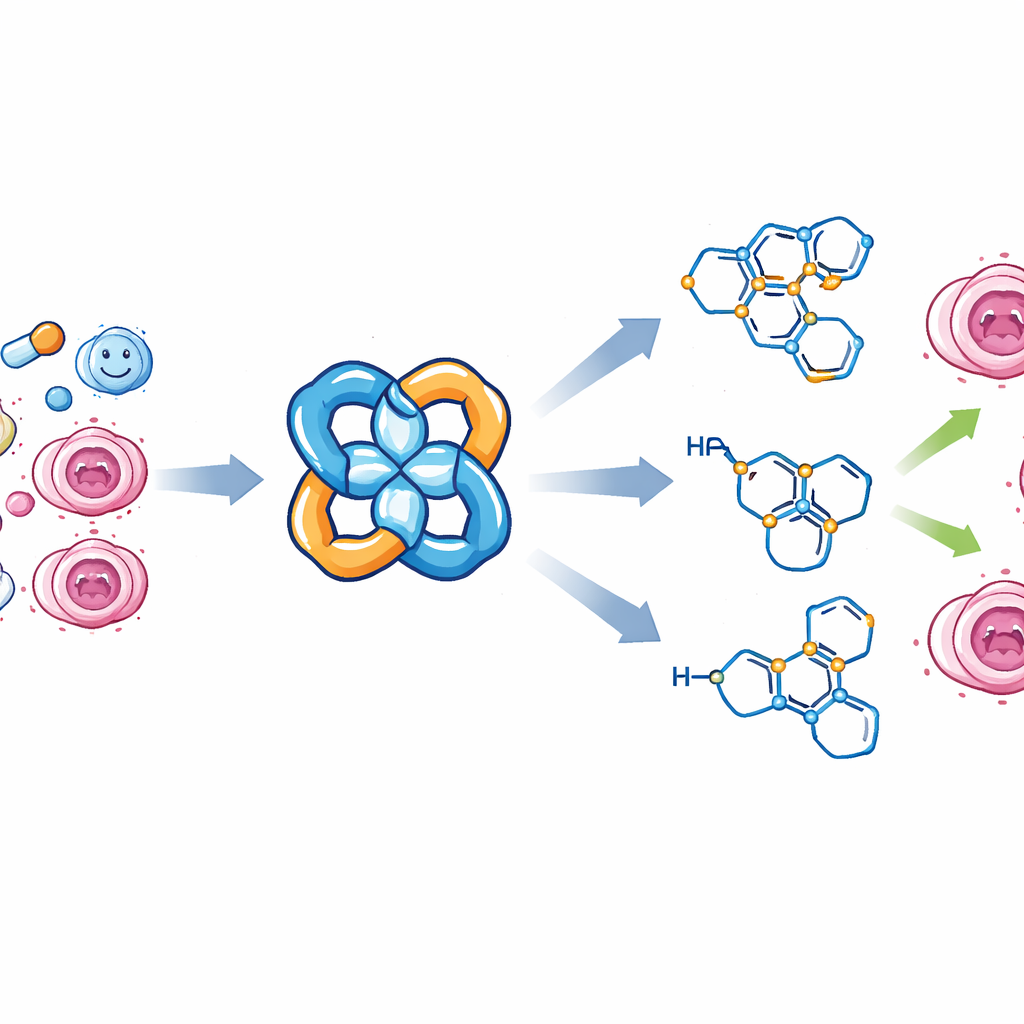
The heart of this work is a special three‑dimensional chemical shape called a spiro scaffold. You can think of it as two ring systems joined at a single pivot point, which makes the whole molecule rigid, compact, and more “object‑like” than a floppy chain. Many modern drugs use this kind of architecture because it helps them fit snugly into the complex pockets of proteins inside our cells. In this project, the team designed new spiro molecules that combine several ring types known from past studies to have anticancer potential, all fused into one tightly organized structure.
A Simple Recipe for Complex Molecules
Chemically, these spiro compounds would normally be difficult and time‑consuming to make. The researchers instead used a one‑pot, multi‑component strategy: three simple building blocks are mixed together and, under the right conditions, they assemble themselves into the intricate target structure. After testing various solvents and temperatures, the best conditions turned out to be ordinary ethanol under gentle heating, without any added catalyst. This approach produced a small library of related molecules in high yield, which they then analyzed in detail using standard techniques to confirm that the intended structures had actually formed.
Putting the New Compounds to the Test
Once the chemistry was established, the focus shifted to biology. The team exposed two hard‑to‑treat cancer cell lines—pancreatic (Panc1) and triple‑negative breast (MDA‑MB‑231)—to the new molecules, alongside normal skin‑derived cells as a safety check. Using a color‑based test that measures how many cells remain alive after treatment, they found that three compounds, labeled 9d, 9e, and especially 9f, stood out with much stronger growth‑inhibiting effects than the others. Remarkably, all of these compounds showed little impact on the normal cells at the same concentrations, hinting at a degree of selectivity that current chemotherapies often lack.
How the Cells Respond and Why Structure Matters
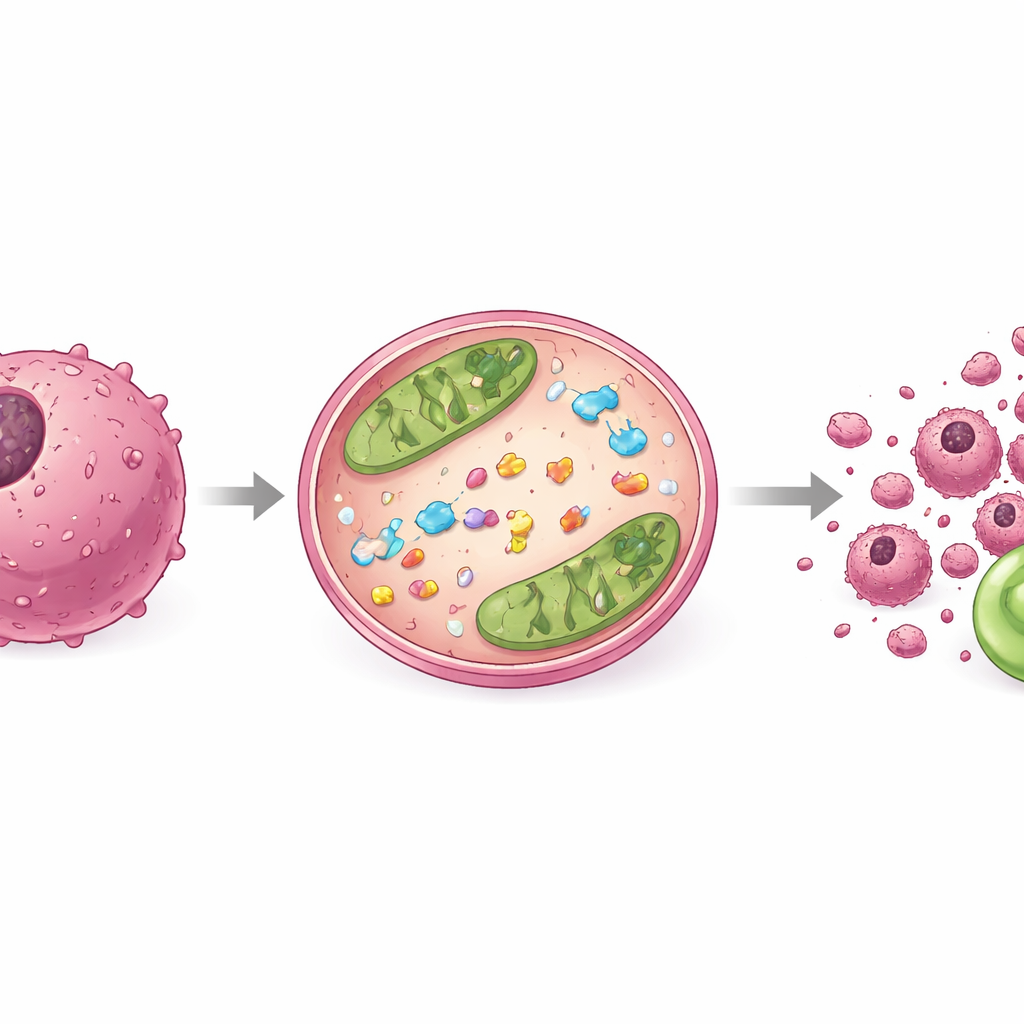
To see what was happening inside the cancer cells, the researchers stained their DNA and examined them under a fluorescence microscope. Cells treated with the most potent compound, 9f, showed shrunken, fragmented nuclei—classic hallmarks of programmed cell death rather than simple poisoning. Further experiments looked at two key guardian proteins that control this cell‑death switch: one that prevents death and one that promotes it. Treatment with 9f shifted this balance toward self‑destruction in the cancer cells, consistent with a targeted push toward apoptosis. By comparing the different members of the compound family, the team also noticed that small changes around the spiro core had big effects on potency, highlighting how both the electronic “pull” and the three‑dimensional placement of substituents can tune anticancer activity.
What This Could Mean for Future Treatments
In plain terms, the study delivers a practical way to make a new class of rigid, three‑dimensional molecules that can strongly slow the growth of certain cancer cells while sparing normal ones in lab tests. One candidate, 9f, was as effective as a standard chemotherapy drug against the tested cell lines and seemed to kill them by activating their built‑in self‑destruct program. These results are early and limited to cells grown in dishes—animal studies, dosing behavior in the body, and long‑term safety remain unknown. Still, the work shows how smart molecular design and efficient synthetic methods can work together to generate promising leads for future cancer medicines.
Citation: Safari, F., Bayat, M., Hosseini, H. et al. Design, synthesis, and antitumor evaluation of new functionalized spiroindenopyridotriazinepyrans. Sci Rep 16, 7917 (2026). https://doi.org/10.1038/s41598-026-38946-1
Keywords: cancer therapy, drug design, spirocyclic molecules, apoptosis, multicomponent synthesis