Clear Sky Science · en
Efficacy and safety findings of the EXTRA study in older adult EGFR-mutant lung cancer patients receiving afatinib as first-line treatment
Why this study matters for older adults
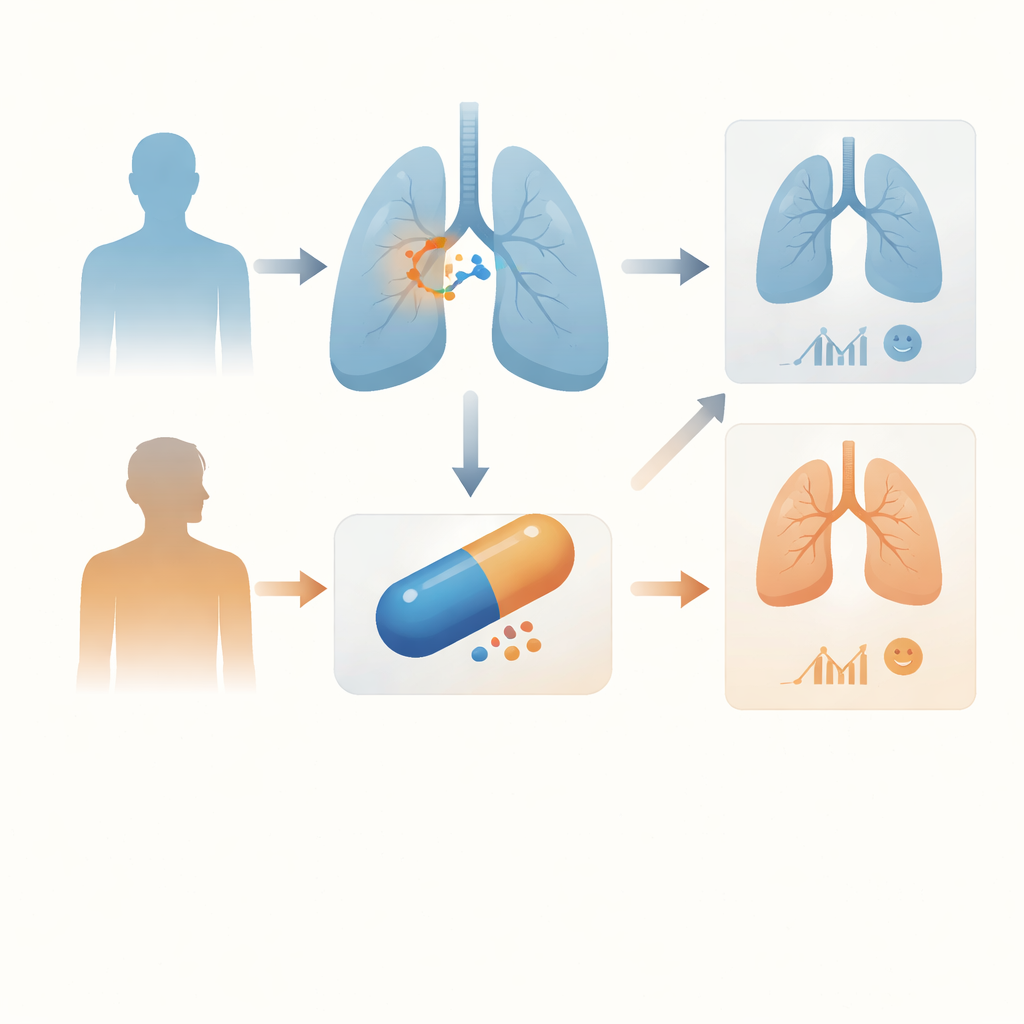
Many people worry that powerful cancer drugs may be too harsh for older adults, even when those medicines could be highly effective. This study looked closely at one such targeted drug, afatinib, used to treat a common type of lung cancer driven by specific changes in a growth signal on tumor cells. The researchers asked a practical question with real-world relevance: can older patients, including those in their late 70s and 80s, use this medicine safely and still gain as much benefit as younger patients if doctors carefully adjust the dose?
The patients and the treatment plan
The research team in Japan followed 103 people with advanced non-small cell lung cancer whose tumors carried changes in the EGFR gene, which make them good candidates for targeted pills instead of, or before, traditional chemotherapy. Everyone in the study received afatinib as their first treatment. The group was divided by age: 71 patients were under 75, while 32 were 75 or older. All started on the same daily dose, but doctors were allowed to lower the dose step by step—down to as little as a pill every other day—if side effects became troublesome. Treatment continued as long as the cancer stayed under control and side effects remained manageable.
How well the drug controlled the cancer
The central finding was that afatinib worked just as well in older adults as it did in younger ones. The cancer stopped growing or shrank for a similar length of time in both groups: on average, a little under two years before the disease clearly progressed again. Survival over the first two years after starting treatment was also comparable, with more than three out of four patients alive in both age groups. Among those who went on to receive a second drug after afatinib stopped working, survival after progression was again similar between younger and older patients. Taken together, these results suggest that age alone did not reduce the benefit of this targeted therapy when used as the first treatment.
Living with treatment: side effects and dose adjustments
Because older bodies often react more strongly to medicines, the study paid special attention to safety and dosing. Nearly all patients in both age groups experienced some side effects, most commonly diarrhea and skin problems, but serious complications were relatively uncommon. In the older group, only six patients had severe side effects, and there were no treatment-related deaths. Doctors lowered the dose more often in older adults, and many ultimately took smaller or less frequent doses. Importantly, cutting back the dose did not seem to shorten the time the drug kept the cancer in check. This supports a flexible, patient-tailored approach: start at a standard dose, then quickly adjust downward to balance effectiveness with comfort and safety.
Afatinib in the bigger treatment picture
Another targeted drug, osimertinib, is widely used as the first choice for this type of lung cancer, but real-world reports suggest it may cause lung inflammation more often in older Japanese patients. That has raised concerns about whether it is always the safest starting option. This study, part of a broader project called the EXTRA study that also collects blood samples for future molecular analysis, adds evidence that afatinib is a solid alternative for older adults when managed carefully. While the trial was not a direct head-to-head comparison and involved a modest number of patients, it showed that older individuals can tolerate afatinib for long periods, especially when doctors are proactive about dose reductions and follow-up care.
What this means for patients and families
For older adults with EGFR-driven lung cancer and their families, the message is cautiously hopeful. This work suggests that an age in the late 70s or 80s does not automatically rule out strong targeted pills like afatinib. With close monitoring and thoughtful lowering of the dose when needed, many older patients can achieve cancer control and survival similar to that of younger people, without an unacceptable burden of side effects. As future studies directly compare different targeted drugs, these findings support a more nuanced, personalized approach: rather than assuming one “best” drug for everyone, doctors can weigh benefits, risks, and dose flexibility to choose the option that fits each patient’s health and life circumstances.
Citation: Morikawa, K., Takata, S., Tanaka, H. et al. Efficacy and safety findings of the EXTRA study in older adult EGFR-mutant lung cancer patients receiving afatinib as first-line treatment. Sci Rep 16, 8316 (2026). https://doi.org/10.1038/s41598-026-38944-3
Keywords: lung cancer, targeted therapy, older adults, EGFR mutation, afatinib