Clear Sky Science · en
High palmitate induces ferroptosis in RIN-m5f cells via miR-3584-5p-mediated suppression of AQP7
Why Fat and Sugar Deeply Matter to the Pancreas
Type 2 diabetes develops when the pancreas can no longer keep up with the body’s demand for insulin. This study looks inside insulin‑producing β‑cells to see how a common dietary fat, palmitic acid, slowly poisons them. By tracing a chain of molecular events, the researchers reveal how excess fat sparks a specific form of cell death and point to new targets that might one day help protect the pancreas in people living with obesity and diabetes.
Too Much Fat and a Vulnerable Cell
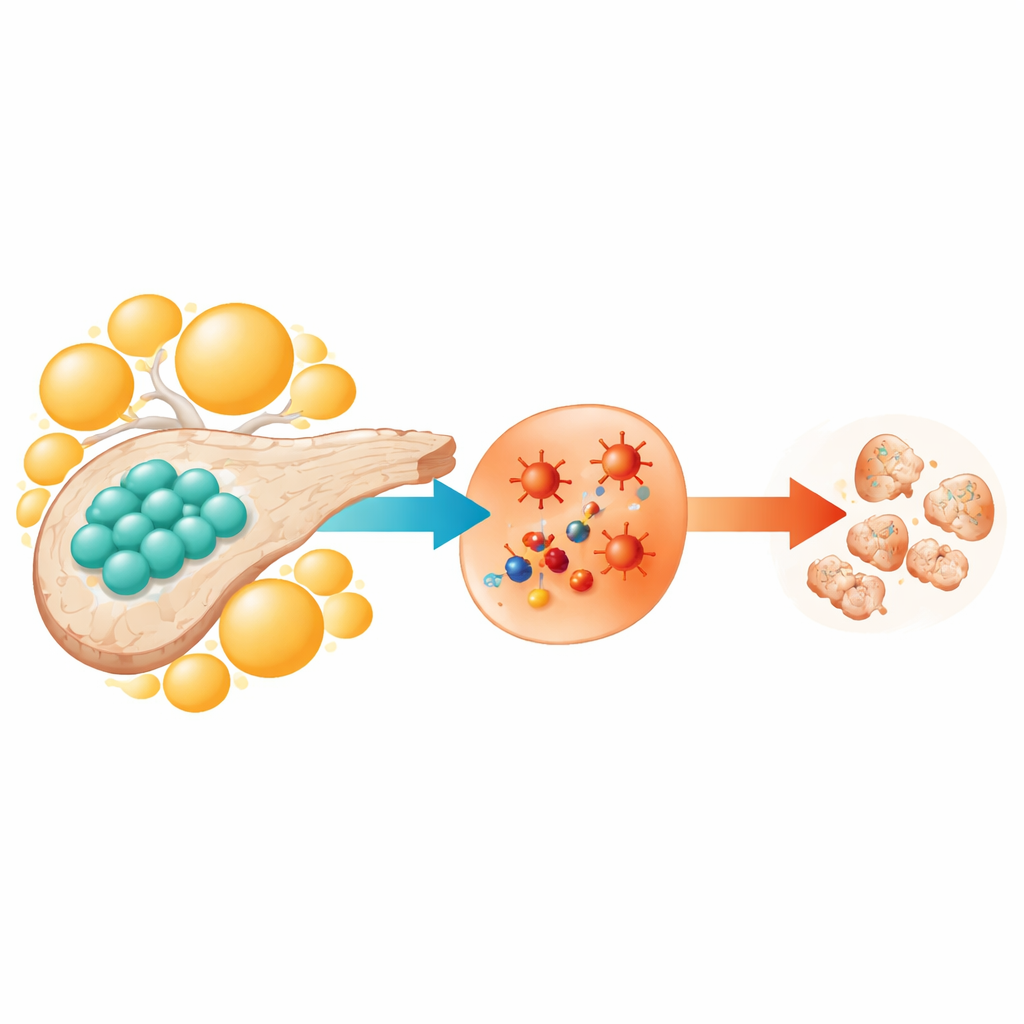
Palmitic acid is a saturated fat that circulates at high levels in people who consume rich, fatty diets. The team used rat β‑cells grown in the lab and bathed them in palmitic acid to mimic a high‑fat environment. Under these conditions, the cells showed clear signs of stress: harmful oxygen‑containing molecules built up, natural antioxidant defenses weakened, and damage to cell membranes increased. At the same time, the cells shifted into a special iron‑dependent mode of death called ferroptosis, marked by rising iron levels and oxidized fats in their membranes. These changes mirror processes thought to occur in the pancreas during the development of type 2 diabetes.
A Gatekeeper Protein That Keeps Damage in Check
The scientists focused on a membrane channel called aquaporin‑7, or AQP7, which is abundant in β‑cells. AQP7 normally helps these cells handle small molecules and has been linked to healthy insulin release. In the high‑fat setting, AQP7 levels dropped sharply. When the researchers deliberately lowered AQP7 with genetic tools, β‑cells accumulated even more reactive oxygen molecules, lost important antioxidant guards, and showed stronger signs of ferroptosis, including more oxidized fats and iron buildup. Boosting AQP7, in contrast, eased oxidative stress and reduced ferroptotic damage, even when palmitic acid was present. This suggests that AQP7 acts as a gatekeeper, helping β‑cells manage oxidative stress and survive in a challenging, lipid‑rich environment.
A Small RNA That Silences Protection
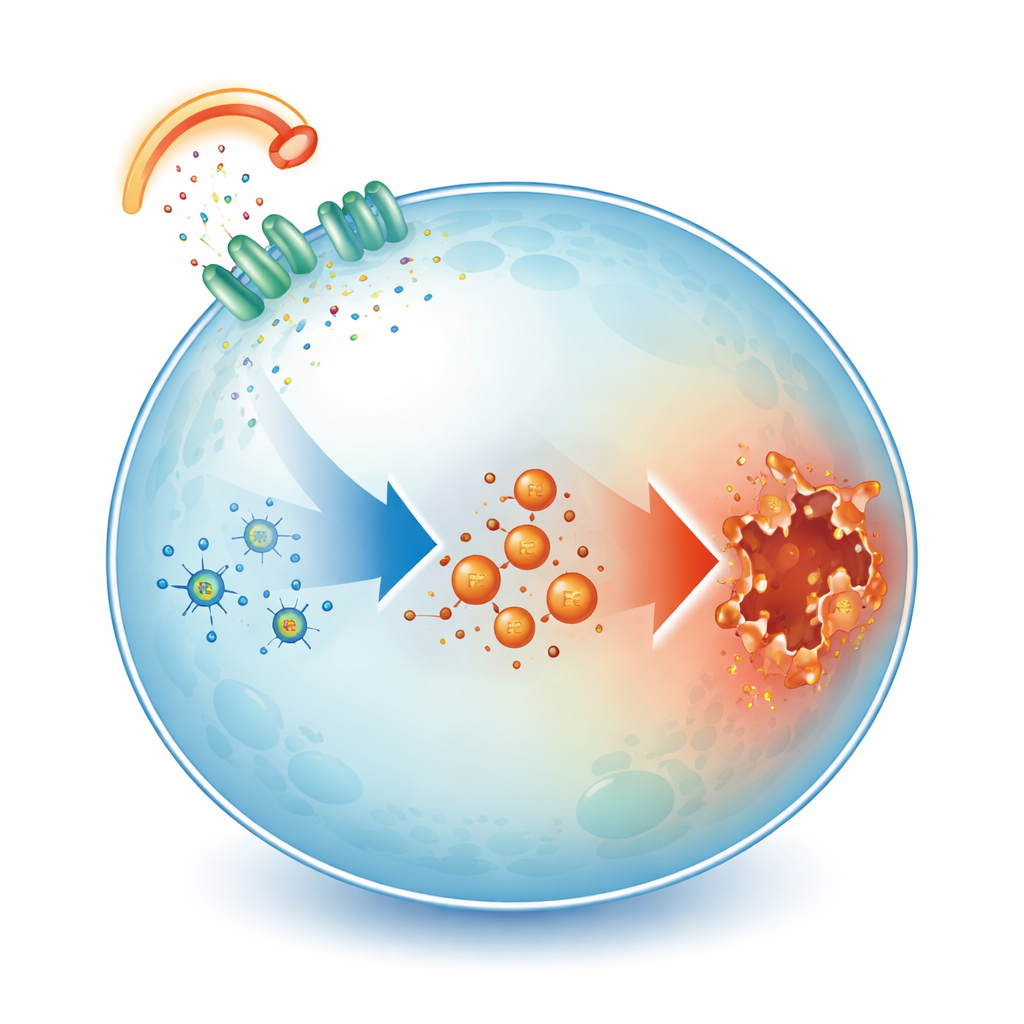
The next question was why AQP7 falls in high‑fat conditions. The team looked at microRNAs, tiny RNA snippets that fine‑tune protein production. Database searches and experiments pointed to one in particular, miR‑3584‑5p, whose levels rose markedly when β‑cells were exposed to palmitic acid. Using a reporter assay, the researchers showed that this microRNA can directly latch onto the message that codes for AQP7, reducing its production. When they added extra miR‑3584‑5p to cells, AQP7 declined, oxidative stress rose, and ferroptosis intensified. Blocking miR‑3584‑5p had the opposite effect: AQP7 rebounded, antioxidant defenses improved, and markers of ferroptosis dropped, even under high‑fat exposure.
Internal Alarm System and Iron‑Driven Damage
The study also highlights the role of the cell’s own alarm system against oxidative damage, centered on a sensor protein called Nrf2 and its partner HO‑1. High fat and AQP7 loss both dampened this protective pathway, while boosting AQP7 or using a chemical that activates Nrf2 helped restore it. Activating Nrf2 reduced iron buildup and lipid damage even when AQP7 was low, underscoring that the miR‑3584‑5p–AQP7 link and the Nrf2–HO‑1 pathway are intertwined parts of the same defense network. Together they decide whether a stressed β‑cell recovers or slides into ferroptosis.
What This Means for Diabetes Prevention
In simple terms, the work outlines a domino effect: excess palmitic acid raises miR‑3584‑5p, which shuts down AQP7, weakens the cell’s antioxidant alarm system, and allows iron‑driven oxidative damage to destroy β‑cells. While this research was done in rat cells in dishes rather than in people, it reveals concrete molecular targets. Therapies that preserve AQP7, dial down miR‑3584‑5p, or strengthen the Nrf2–HO‑1 defense pathway could help shield insulin‑producing cells from the toxic mix of fat and oxidative stress that fuels type 2 diabetes.
Citation: Luan, C., Wang, Z., Li, M. et al. High palmitate induces ferroptosis in RIN-m5f cells via miR-3584-5p-mediated suppression of AQP7. Sci Rep 16, 7997 (2026). https://doi.org/10.1038/s41598-026-38935-4
Keywords: type 2 diabetes, pancreatic beta cells, lipotoxicity, oxidative stress, ferroptosis