Clear Sky Science · en
The mechanism and impact of digital transformation on supply chain resilience in the manufacturing industry
Why digital makeovers matter for factory lifelines
When a pandemic shuts borders, a storm floods a port, or a trade dispute erupts overnight, the hidden webs that move parts and products around the world can quickly start to fray. This article asks a simple but pressing question: can the ongoing digital makeover of manufacturing—think sensors, big data and AI—actually make these supply chains tougher and more reliable, rather than more fragile? Using more than a decade of data from thousands of Chinese listed manufacturers, the authors dig into how digital tools change the financial and competitive environment around firms, and what that means for keeping goods flowing when trouble hits.
How computers and data steady a fragile web
Supply chain “resilience” is the ability not just to survive shocks, but to bounce back quickly, adapt to new conditions and even emerge stronger over time. Traditional approaches have focused on reorganizing warehouses, logistics routes and contracts. The authors argue that a new, deeper layer is emerging as companies wire up factories with the Internet of Things, digital twins and even industrial versions of the metaverse. These systems create real-time virtual replicas of physical production networks. Managers can watch flows of materials and orders as they happen, simulate disasters in a digital sandbox and rehearse recovery plans before anything goes wrong in the real world. Human‑centric artificial intelligence—where algorithms support, rather than replace, frontline workers—further boosts this resilience by combining machine precision with human judgment in fast‑changing situations.
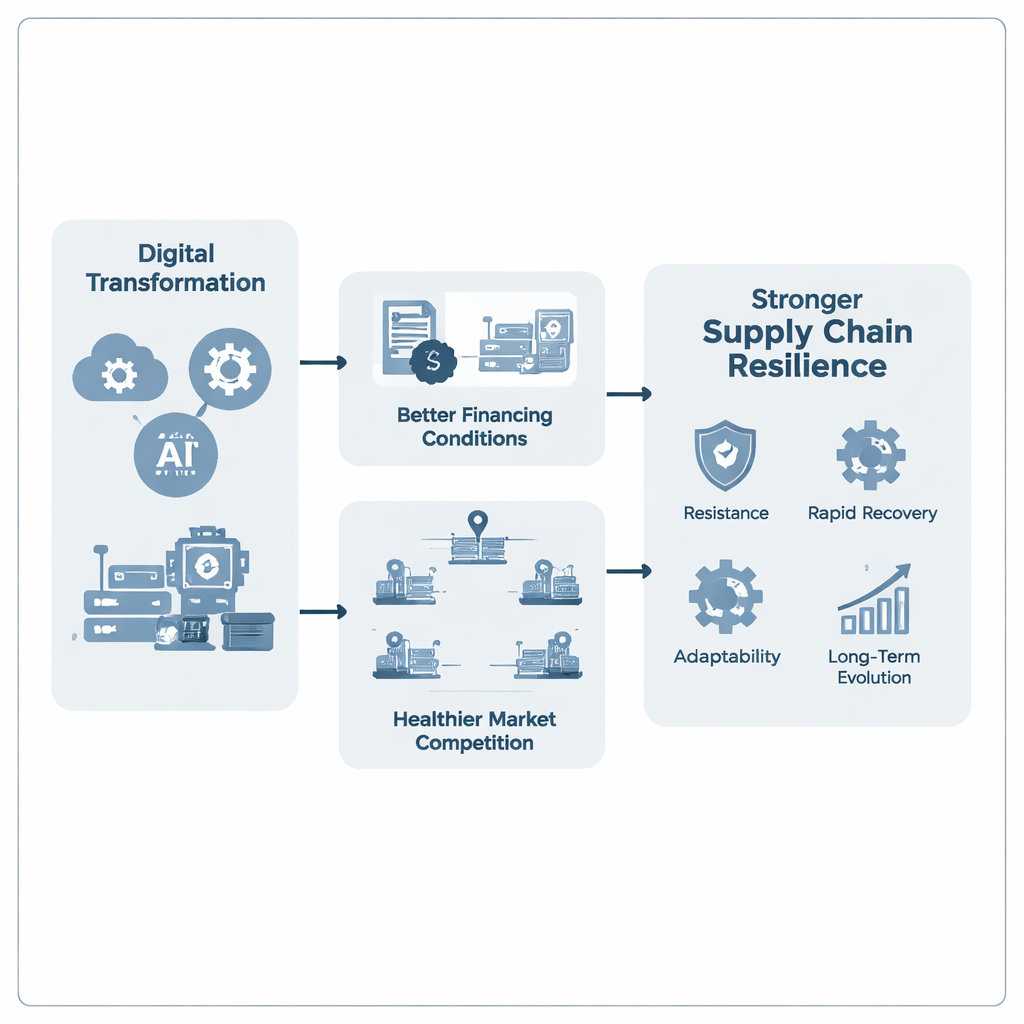
Following thousands of factories over time
To move beyond theory, the study tracks 28,664 yearly observations from Chinese A‑share listed manufacturing companies between 2011 and 2024. It builds a detailed score for each firm’s supply chain resilience, blending measures of adaptability, financial strength, recovery speed, human skills and government support. It also constructs a rich index of how far each company has gone in its digital transformation—from leadership vision and spending on digital tools to concrete applications and measurable digital outcomes. Statistical models then test how changes in digitalization relate to changes in resilience, while holding constant firm size, debt, profitability, ownership concentration and other factors, and by running multiple checks to weed out misleading correlations.
Money, rivals and the hidden wiring of resilience
The results show a clear pattern. First, firms that are more digital consistently score higher on supply chain resilience, even after strict tests that shorten the time window, adjust for regional and industry quirks and use historical communication infrastructure as an external instrument. But the most intriguing finding lies in how this happens. Digital tools make a company’s operations more transparent and traceable, which helps banks and investors better judge risk. That tends to lower borrowing costs and ease financing bottlenecks, giving firms the cash cushion they need to build inventory buffers, redesign logistics and invest in flexible production. At the same time, digital leaders use data and automation to differentiate their products and services and to coordinate more closely with partners. This reduces cut‑throat price wars, shifts competition away from pure cost‑cutting and creates a more stable market space in which long‑term resilience investments become worthwhile.
Different industries, different payoffs
The benefits of going digital are not spread evenly. High‑tech manufacturers, cleaner industries and firms in fiercely competitive markets see the strongest resilience gains from digital transformation. These companies typically have better technical foundations, more flexible organizations and stronger incentives to stand out from rivals, so new digital tools quickly improve coordination and shock‑absorption across their supply chains. In contrast, traditional sectors, heavily polluting industries and markets with little competition show weaker or no measurable effects. There, companies may be preoccupied with meeting strict environmental rules or may lack the pressure and capabilities needed to turn digital investments into real‑world resilience.
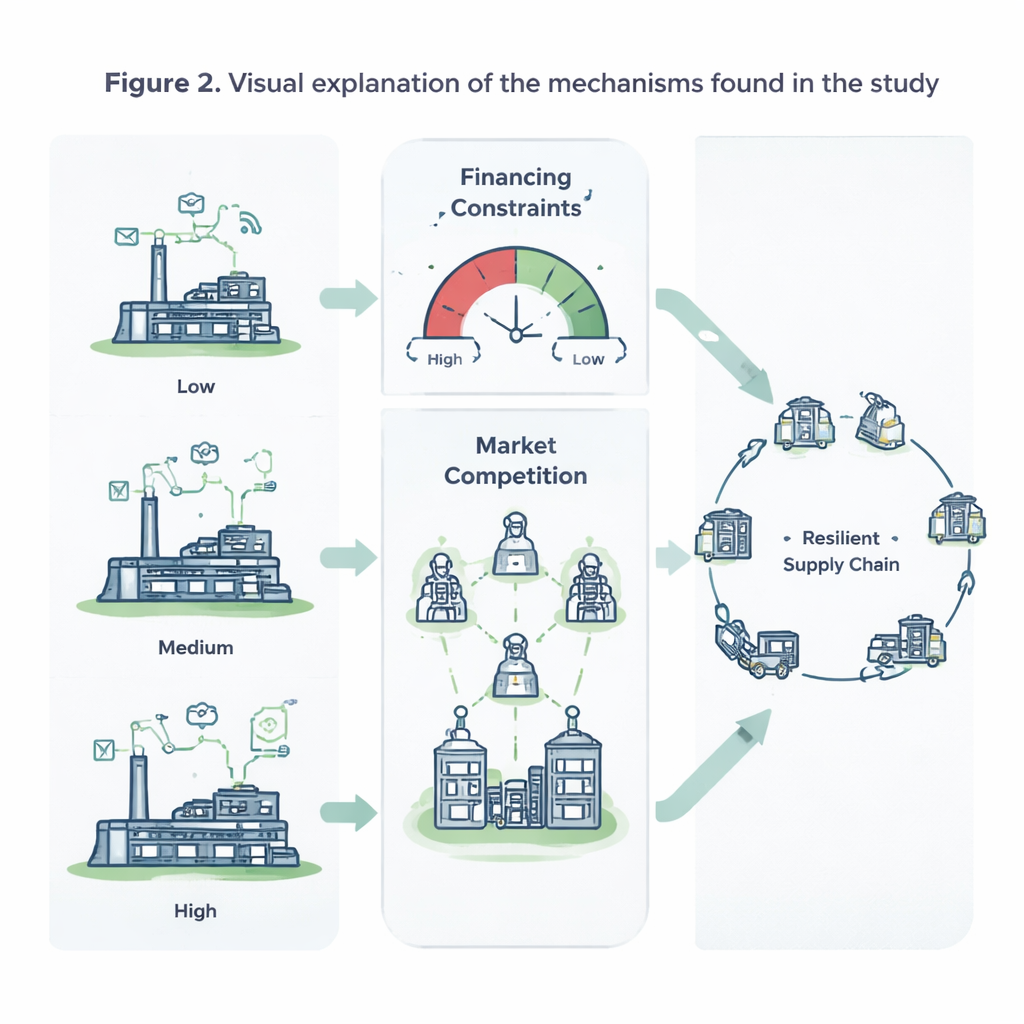
What this means for everyday stability
For non‑specialists, the takeaway is straightforward: digital transformation is not just a buzzword about smarter gadgets in factories. Used well, it quietly strengthens the financial health, partnerships and flexibility that keep products on shelves when the world turns unpredictable. Policies that help manufacturers adopt digital tools, access affordable financing and compete on quality and innovation—rather than on race‑to‑the‑bottom pricing—can make the entire system that delivers everyday goods more reliable. In plain terms, better data and smarter software, combined with skilled people, give supply chains thicker shock absorbers and faster recovery springs.
Citation: Li, J., Song, H. & Ma, Y. The mechanism and impact of digital transformation on supply chain resilience in the manufacturing industry. Sci Rep 16, 7635 (2026). https://doi.org/10.1038/s41598-026-38930-9
Keywords: digital transformation, manufacturing, supply chain resilience, artificial intelligence, industrial policy