Clear Sky Science · en
Modulation of fat mobilization and adipose tissue gene expression in Holstein cows supplemented with omega-3 fatty acids and N-acetyl-tryptophan during the transition period
Why this matters for dairy cows and farmers
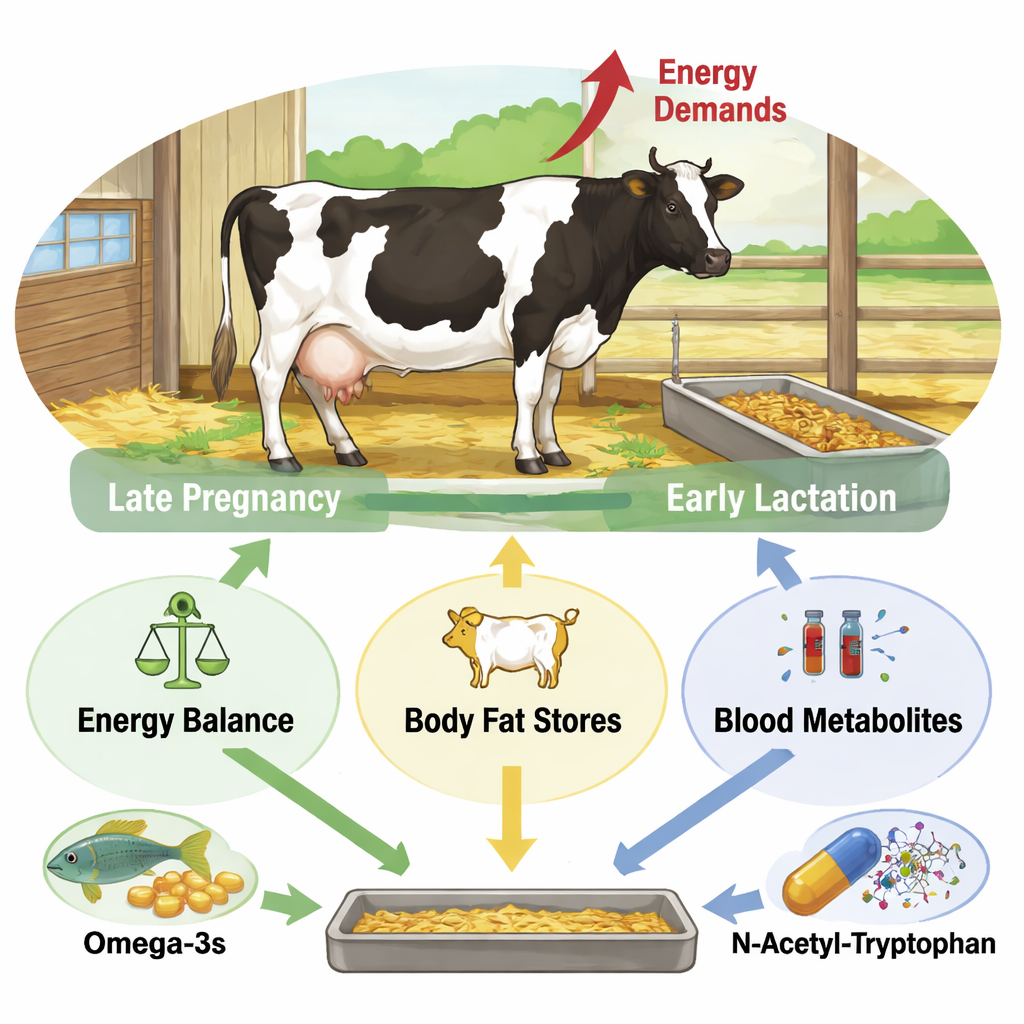
The weeks just before and after a cow gives birth are a financial and welfare tipping point on a dairy farm. During this time, cows need far more energy for calving and milk production, but they often eat less. Their bodies pull heavily from body fat, which can trigger metabolic diseases like ketosis and fatty liver, reduce milk yield, and harm fertility. This study asks a practical question: can adding two specific nutrients—omega-3 fats and a form of the amino acid tryptophan—help cows glide through this transition more smoothly by easing fat mobilization and stabilizing metabolism?
The fragile weeks around calving
In the three weeks before to three weeks after calving, most high-producing Holstein cows fall into what scientists call a "negative energy balance": they burn more energy than they take in. To cope, they draw on body fat, leaking fat-related substances—non-esterified fatty acids (NEFA) and ketone bodies like β-hydroxybutyrate (BHBA)—into the bloodstream. In moderation this is normal, but chronic overshoot overloads the liver, weakens immunity, and raises the risk of costly disorders and poor reproduction. Researchers are therefore searching for nutritional tweaks that can keep cows milking well without forcing them to strip off excessive body reserves.
Designing a feeding test on commercial cows
The team studied 48 multiparous Holstein cows on a commercial farm from three weeks before calving to six weeks after. All cows received the same balanced total mixed ration. On top of that, they were randomly assigned to one of four groups: no supplement (control), omega-3 fatty acids alone, N-acetyl-tryptophan (a stable tryptophan derivative) alone, or both together. Supplements were rumen-protected so they would pass the cow’s forestomach and act where needed. The researchers monitored body weight and body condition score, measured blood levels of NEFA, BHBA, insulin, and glucose at several key time points, and took small fat biopsies after calving to see which genes related to fat storage and fat breakdown were turned up or down.
Keeping weight on and harmful fats down
Cows that received both omega-3s and N-acetyl-tryptophan lost the least body weight and body condition across the transition period. Their blood told a matching story: these animals had significantly lower NEFA and BHBA, which signals less aggressive fat mobilization and a lower risk of fatty liver and ketosis. At the same time, they showed higher insulin and a tendency toward higher blood sugar, suggesting their bodies handled nutrients more effectively. Interestingly, feed intake was similar in all groups, so the benefits were not from eating more, but from how their metabolism processed and stored energy.
What was happening inside the fat tissue
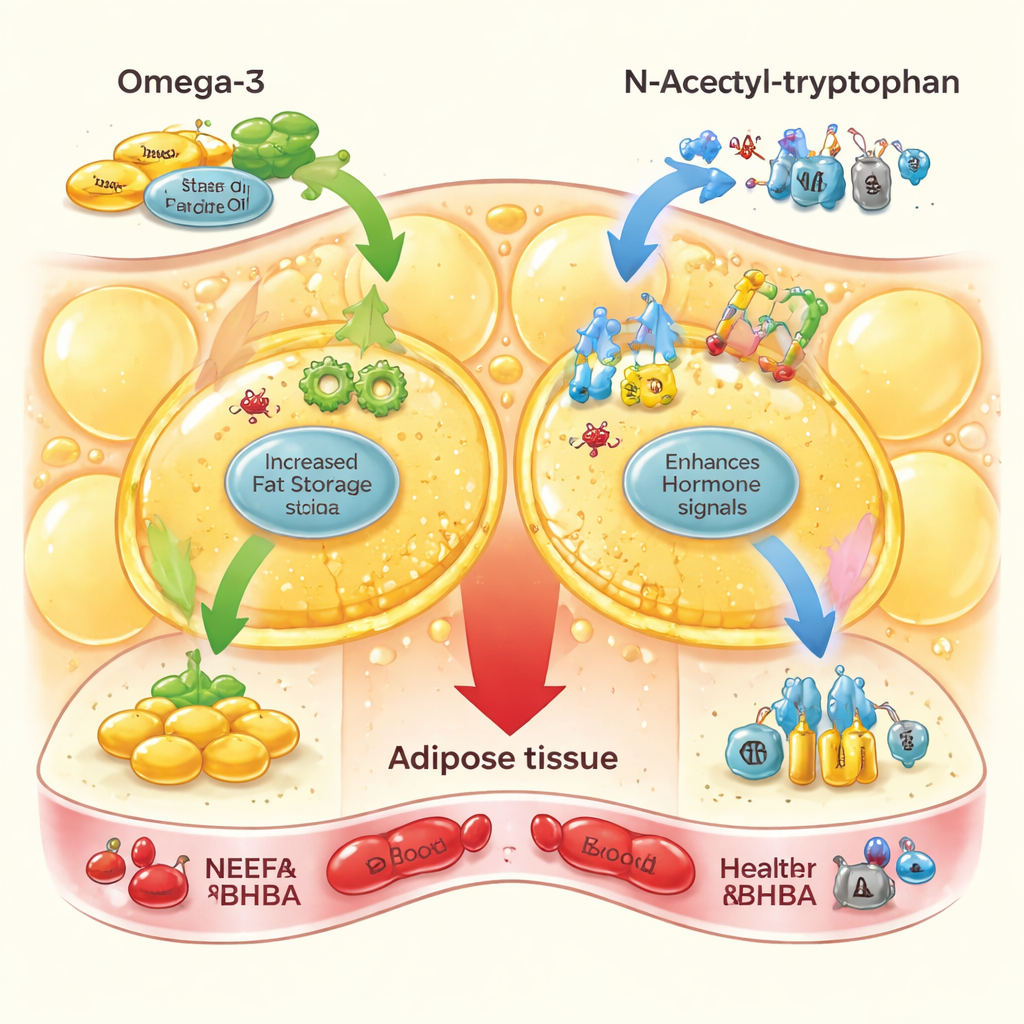
Analyses of the cows’ subcutaneous fat revealed how the supplements worked under the surface. Omega-3 feeding strongly boosted activity of PPARγ and lipoprotein lipase, genes that encourage fat uptake and safe storage in fat cells. N-acetyl-tryptophan, in turn, markedly increased the abundance of adiponectin receptors, which help fat tissue respond to hormones that promote sugar use and limit fat release. Together, the two supplements lowered the expression of hormone-sensitive lipase, a key enzyme in fat breakdown, without affecting another basal fat-breakdown enzyme, suggesting a selective slowing of hormonally driven fat mobilization. Both nutrients also dampened a gene involved in burning fatty acids in peroxisomes, pointing to a shift from frantic fat burning toward more controlled storage and use.
Connecting the dots between blood and genes
Using correlation maps, the researchers linked changes in blood markers to shifts in gene activity in fat. Higher insulin and glucose were positively associated with PPARγ and the adiponectin receptors, reinforcing the idea that these genes help maintain a healthier, more insulin-responsive state in early lactation. In contrast, higher NEFA and BHBA clustered with genes tied to fat breakdown and stress signaling, underscoring how unchecked fat mobilization connects to metabolic strain. In cows receiving both supplements, this network tilted toward pathways that favored fat storage and hormone sensitivity rather than uncontrolled fat release.
Practical takeaways for herd health
For non-specialists, the conclusion is straightforward: carefully targeted nutrition can help dairy cows weather the high-stress transition period with less damage to their bodies. Adding rumen-protected omega-3 fats and N-acetyl-tryptophan reshaped fat tissue so that it stored energy more safely, released less harmful fat into the blood, and worked in closer harmony with insulin and other hormones. The cows kept more body condition, showed fewer biochemical warning signs of metabolic disease, and likely set the stage for better health and fertility. While more work is needed to refine doses and costs, this study points to a promising way to use “smart” nutrients to protect both cows and farm profitability during one of the most vulnerable phases of the lactation cycle.
Citation: Ghorbanalinia, M., Dirandeh, E., Ansari-Pirsaraei, Z. et al. Modulation of fat mobilization and adipose tissue gene expression in Holstein cows supplemented with omega-3 fatty acids and N-acetyl-tryptophan during the transition period. Sci Rep 16, 7785 (2026). https://doi.org/10.1038/s41598-026-38923-8
Keywords: dairy cow transition period, omega-3 supplementation, tryptophan N-acetyl-tryptophan, fat metabolism in cows, ketosis prevention