Clear Sky Science · en
A novel C/EBPα–miR-335-5p–PRKAA2 regulatory axis drives hepatic lipid accumulation in MASLD
Why Fatty Liver Disease Matters
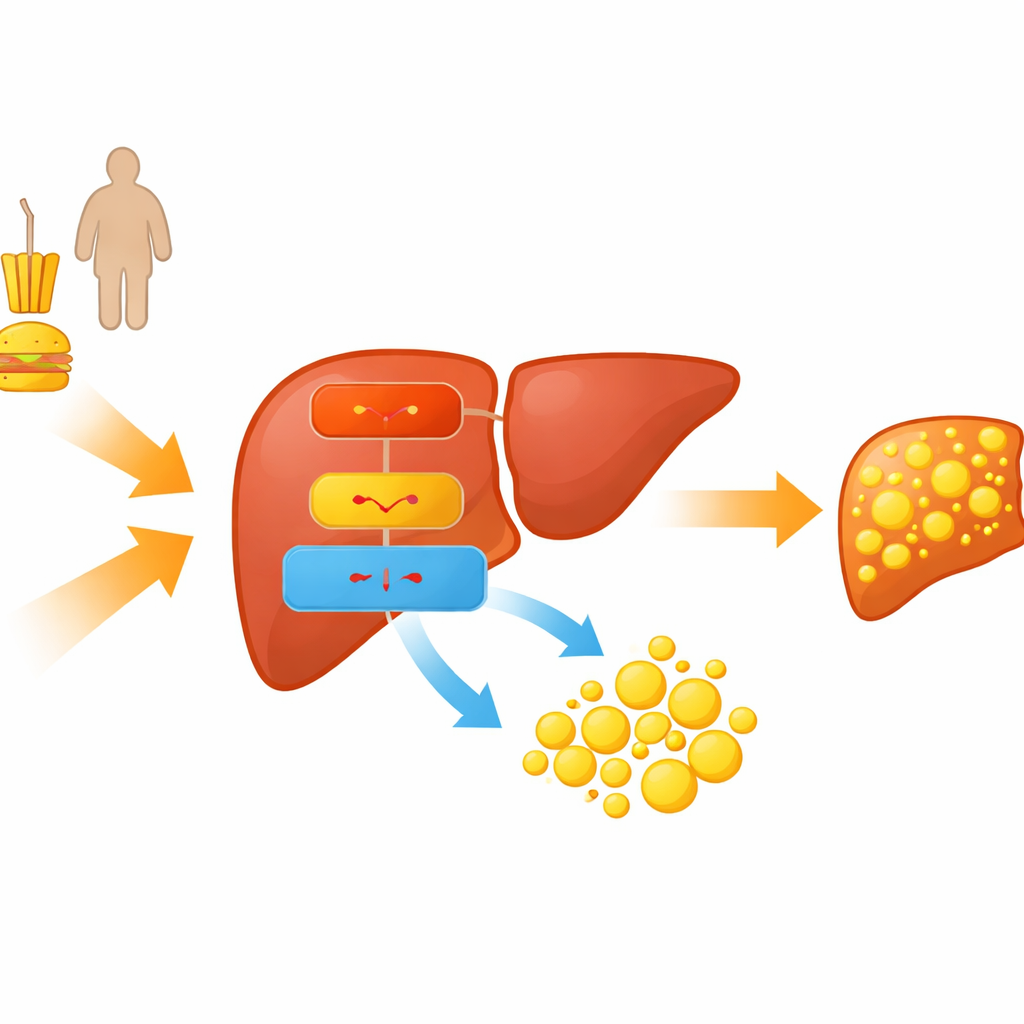
Many people who never drink much alcohol still develop a "fatty liver," a condition now called metabolic dysfunction–associated steatotic liver disease (MASLD). It is closely tied to obesity and type 2 diabetes and can quietly progress to liver scarring, cirrhosis, and even liver cancer. This study asks a simple but crucial question: what is happening inside liver cells that makes them store so much fat, and can we find a molecular switch that might be turned off to protect the liver?
A Hidden Chain Reaction in Liver Cells
The researchers focused on a molecular chain reaction that links diet and metabolism to fat buildup in the liver. They studied mice fed a high‑fat diet and cultured liver cells bathed in fatty acids to mimic MASLD. In these models, the animals gained weight, their blood fats rose, and their livers filled with oily droplets, reproducing key features of human fatty liver. Within these fatty livers, the team noticed that a particular genetic regulator, a transcription factor called C/EBPα, and a small RNA molecule, miR‑335‑5p, were both ramped up, while a protective enzyme subunit named PRKAA2, part of the well‑known energy sensor AMPK, was dialed down.
How a Small RNA Tips the Balance Toward Fat
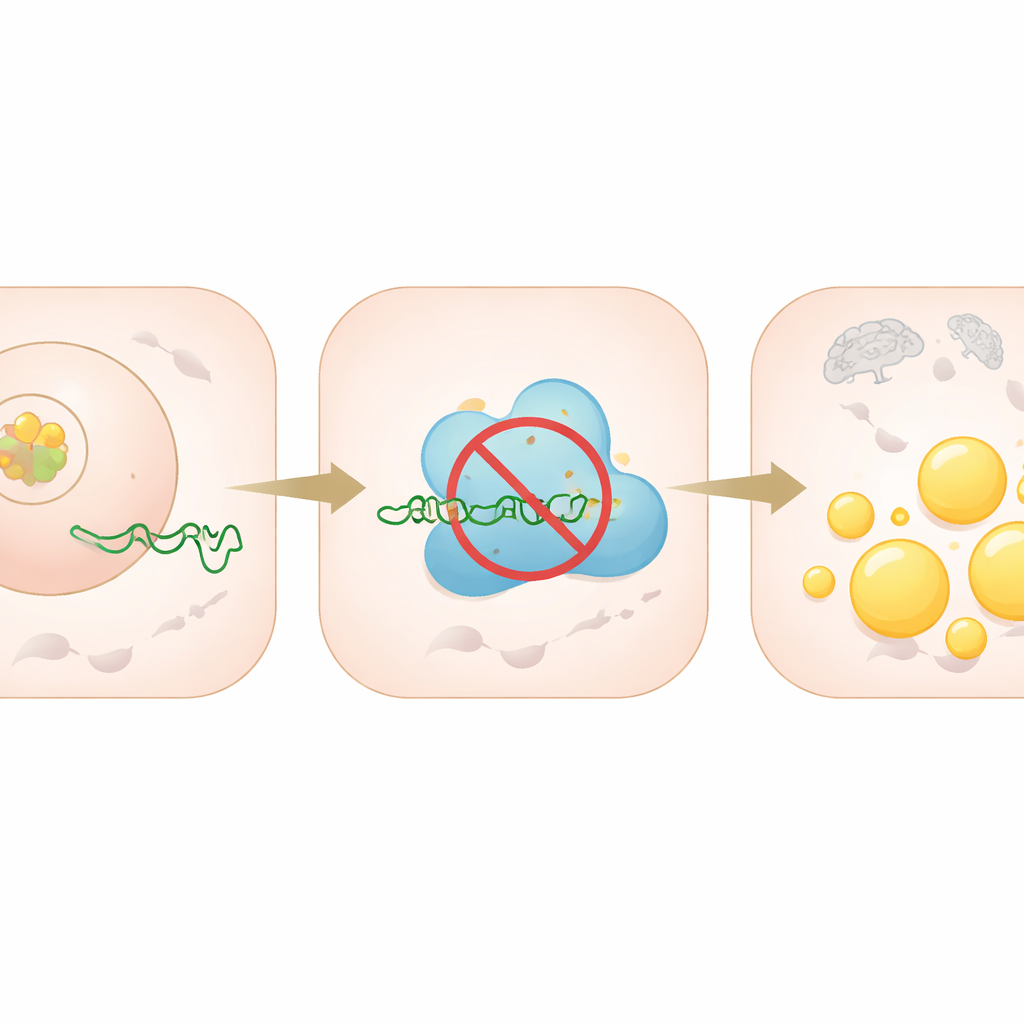
Small RNA molecules called microRNAs act like molecular dimmer switches, tuning down specific genes. The team showed that miR‑335‑5p directly latches onto the message that codes for PRKAA2 and prevents cells from making this protein. PRKAA2 helps assemble the AMPK complex, which normally senses low energy and responds by curbing fat production and encouraging fat burning. When miR‑335‑5p levels were artificially boosted in liver cells, PRKAA2 levels fell, AMPK activity dropped, and fat‑building proteins surged, leading to visible piles of fat droplets. When miR‑335‑5p was blocked, the opposite happened: PRKAA2 and AMPK activity rose and fat accumulation declined.
The Master Switch That Starts the Cascade
What turns miR‑335‑5p on in the first place? By scanning the DNA sequence that controls this microRNA, the scientists predicted several possible master switches and homed in on C/EBPα, already known to influence fat and sugar handling. They confirmed that C/EBPα binds directly to the miR‑335‑5p control region and boosts its activity. Increasing C/EBPα in liver cells raised miR‑335‑5p levels, lowered PRKAA2, weakened AMPK signaling, and promoted fat buildup. Silencing C/EBPα had the reverse effect, strengthening the cell’s energy‑sensing brake and reducing lipids. Rescue experiments, in which miR‑335‑5p was blocked or PRKAA2 was restored, showed that much of C/EBPα’s fat‑promoting effect flows through this single chain.
From Cell Dishes to Living Mice
To test whether this pathway matters in living animals, the researchers used engineered viruses to deliver genetic tools directly to the livers of high‑fat‑fed mice. One tool cut down C/EBPα levels; another soaked up excess miR‑335‑5p. In both cases, the animals’ livers contained less fat, their microscopic appearance improved, and PRKAA2 and AMPK activity rebounded, while proteins that drive fat synthesis fell. These in‑body results agreed with the cell culture findings and underscored that the C/EBPα–miR‑335‑5p–PRKAA2 chain is not just a laboratory curiosity but a powerful driver of fatty liver in a living organism.
What This Means for Future Treatments
Put simply, the study reveals a three‑step molecular relay that makes liver cells hoard fat: C/EBPα flips on miR‑335‑5p, which in turn shuts down PRKAA2 and weakens AMPK, the cell’s energy brake. With that brake off, fat‑building machinery runs unchecked and the liver becomes engorged with lipids. Interrupting any link in this relay—dampening C/EBPα, blocking miR‑335‑5p, or boosting PRKAA2/AMPK—reduced fat in the livers of mice. While much work remains before such strategies can be safely used in people, this pathway offers a clear and testable target for future drugs aimed at slowing or reversing MASLD.
Citation: Zeng, X., Xu, Y., You, S. et al. A novel C/EBPα–miR-335-5p–PRKAA2 regulatory axis drives hepatic lipid accumulation in MASLD. Sci Rep 16, 9255 (2026). https://doi.org/10.1038/s41598-026-38918-5
Keywords: fatty liver disease, microRNA, AMPK, lipid metabolism, metabolic disease