Clear Sky Science · en
High utility of DNA barcoding for species identification and cryptic diversity in Korean aphids (Hemiptera: Aphididae)
Why tiny plant pests matter
Aphids are small sap‑sucking insects that can quietly devastate crops and garden plants, yet they are notoriously hard to tell apart by eye. Many species look almost identical and change form with the seasons, making traditional identification with microscopes slow and uncertain. This study shows how a genetic shortcut called DNA barcoding can rapidly sort Korean aphids into species, uncover hidden look‑alikes, and improve our ability to monitor pests and protect agriculture.
Invisible differences in look‑alike insects
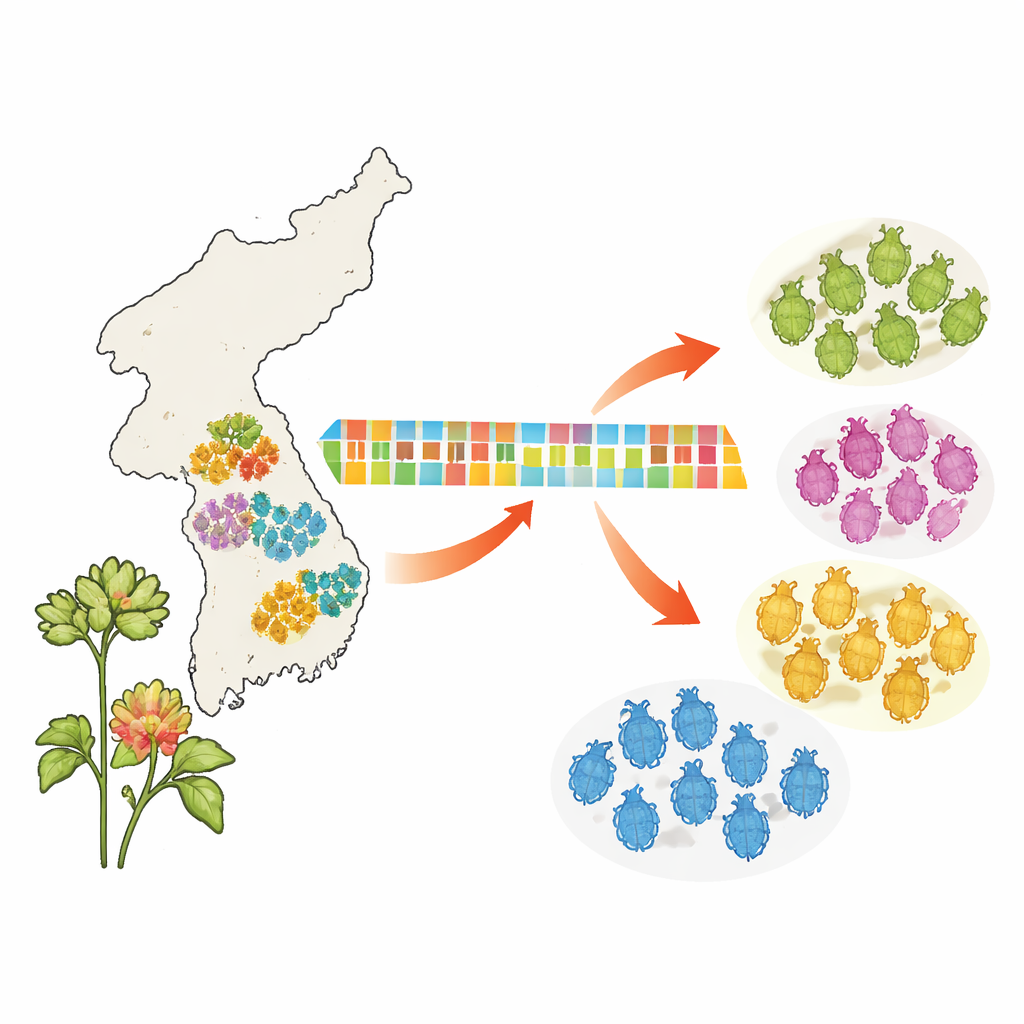
On the Korean Peninsula, hundreds of aphid species feed on everything from vegetables to trees, and about 250 species worldwide are considered serious agricultural pests. Because aphids are tiny, soft‑bodied, and often behave secretly on the undersides of leaves, specialists usually need detailed body measurements to name them, a process that can take hours per sample. The researchers set out to test whether a short, standard stretch of DNA could stand in as a reliable “barcode” for these insects, turning a laborious identification task into something that can be done far more quickly and consistently.
A genetic ID card for each species
The team collected 566 aphids from 85 locations across South Korea, representing 125 groups first sorted by appearance (called morphospecies). For each specimen, they sequenced a standard segment of a mitochondrial gene widely used in barcoding animals. They then compared how similar or different these DNA sequences were within a species, between species in the same genus, and between more distant relatives. As expected, DNA differences were tiny within recognized species but much larger between species, creating a measurable “gap” that can be used to tell species apart.
Finding hidden lineages and testing the limits
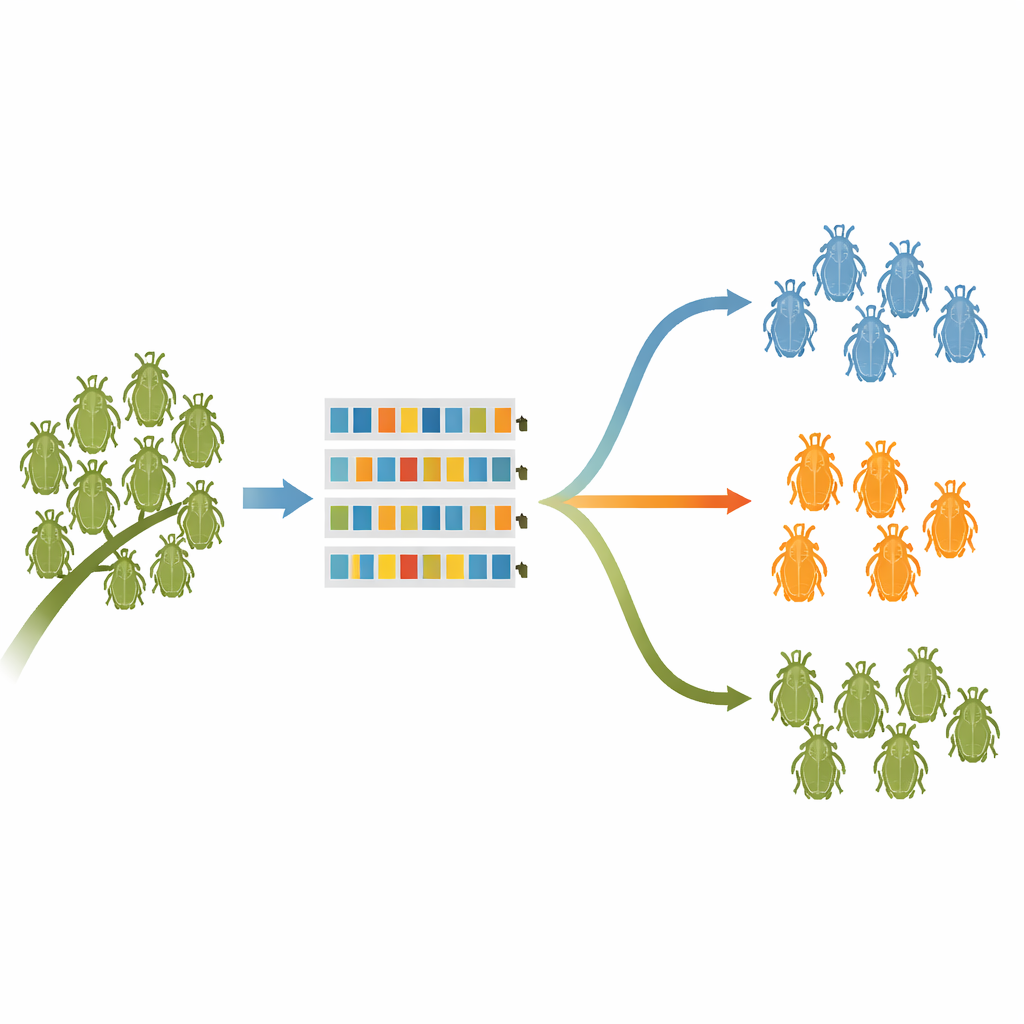
To turn raw DNA differences into practical species boundaries, the researchers applied four widely used computer methods, each slicing the genetic family tree in its own way. Across these approaches, they found that a difference of about 2% in the barcode region worked well as a first‑pass cutoff between species for most Korean aphids. About 70% of the morphospecies were consistently recovered as separate units by all methods, showing that barcodes and traditional morphology largely agreed. However, dozens of cases did not line up so neatly, hinting at either hidden diversity within what had been thought to be single species or, in a few cases, very similar species that may not be truly distinct.
Hidden species and broad genetic variation
Closer study of the mismatched cases revealed several intriguing stories. Three aphid species, including Eriosoma yangi and Greenidea kuwanai, split into clearly distinct genetic lineages that also showed subtle but consistent body differences or different ecological settings—strong signs of cryptic species that had gone unnoticed. In other species, such as the grain pest Sitobion avenae and the legume pest Aphis craccivora, the barcodes showed surprisingly high variation across regions, but all the computer methods still grouped them as single species. These appear to be genetically rich yet cohesive species, a useful reminder that high DNA diversity does not always mean multiple species.
What this means for crops and biodiversity
Aphids lead complex lives, often switching hosts and reproducing by cloning for part of the year, which can blur the clean genetic boundaries that barcoding relies on. The authors caution that DNA barcodes alone can sometimes over‑split or under‑split species in such groups, and they argue for combining genetics with careful morphology and ecological information. Even so, their large Korean dataset shows that barcoding is a powerful practical tool: it speeds up routine identifications, flags cases where hidden species may lurk, and helps build reference libraries that farmers, quarantine officers, and ecologists can use. For lay readers, the takeaway is that a short DNA “tag” can reveal a surprising amount about the true diversity of tiny insects that shape our crops and ecosystems.
Citation: Kang, Y., Lee, H., Park, DK. et al. High utility of DNA barcoding for species identification and cryptic diversity in Korean aphids (Hemiptera: Aphididae). Sci Rep 16, 9307 (2026). https://doi.org/10.1038/s41598-026-38901-0
Keywords: DNA barcoding, aphids, cryptic species, agricultural pests, biodiversity