Clear Sky Science · en
Oxidative stress-mediated impairment of human trophoblast cell proliferation by zinc pyrithione exposure
Why a dandruff ingredient matters for pregnancy
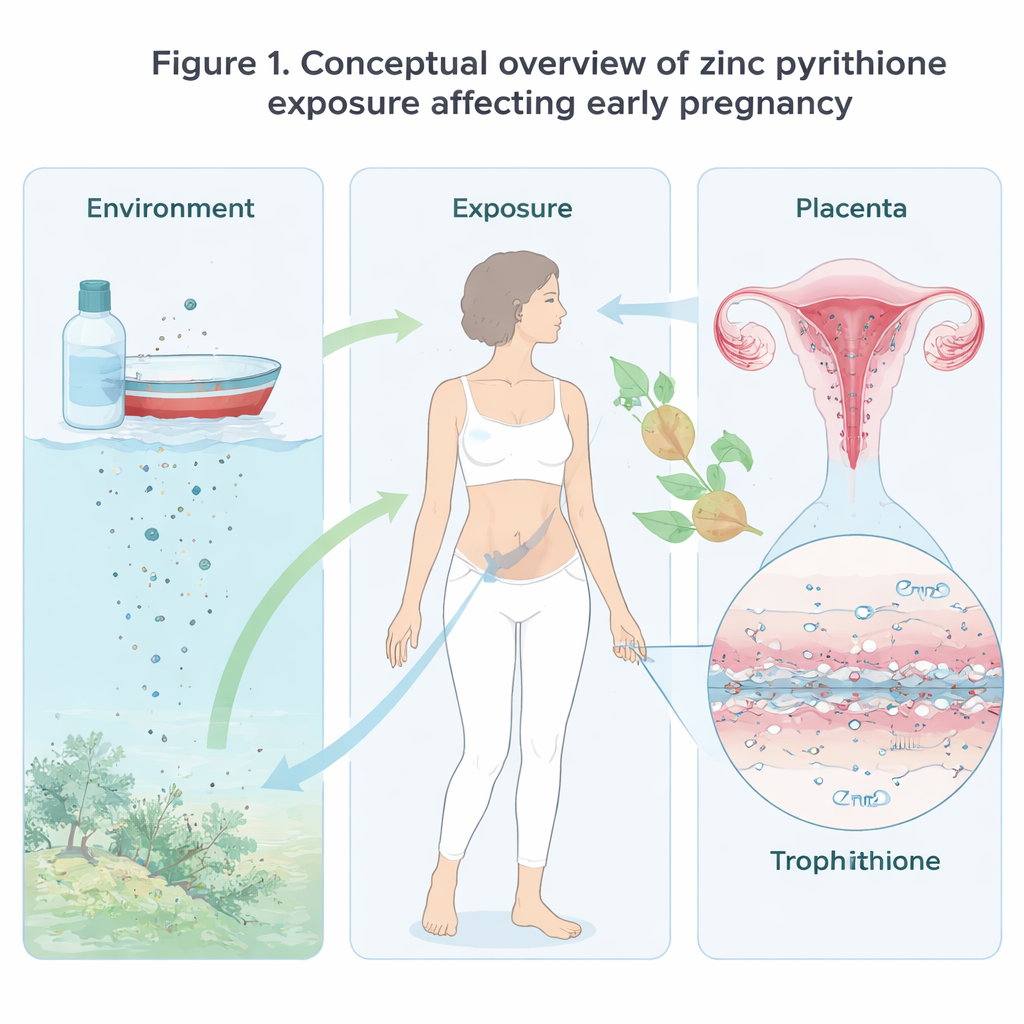
Zinc pyrithione is a familiar yet hidden part of modern life—it is the active ingredient in many anti-dandruff shampoos and also coats ship hulls to keep them free of algae. Because it washes down the drain and builds up in water, food, and even on our skin, scientists are increasingly asking what this chemical might do inside the body. This study focuses on a particularly vulnerable target: the cells that help form the placenta in early pregnancy, and how zinc pyrithione might interfere with their health.
The frontline cells of early pregnancy
In the earliest weeks after conception, specialized cells called trophoblasts help an embryo implant into the uterus and build the placenta, the organ that delivers oxygen and nutrients to the fetus. If these cells cannot grow, move, or tunnel properly into the uterine wall, the pregnancy may fail or the placenta may develop poorly. Because trophoblasts are in direct contact with a mother’s blood and environment, they can be especially sensitive to pollutants, metals, and other chemicals. Yet, despite decades of widespread zinc pyrithione use, its potential impact on these crucial cells has not been well explored.
Testing a common chemical on placental cells
The researchers used a well-established human trophoblast cell line called JEG-3 as a stand‑in for early placental cells. They exposed these cells in the lab to low nanomolar doses of zinc pyrithione—levels chosen because earlier tests showed they were just strong enough to cause measurable harm without instantly wiping out the cells. Over several days, they tracked how well the cells multiplied, how many began to die, and how effectively they could migrate and invade through a gel, a lab mimic of how trophoblasts burrow into the uterine wall. They also measured chemical stress inside the cells, checked for breaks in DNA, and sequenced all active genes to see which biological pathways were being switched on or off.
Cell growth slows and movement stalls
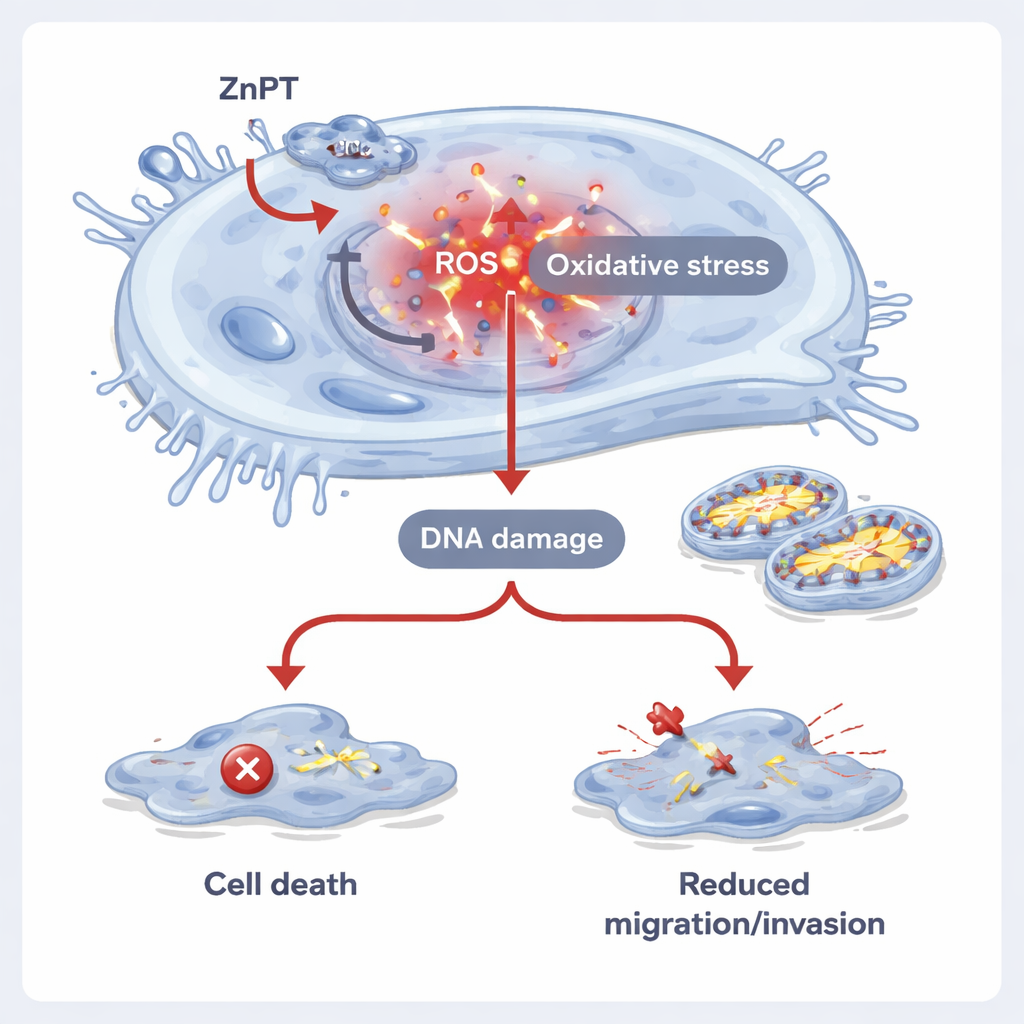
Even at modest doses, zinc pyrithione made trophoblast cells less able to grow and survive. Their viability dropped steadily with both dose and time, and many cells entered a late stage of programmed death rather than continuing to divide. Interestingly, the overall cell cycle—the rhythm of preparation and division—looked unchanged, suggesting the cells were not simply pausing but being pushed toward death. At the same time, their ability to move and invade was sharply reduced: treated cells closed artificial “wounds” on a dish more slowly and sent far fewer cells through invasion chambers. For a placenta, which relies on active, invasive trophoblasts to anchor the pregnancy and remodel maternal blood vessels, such losses in motility could be critical.
Inside the cell: stress, damaged DNA, and drained energy
Zooming in on the cell’s inner workings, the team found that zinc pyrithione triggered a surge of reactive oxygen species—highly reactive molecules that can corrode cellular components. Markers of broken DNA strands increased, showing that this oxidative stress was harming the genetic material. Gene activity patterns reinforced this picture. Stress and self‑cleanup pathways, including those tied to autophagy and mitochondrial-driven cell death, were turned up. At the same time, many genes needed for energy production and adaptation to low oxygen—such as those involved in sugar breakdown, NAD⁺ recycling, and responses to hypoxia—were turned down. Important genes that help maintain healthy mitochondria and support trophoblast development and movement, including BMP4, BNIP3, and BNIP3L, also dropped in activity.
What this could mean for real pregnancies
Put simply for non‑specialists, the study suggests that zinc pyrithione can push early placental cells into a harmful spiral: it raises internal chemical stress, damages DNA, upsets the cell’s waste‑disposal and energy systems, and ultimately makes the cells more likely to die and less able to move where they are needed. Because these experiments were done in a dish, not in pregnant people or animals, they cannot prove that everyday use of zinc pyrithione products causes miscarriages or placental problems. But they do provide a mechanistic warning signal and identify molecular “red flags” that future animal studies and human data can look for when assessing whether this commonplace anti-dandruff ingredient poses a hidden risk to early pregnancy.
Citation: Wang, X., Luo, B., Lu, Z. et al. Oxidative stress-mediated impairment of human trophoblast cell proliferation by zinc pyrithione exposure. Sci Rep 16, 7439 (2026). https://doi.org/10.1038/s41598-026-38895-9
Keywords: zinc pyrithione, placenta, oxidative stress, trophoblast cells, reproductive toxicity