Clear Sky Science · en
Automatic detection of single-electron regime and virtual gate definition in quantum dots using U-Net and clustering
Smarter Tuning for Future Quantum Computers
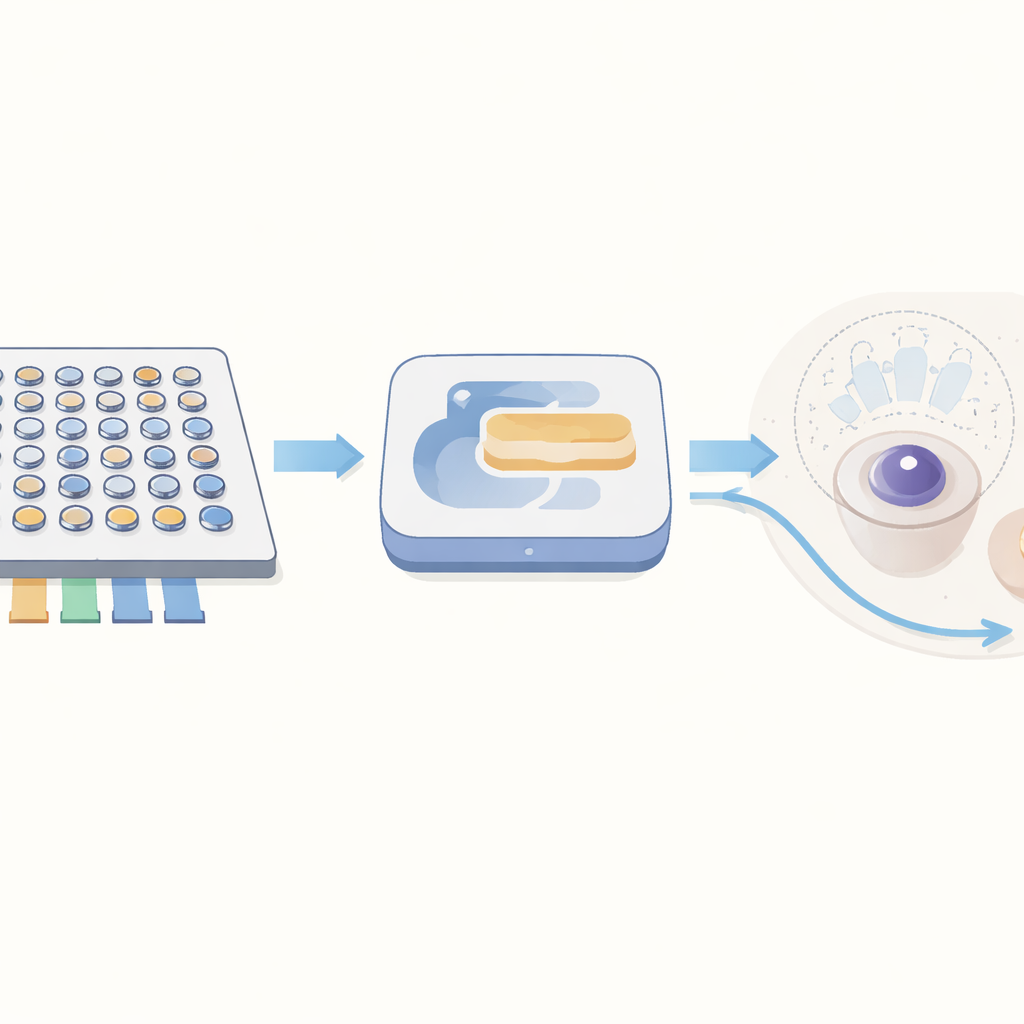
Building useful quantum computers may require millions of tiny devices called qubits, each of which must be carefully adjusted before it can be used. Today, much of this tuning is done by hand, which is already slow and difficult for just a few qubits. This paper presents an automated way to handle one of the most delicate parts of that job: finding and controlling single electrons trapped inside semiconductor structures known as quantum dots. By borrowing tools from modern image analysis, the authors show how a computer can reliably find the right operating point in seconds instead of minutes.
Why Tiny Electron Islands Are Hard to Control
Semiconductor spin qubits store information in the quantum state of a single electron confined in a quantum dot, a nanometer‑scale island created by voltages on metallic gates. In principle, each gate controls its own dot, but in practice nearby dots feel each other’s electric fields. Changing one gate can unintentionally shift the electrons in several neighbors, making the device behave like a set of tangled knobs rather than a neat array of sliders. To untangle this mess, experimentalists define so‑called virtual gates: special combinations of voltages that move the charge in just one dot while leaving the others almost unchanged. Defining these virtual gates requires reading patterns of slanted lines in charge stability diagrams—maps of how electron occupancy changes as two gate voltages are swept—which becomes unmanageable as devices grow larger.
Teaching a Neural Network to Read Quantum Maps
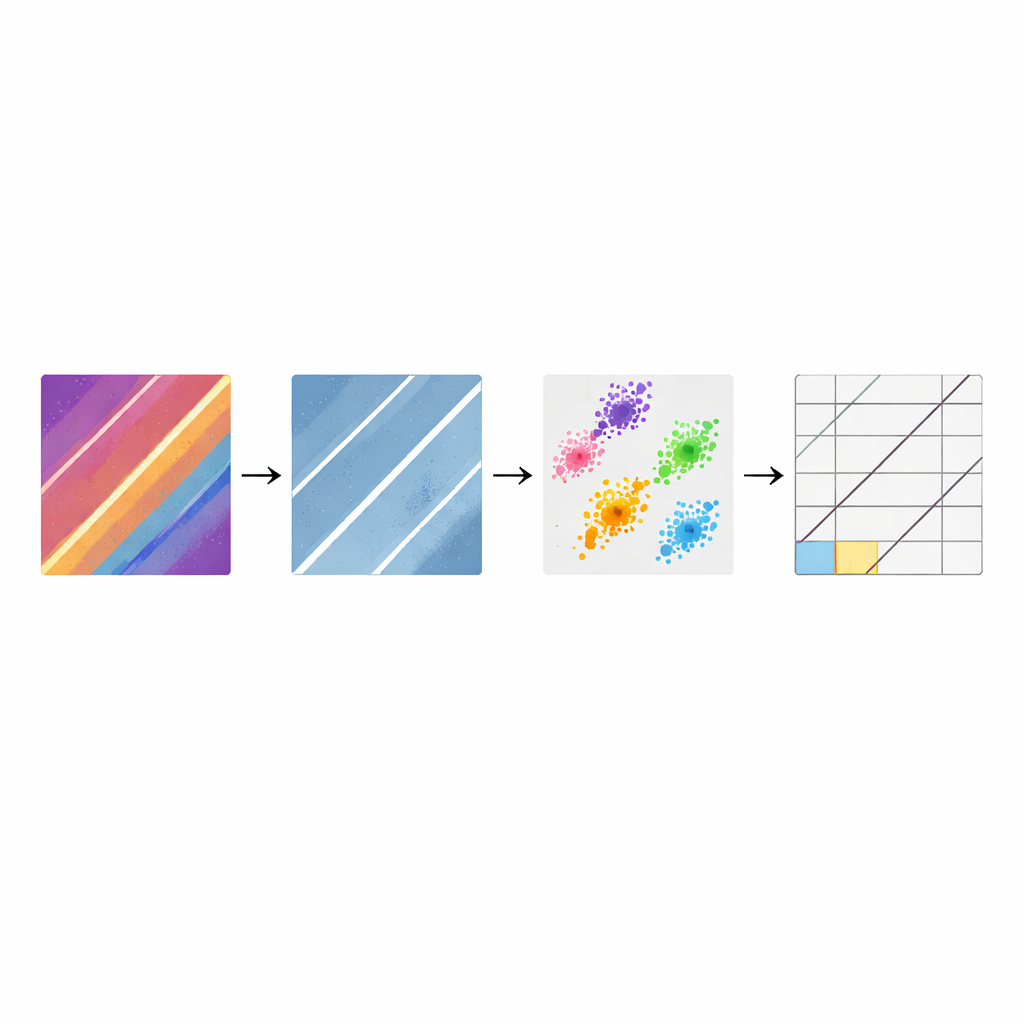
The core of the new method is a neural network architecture called U‑Net, originally designed to outline structures in medical images. Charge stability diagrams look a bit like abstract art, with faint diagonal streaks marking where the number of electrons jumps by one. Real data are noisy, and older image‑processing tricks often confuse noise with real lines, making later analysis unreliable. The authors train U‑Net on a modest set of experimental diagrams where an expert has manually traced the true lines. Once trained, the network looks at each pixel and decides whether it belongs to a transition line or background, effectively “inking in” only the meaningful features and suppressing spurious patterns from measurement noise.
From Clean Lines to Independent Controls
After U‑Net has produced a clean black‑and‑white map of the important lines, the next step is to determine their exact directions and positions. For this, the authors turn to the Hough transform, a standard tool in computer vision for finding straight lines. Applied to the network’s output, it produces angle and offset values for each detected line. Because the U‑Net has already removed most of the noise, the line parameters are stable and need little manual tuning of thresholds. Using the average directions of the nearly vertical and nearly horizontal families of lines, the authors construct a transformation that defines virtual gate axes—new combinations of voltages where each axis primarily changes the electron number in one dot. When the original data are re‑plotted in this virtual gate space, the line patterns straighten into an orderly grid, confirming that the dots are now controlled almost independently.
Finding the Single‑Electron Sweet Spot Automatically
However, many nearly overlapping lines may represent the same physical boundary, so the authors add a clustering step. They apply a density‑based clustering algorithm to the list of line parameters from the Hough transform, grouping nearby entries into single representative lines and discarding duplicates. With one clean line for each charge boundary, the algorithm then looks for the lowest‑electron crossing point: the intersection between the leftmost line from one family and the bottommost line from the other. This point marks the entrance to the single‑electron regime, where one dot holds exactly one electron and the neighboring dot is also in a well‑defined charge state. The method automatically highlights the corresponding region in both the original and virtual‑gate diagrams, and it works not only on the authors’ own data but also on independent datasets from another group.
What This Means for Scalable Quantum Hardware
The study demonstrates that a carefully designed combination of neural networks, line‑finding, and clustering can replace a slow, human‑driven tuning task with a fast, reliable, and fully automated pipeline. In tests, the full procedure—from raw measurement diagram to identifying the single‑electron regime in virtual gate space—takes about half a second, versus several minutes of expert effort. Because the approach relies only on general image features and geometric relationships, it should extend to other types of spin qubits with minor adjustments. As quantum dot arrays grow toward the thousands or millions of qubits needed for practical machines, such automation will be essential to keep the tuning problem from becoming a fundamental bottleneck.
Citation: Muto, Y., Zielewski, M.R., Shinozaki, M. et al. Automatic detection of single-electron regime and virtual gate definition in quantum dots using U-Net and clustering. Sci Rep 16, 8161 (2026). https://doi.org/10.1038/s41598-026-38889-7
Keywords: quantum dots, spin qubits, machine learning, device autotuning, virtual gates