Clear Sky Science · en
Eco-friendly synthesis of star-shaped Zn nanoparticles using Beta vulgaris peel extract and evaluation of their antibacterial, photocatalytic, and cytotoxic activities
Turning kitchen scraps into tiny helpers
Imagine if the peels from your beets could help clean polluted water, fight germs, and even assist in cancer treatment. This study shows that what we usually throw away from the humble red beet (Beta vulgaris) can be transformed into star-shaped zinc nanoparticles—ultra-small particles made of the essential metal zinc—using an eco-friendly process. These tiny "stars" turn out to be powerful tools for breaking down dyes in wastewater, slowing the growth of cancer cells in the lab, and stopping harmful bacteria from multiplying.
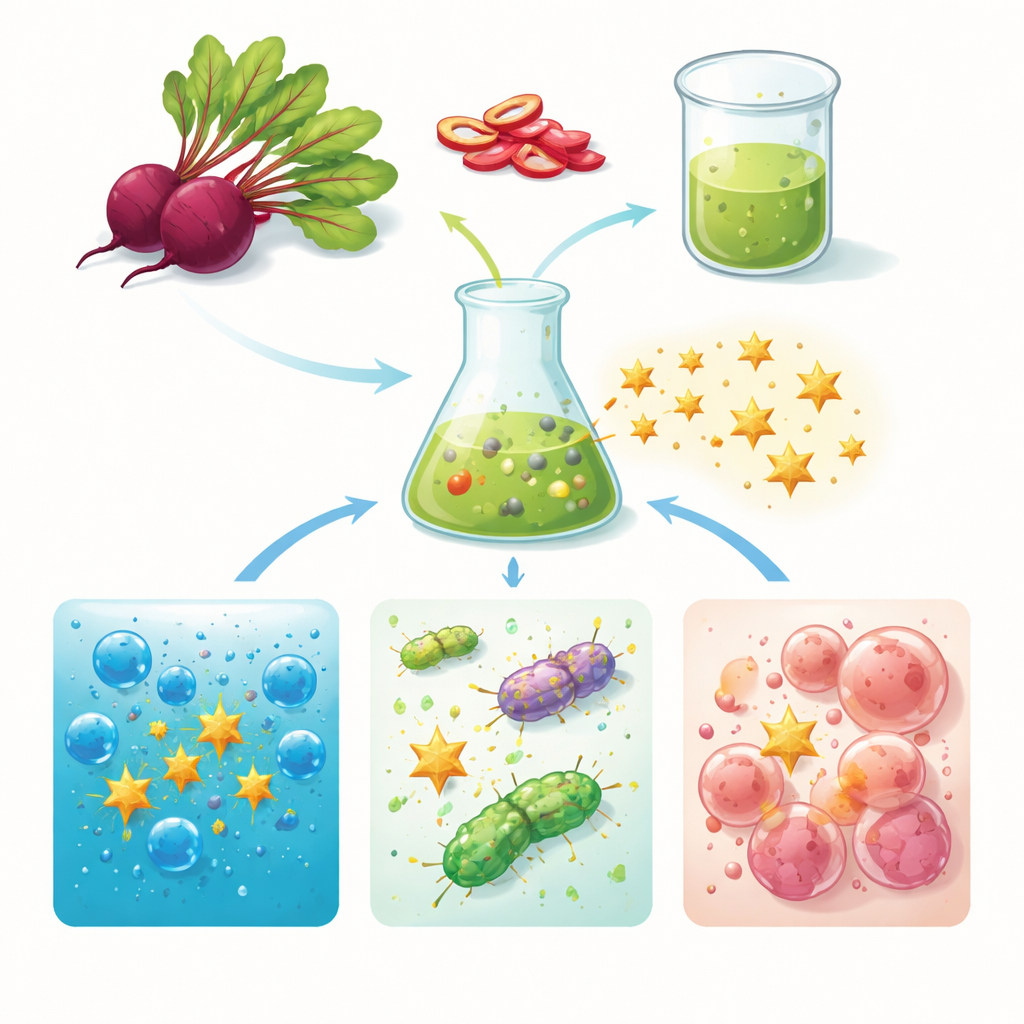
From beet peels to shining metal stars
The researchers began with a surprisingly simple idea: use beetroot peels, an agricultural and food-industry waste, as a natural factory for making metal nanoparticles. They washed, dried, and ground the peels, then boiled the powder in water to pull out a cocktail of plant compounds such as pigments, polyphenols, and other phytochemicals. These molecules can grab onto dissolved zinc ions and help turn them into solid particles while also coating and stabilizing the finished product. By mixing the beet peel extract with a zinc salt solution under controlled conditions, the liquid gradually changed color, signaling that tiny zinc-based particles were forming without the need for harsh chemicals.
Looking closely at the shape and structure
To be sure they had made what they intended, the team used a suite of laboratory tools. Light absorption measurements confirmed that the particles interacted strongly with ultraviolet (UV) light, a hint that they could drive light-triggered chemical reactions. X-ray tests revealed that the particles were crystalline zinc with a well-ordered internal structure. Electron microscopes, which can see far beyond the limits of normal optical microscopes, showed something striking: instead of smooth spheres, the particles had a distinctive star-like shape on the nanometer scale, with multiple arms radiating outward. This geometry increases their surface area, giving more room for chemical reactions to occur and for the plant-derived coating to interact with cells and microbes.
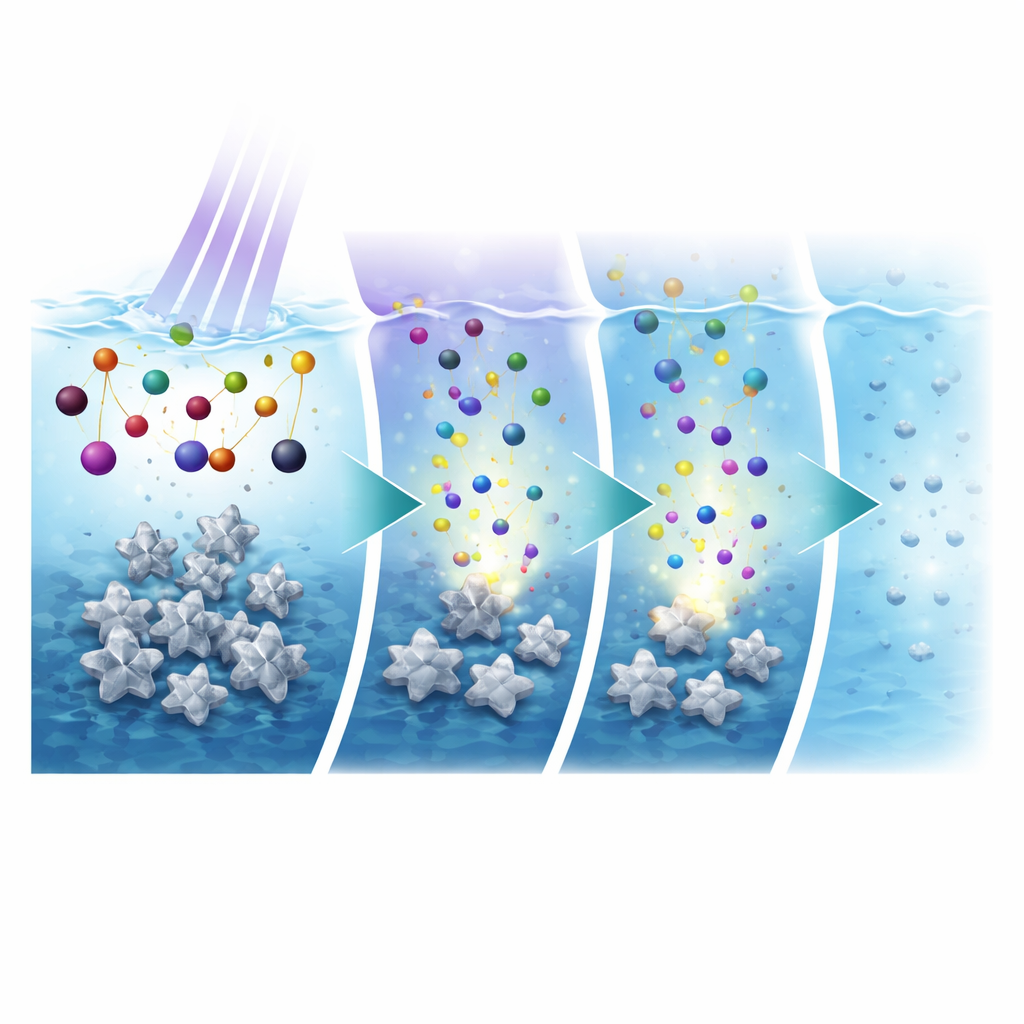
Cleaning colored water and tackling germs
The team then asked what these beet-derived zinc stars could actually do. First, they tested the particles on two brightly colored dyes commonly used as stand-ins for organic pollutants in wastewater. Under UV light, the nanoparticles helped break down more than 97–98% of both dyes within about 150 minutes, and they could be reused several times while still keeping most of their cleaning power. The particles act like tiny solar-activated reactors: when hit by UV light, they generate highly reactive forms of oxygen that attack and dismantle dye molecules until only simple, colorless products remain. Next, the scientists placed the nanoparticles on bacteria-growing plates containing several common disease-causing microbes, including Staphylococcus aureus and Escherichia coli. Clear zones with no bacterial growth formed around the particles, showing that they can damage or kill both gram-positive and gram-negative bacteria, likely through a mix of reactive oxygen, direct contact with cell walls, and the release of zinc ions.
Gentler on healthy cells, tougher on cancer
Because zinc is naturally present in the body but can become harmful at high doses, the researchers also examined how these nanoparticles affect mammalian cells. In lab dishes, they exposed normal fibroblast cells and breast cancer cells to increasing nanoparticle concentrations. At the highest tested levels, cancer cell growth dropped sharply, while normal cells remained much less affected within the same range. This suggests a window where the particles are more toxic to cancer cells than to healthy ones, although the doses involved are still relatively high and the tests were short-term. The plant-derived coating and the star shape may help concentrate the damaging effects where they are most needed, but much more work would be required before any clinical use.
What this could mean for everyday life
Taken together, the findings show that beetroot peels—normally discarded as waste—can serve as a low-cost, environmentally friendly source of powerful zinc nanostars. These particles can help strip dye pollutants from water, slow the growth of harmful bacteria, and selectively stress cancer cells in early laboratory tests. For a layperson, the key message is that food and agricultural leftovers can be turned into tiny, multifunctional tools with potential uses in greener water treatment, antimicrobial coatings for packaging or surfaces, and supportive cancer research. While these results are still at the experimental stage, they point toward a future where kitchen scraps could quietly contribute to cleaner water and safer, healthier environments.
Citation: Mousavi Khatat, F.S., Sabouri, Z. & Darroudi, M. Eco-friendly synthesis of star-shaped Zn nanoparticles using Beta vulgaris peel extract and evaluation of their antibacterial, photocatalytic, and cytotoxic activities. Sci Rep 16, 7906 (2026). https://doi.org/10.1038/s41598-026-38842-8
Keywords: green nanotechnology, zinc nanoparticles, beetroot peel, wastewater treatment, antibacterial materials