Clear Sky Science · en
Effects of the 11 for Health program on physical performance and executive functions in schoolchildren
Why This Matters for Kids and Classrooms
Many parents and teachers worry that children today spend too much time sitting and staring at screens. This study asks a simple but important question: if we swap some traditional gym classes for an exciting, football-based program that also teaches health habits, can we boost not only children’s fitness but also how well they think, plan, and focus in school?
A New Spin on Gym Class
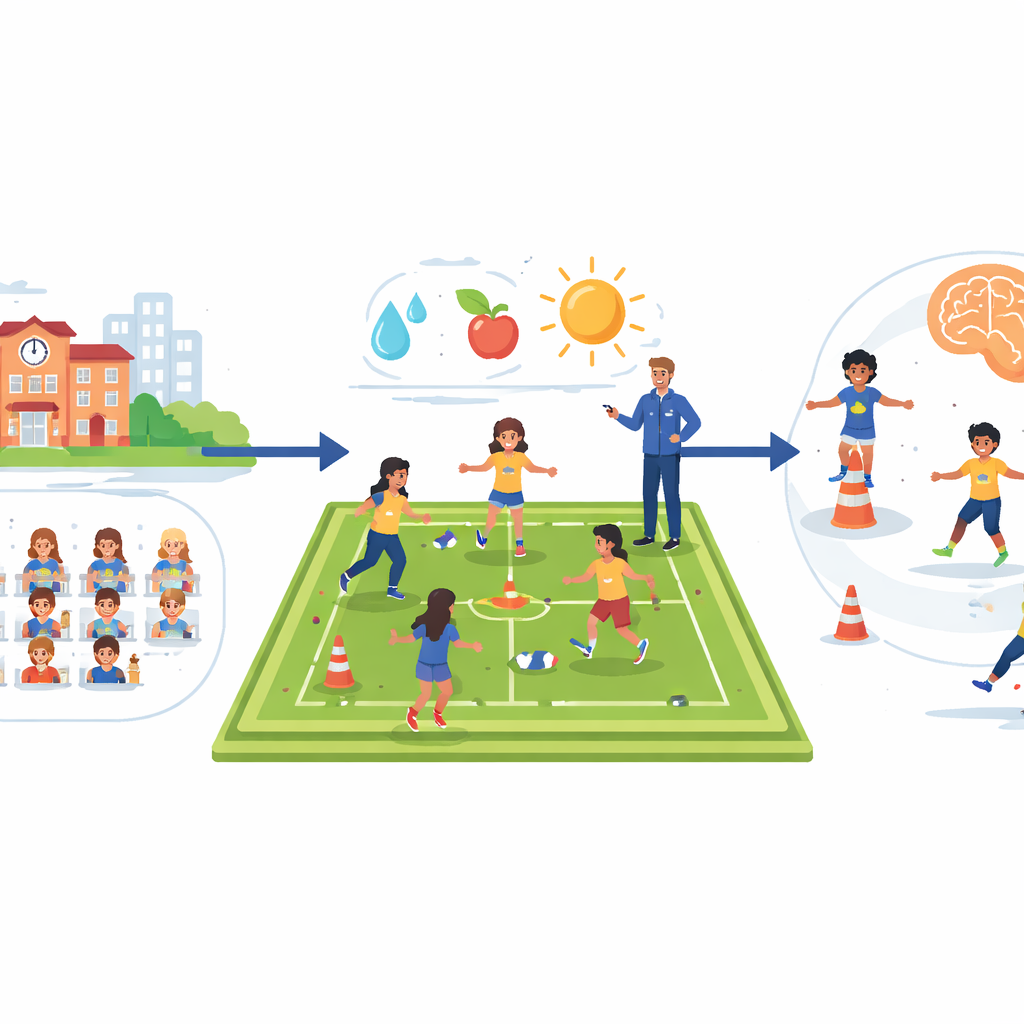
Researchers in Türkiye tested an 11-week program called “11 for Health” with fifty-six fifth-grade students, aged 10 to 11. All of the children attended the same public school but were in two different classes. One class took part in the special program, which mixed football drills with short, age-appropriate messages about topics such as staying active, eating well, washing hands, and drinking water. The other class continued with the regular national physical education lessons—running, games, and general fitness—without the football-based health themes.
What the Kids Actually Did
The children in the program group trained twice a week for 45 minutes over one school term. One session focused on football play, like passing, dribbling, shooting, and small-sided games; the other blended simpler football activities with discussions and reflections about health. Coaches followed a detailed guide to keep sessions similar from week to week and used an encouraging style aimed at making children feel supported and involved. The control group also had two 45-minute classes a week, but their lessons were delivered by the school’s physical education teacher and followed the standard national curriculum, which covers movement skills, safety, and fair play without a specific football or health-education structure.
Testing Bodies and Brains
Before and after the 11 weeks, both groups completed a series of tests. To measure physical performance, the team looked at several types of balance (standing still, responding to shifting surfaces, and moving side-to-side or front-to-back), a vertical jump test, and a shuttle run that captured how quickly children could sprint, stop, and change direction. To probe thinking skills, the children performed computer-based tasks commonly used in psychology. One task measured how well they could react quickly while stopping themselves from pressing at the wrong time. Another puzzle required planning the fewest moves to shift disks between pegs. A third task checked how many positions on a screen children could remember and repeat in the right order, a window into their short-term visual memory.
What Changed After Eleven Weeks
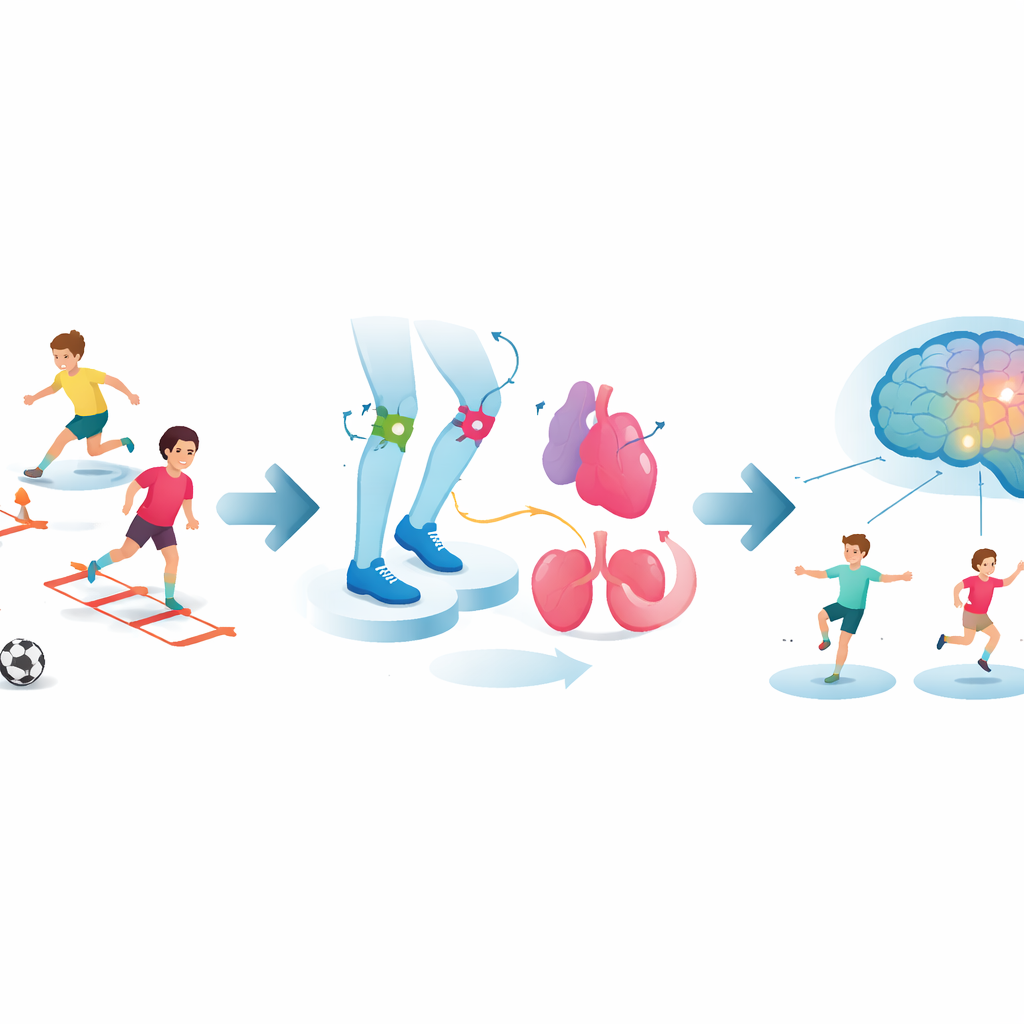
Even after accounting for where children started, those in the football-based program improved more than their peers on every physical measure. They stood steadier, controlled their movement better when the platform beneath them shifted, jumped higher, and completed the agility run faster. The gains were not minor; the differences between the two groups were large by standard scientific yardsticks. Just as striking, the program group also advanced more on several thinking skills. They became more accurate at responding when they should and holding back when they should not, they reacted more quickly, remembered longer sequences of blocks, and solved the puzzle with fewer moves and in less time, suggesting better planning and working memory.
Reading the Fine Print
Although the results are encouraging, the authors are careful about what they claim. The two classes were not randomly mixed and then reassigned, so there may have been hidden differences between them from the start, such as teacher style or classroom atmosphere. The study also did not track how active children were outside of school, how hard they worked during sessions, or how long the benefits might last. Because of these limits, the researchers describe their findings as preliminary: the program seems promising, but it does not yet prove that football training alone caused all of the improvements.
What This Could Mean for Schools
This study suggests that a well-designed, enjoyable football program can do more than simply get children moving. Over just eleven weeks, the participating Turkish fifth-graders not only became more agile and better balanced, they also showed sharper skills in controlling impulses, holding information in mind, and planning their actions—abilities that matter for everyday learning and behavior. While more rigorous, long-term studies are needed, the work adds to growing evidence that creative, game-based physical education could help schools nurture both healthy bodies and more capable minds.
Citation: Şendil, A.M., Canlı, U., Larsen, M.N. et al. Effects of the 11 for Health program on physical performance and executive functions in schoolchildren. Sci Rep 16, 8439 (2026). https://doi.org/10.1038/s41598-026-38837-5
Keywords: school-based physical activity, youth football training, executive functions, children’s cognitive development, physical fitness in schoolchildren