Clear Sky Science · en
Parental mediation of smart device use and its impact on language development in early childhood
Why Screens and Speech Matter for Young Children
Smartphones and tablets have become fixtures in family life, often landing in the smallest hands. Parents may hope that educational apps and videos will boost their children’s learning, or worry that too much screen time could hold them back. This study, conducted with families in Amman, Jordan, asks a simple but crucial question: how the way parents manage smart device use—more than the devices themselves—shapes young children’s language development. Its findings offer guidance for caregivers everywhere who want screens to support, not slow, their child’s ability to talk and understand.
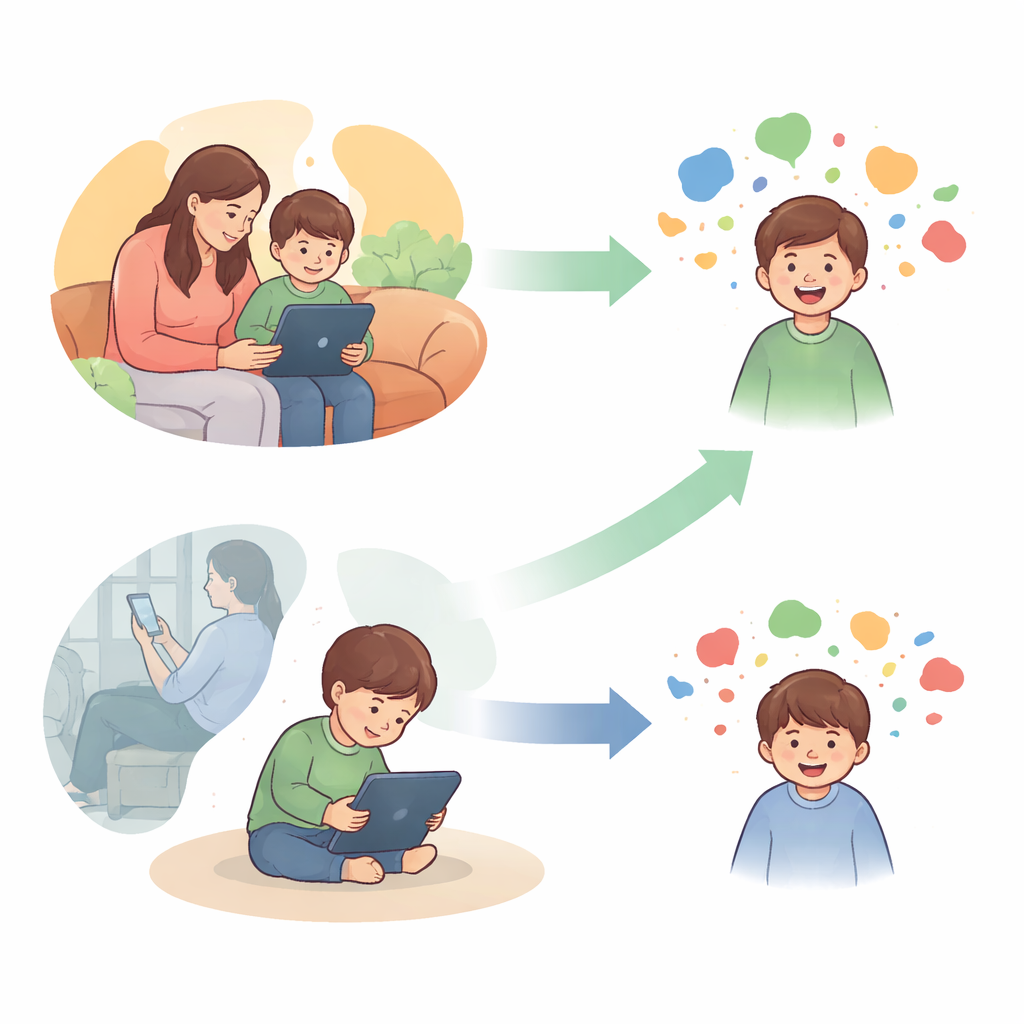
How Parents Shape Screen Experiences
The researchers focused on “parental mediation,” meaning the rules and habits parents use when their young children, aged one to five, interact with smart devices. Drawing on a well-known idea in child development—the notion that children learn best when adults actively guide them just beyond what they can do alone—they expected that hands-on involvement with screens would nurture language. That might include sitting with a child, talking about what appears on the screen, and turning on-screen events into real-world conversations. In contrast, they distinguished this from a more hands-off approach where parents mainly control when and how long screens can be used, without much shared interaction.
What the Study Did in Families’ Daily Lives
Using a carefully designed questionnaire, the team surveyed 82 families living in Amman. Parents reported how they managed their children’s smart device use: whether they set time limits, used parental controls and passwords, watched or played together with their child, or discussed what appeared on the screen. They also shared their views on whether smart device content helps or harms early language and reading skills. The answers were analyzed with standard statistical tools to reveal common patterns, the strength of parents’ agreement on different practices, and how strongly they leaned toward active or passive mediation.
Rules Without Talk: A Missed Opportunity
The results painted a clear picture. Most parents reported that they strongly agreed with setting rules and limits on screen time, monitoring what their child accesses, and using controls to keep content safe. These rule-based strategies were widely accepted and seen as important. However, there was much less certainty about the educational value of screen content itself. Parents did not agree on whether even carefully chosen apps or videos, under supervision, actually fostered early reading and language skills. Strikingly, many did not believe that sitting with their child and interacting during screen use helped the child better understand and use language in context. In practice, this meant parental mediation in Amman was largely passive—centered on rules and restrictions—rather than active, involving ongoing conversation and shared attention.
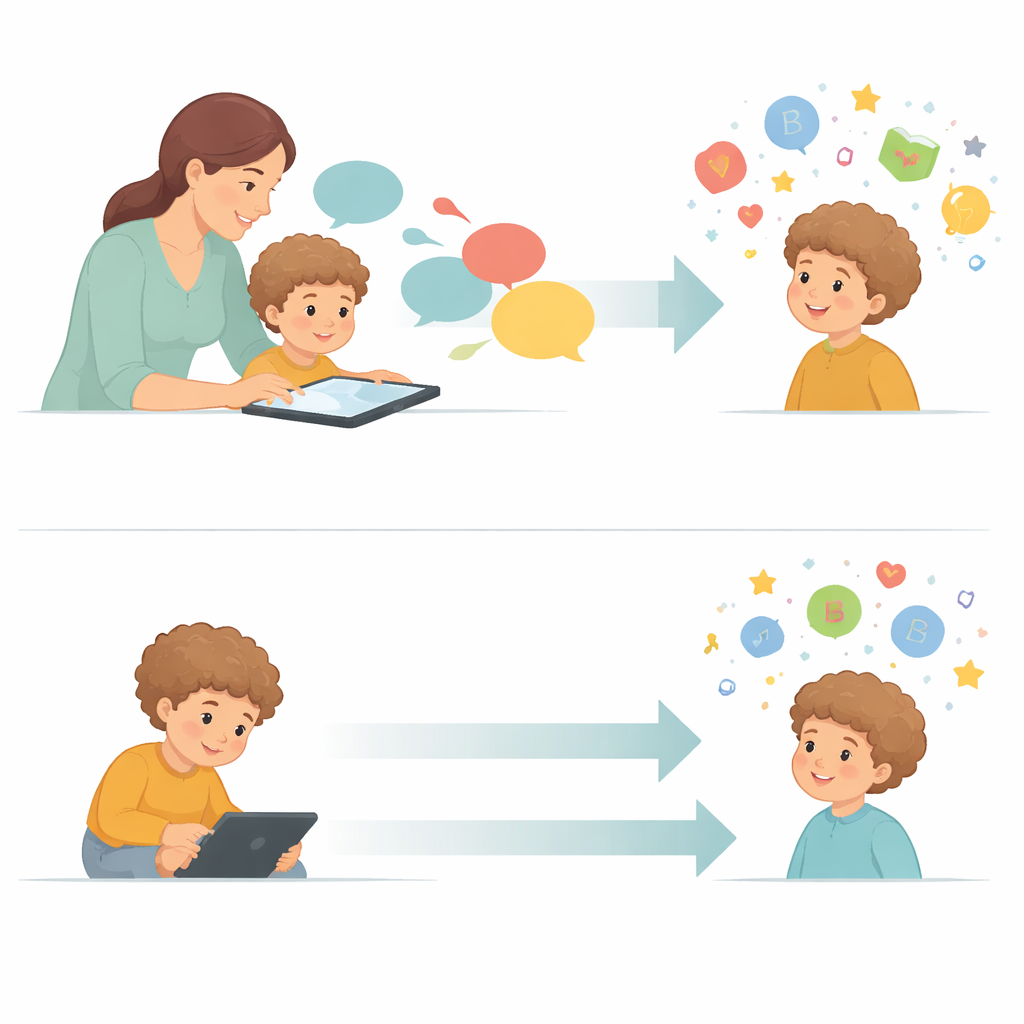
Why Active Involvement Matters
When the researchers looked closely at the patterns in parents’ responses, they found that this heavy reliance on time limits, without much co-viewing or guided talk, may undermine the potential benefits of smart devices. Without rich back-and-forth conversation, screen time can crowd out face-to-face interactions that are essential for building vocabulary, grammar, and social use of language. The study’s findings echo results from other countries: simply handing a child a device or tightly policing usage does not automatically support learning. Instead, what matters most is how adults turn screen experiences into real dialogue, questions, and shared exploration.
Turning Screen Time into Language Time
In plain terms, the study concludes that young children in Amman are mostly experiencing smart devices under rules, not relationships. Parents are careful about how long and what their children watch or play, but often do not see the value of joining in and talking through those moments. The authors argue that, without more active engagement, smart devices risk becoming quieting tools rather than tools for learning. They recommend targeted educational programs to help parents see how sitting beside a child, asking questions, naming objects, and linking on-screen events to everyday life can transform screen time into powerful practice for speaking and understanding. With simple changes in how adults participate, the same devices that now may dampen language growth could instead become catalysts for it.
Citation: Alkouri, Z., Aldhafeeri, F.J. Parental mediation of smart device use and its impact on language development in early childhood. Sci Rep 16, 8209 (2026). https://doi.org/10.1038/s41598-026-38833-9
Keywords: parental mediation, smart devices, early childhood language, screen time, digital parenting