Clear Sky Science · en
Hydration, water requirements, and energy balance from spring to summer in free-living older adults: a doubly labelled water study
Why staying hydrated matters more as summers heat up
Heat waves are becoming more frequent and intense as the climate warms, and older adults are among the people most likely to suffer when temperatures soar. Their bodies are less able to cool themselves and they often feel less thirsty, which makes it easier to slip into dehydration. This study followed a group of Japanese seniors through both a mild spring and a hot summer to see how their bodies handled water and energy in everyday life, outside the lab. The findings help explain how older adults naturally adjust to seasonal heat—and where hidden risks may lie.
Following older adults through cool and hot seasons
Researchers tracked 26 community-dwelling men and women aged 65 and older living in Kameoka City, Japan. Each person took part in two measurement periods: one in May, when outdoor temperatures averaged about 19 °C, and one in August, when averages rose to about 29 °C with peaks near 35 °C. For roughly two weeks each season, the team measured how much water moved into and out of the body using a precise method called doubly labeled water, recorded energy use, and monitored daily movement with a waist-worn activity sensor. Participants also kept detailed seven-day food and drink diaries so the scientists could estimate how much water they consumed from both foods and beverages.
How bodies and drinking habits changed in the heat
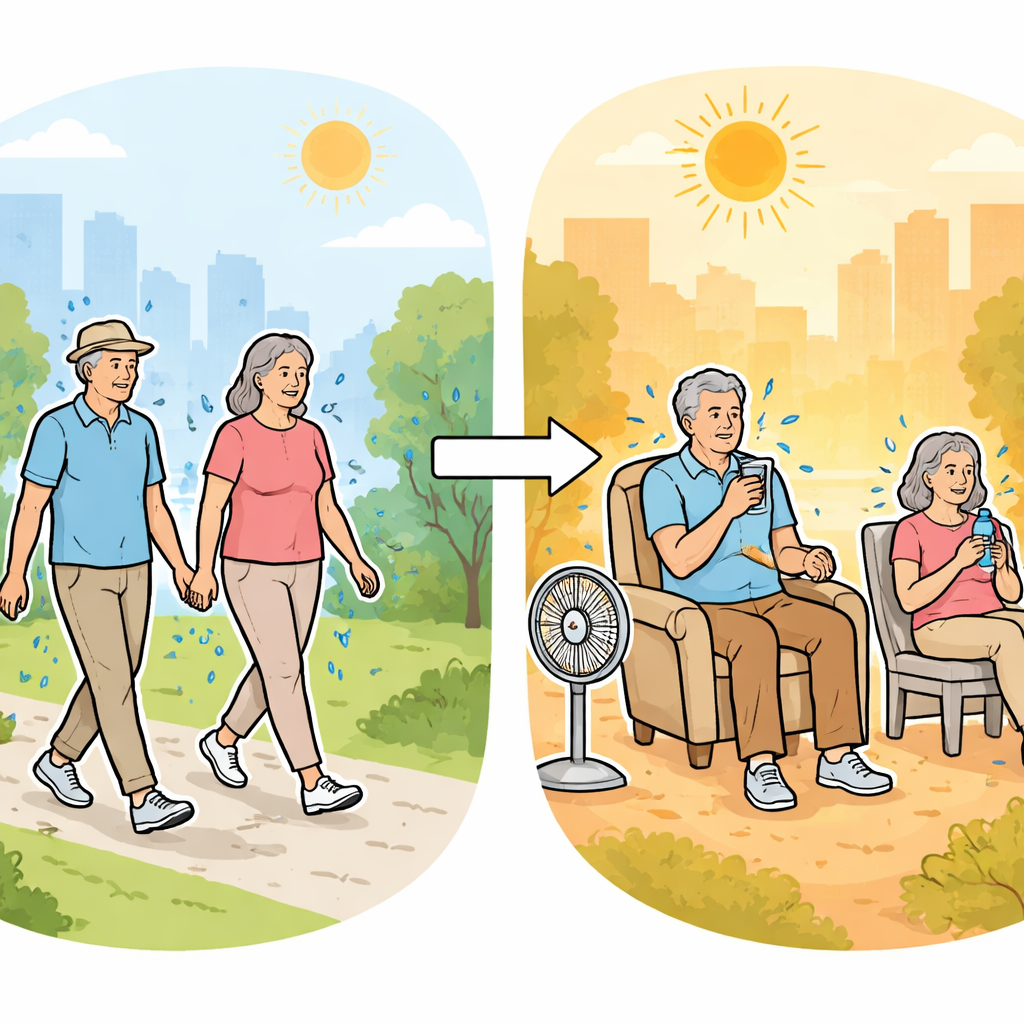
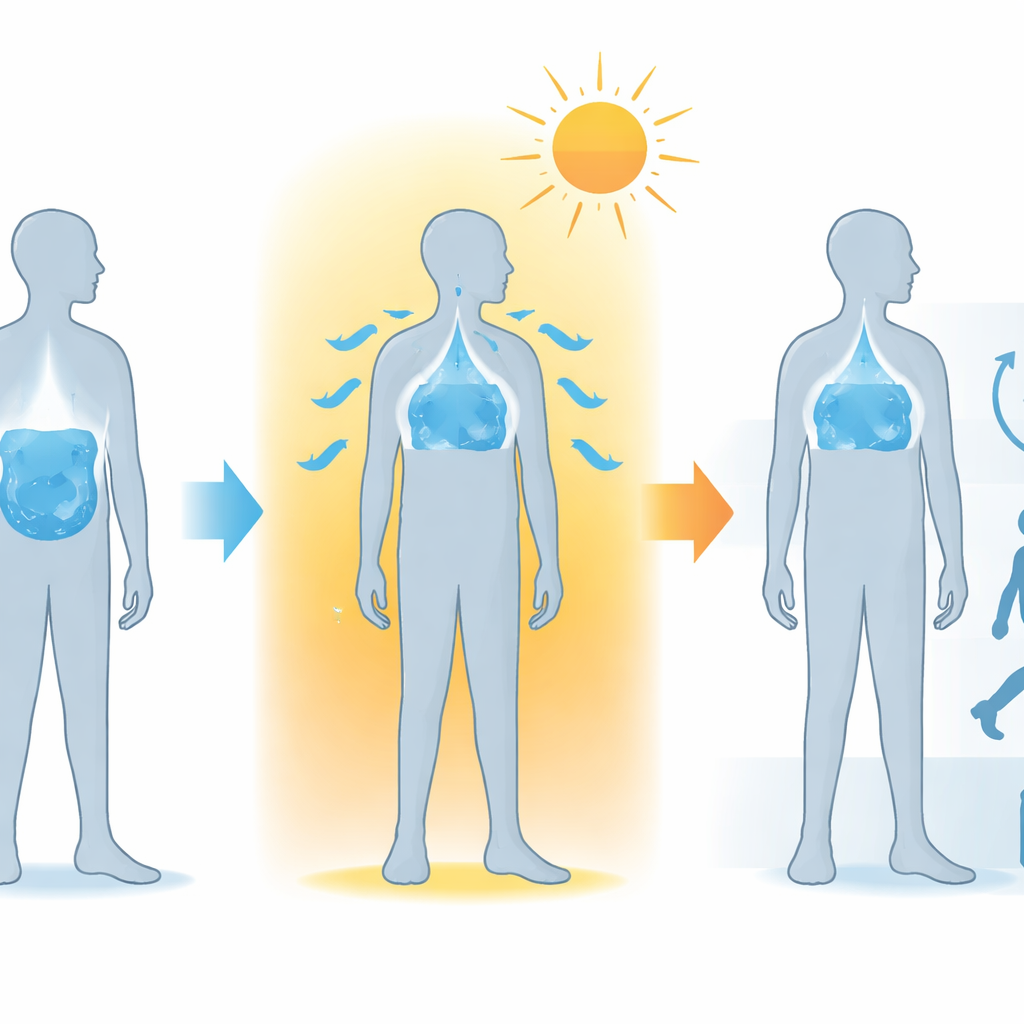
As temperatures climbed from spring to summer, the older adults’ bodies quietly shifted how they handled water. Total body water—the amount of water stored in tissues—rose by about 0.8 kilograms on average. Even more striking, daily water turnover, a measure of how much water is replaced each day, increased by about 640 milliliters. Nearly all participants showed higher water turnover in summer, indicating that their bodies were both losing and taking in more water. While water from foods stayed about the same across seasons, water from drinks rose clearly: fluid intake jumped from about 1.6 to 2.1 liters per day, and water coming in through breathing and through the skin also went up in the hotter, more humid air.
Moving less and burning fewer calories in hot weather
The same people who drank more in summer also tended to slow down. Step counts and time spent in light activity both dropped, while sedentary time, including sleep and sitting, increased. Careful calculations showed that total daily energy use fell by roughly 150 kilocalories when measured with the water-based method, and by a smaller but still meaningful amount when estimated from the activity sensors. Food intake followed the same pattern: people ate fewer calories, and slightly less protein, fat, and carbohydrate in summer than in spring. These shifts are consistent with what is known about appetite hormones, which tend to curb hunger in hot weather.
Links between water use and how active people were
Not everyone responded to summer in exactly the same way. Some participants actually became more active, while most moved less. The researchers found that those whose activity levels rose from spring to summer also showed the largest increases in water turnover. In other words, older adults who stayed or became more active in the heat needed to circulate more water through their bodies. This suggests that guidance on drinking in hot weather should consider not only temperature and age but also how much a person moves. At the same time, the authors note that drinking far beyond the body’s needs can be dangerous for seniors with reduced kidney function, because it may contribute to low blood sodium.
What these findings mean for healthy aging in a warming world
Taken together, the study shows that even relatively healthy older adults living independently adapt to hot summer conditions by turning over more water, drinking more fluids, and unconsciously cutting back on movement and food. These changes may protect them in the short term from heat stress, but long periods of reduced physical activity could worsen frailty and chronic disease risk over time. As climate change brings more intense and frequent heat waves, public health advice for seniors will need to strike a careful balance: encouraging regular, appropriate fluid intake while also helping older adults stay safely active enough to maintain strength and independence.
Citation: Kim, HK., Nakayama, Y., Yoshida, T. et al. Hydration, water requirements, and energy balance from spring to summer in free-living older adults: a doubly labelled water study. Sci Rep 16, 9872 (2026). https://doi.org/10.1038/s41598-026-38832-w
Keywords: older adults, heat and hydration, water intake, physical activity, climate change health