Clear Sky Science · en
Harnessing insect-derived oils for enhanced efficacy of plant-based repellents against disease-transmitting mosquitoes
A new twist on mosquito protection
Mosquitoes are more than a nuisance: they spread malaria, dengue, Zika, and other diseases that sicken hundreds of millions of people every year. Many families prefer “natural” plant-based repellents such as citronella, but these usually fade quickly on the skin. This study asks a surprising question with real-world impact: can oils made from edible insects help plant-based repellents last longer and work nearly as well as trusted products like DEET?
Why today’s repellents are not enough
For decades, mosquito control has depended heavily on chemical insecticides and treated bed nets. These tools have saved countless lives, but mosquitoes are evolving resistance, and some insecticides can harm the environment. On the personal protection side, powerful synthetic repellents like DEET and Picaridin offer many hours of defense but raise concerns for some users about long-term exposure and ecological footprint. By contrast, plant-based repellents made from oils such as citronella, lemon eucalyptus, and African basil are biodegradable and popular with consumers, yet they evaporate quickly in hot, humid climates. That means people must reapply them often, and protection times can fall well below two hours.
Borrowing help from edible insects
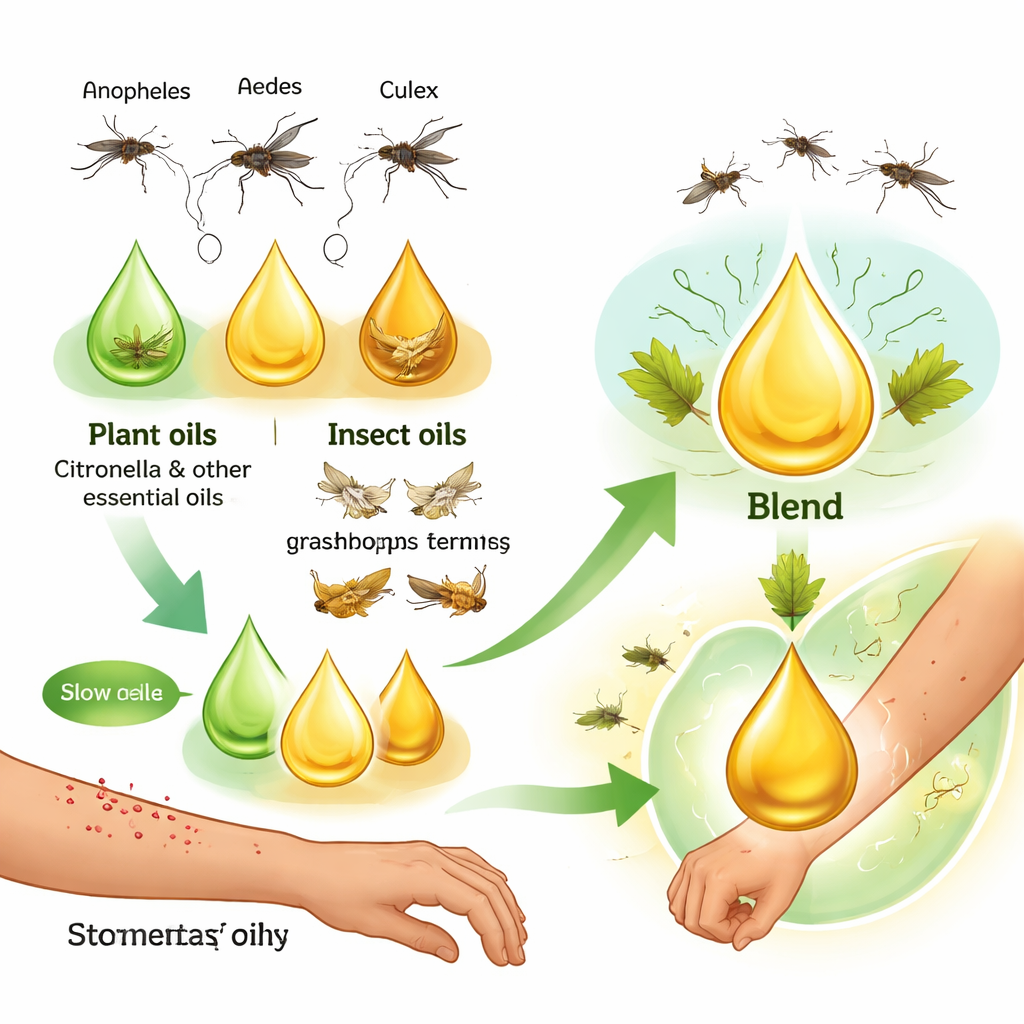
Edible insects are gaining attention as sustainable sources of food and animal feed, and processing them generates large amounts of oil that are often discarded. These insect oils have a different chemistry from plant essential oils: instead of light, quickly evaporating aroma molecules, they are rich in heavier fatty acids and sterols, which are more stable and slower to break down. The researchers wondered whether these heavier insect oils could act as “fixatives” for plant oils—slowing the escape of scent molecules from the skin and stretching out the time mosquitoes stay away. They focused on oils from three insects commonly eaten in East Africa: desert locusts, the bush cricket Ruspolia differens (known locally as nsenene), and winged termites from the genus Macrotermes.
Blending plant scents with insect staying power
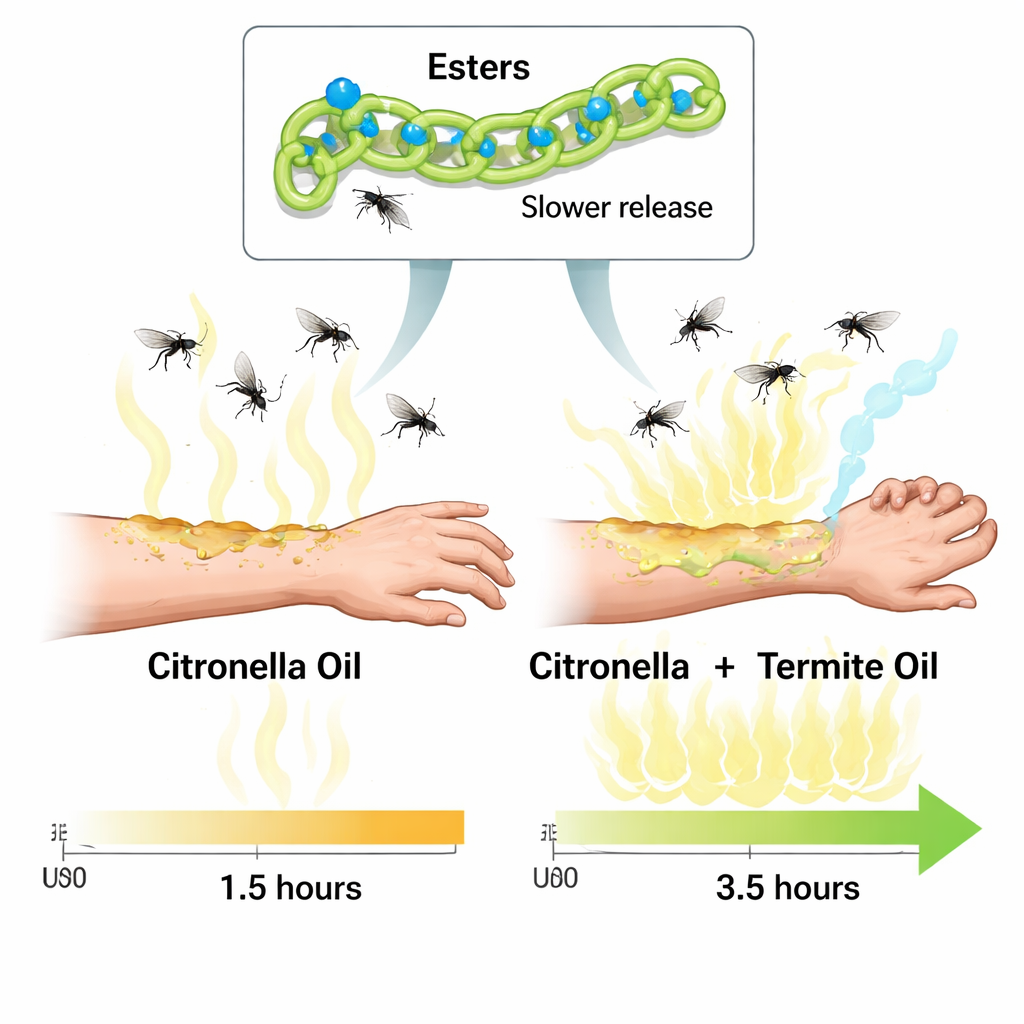
The team extracted and chemically analyzed both insect oils and essential oils from citronella grass (Cymbopogon nardus), African camphor basil, and lemon eucalyptus. Using human volunteers in controlled cages filled with disease-transmitting mosquitoes—Anopheles gambiae, Aedes aegypti, and Culex quinquefasciatus—they tested how long each formulation prevented bites, a measure called Complete Protection Time. Plant oils used alone protected for roughly one to two hours, while insect oils alone were weak repellents. But when the scientists mixed plant and insect oils in equal parts, protection nearly doubled. The standout blend was citronella grass oil combined 1:1 with Macrotermes termite oil, which kept Anopheles mosquitoes from biting for about 3.5 hours and offered similar early protection to a 20 percent DEET product during the first three and a half hours. Comparable, though slightly shorter, protection was seen against Aedes and Culex mosquitoes.
How the blends keep working longer
To uncover why these mixtures lasted longer, the researchers captured and measured the airborne chemicals rising from volunteers’ skin over time. The citronella–termite oil blend released about three times more of certain fragrant compounds, especially a group of “esters” such as geranyl acetate and citronellyl acetate, than citronella alone. These esters persisted on the skin for more than three hours. The team suggests that fatty acids in the insect oil chemically link with citronella components to form these heavier esters, which evaporate more slowly. This slower, steadier release appears to keep a cloud of repellent scent around the skin that masks the carbon dioxide and body odors mosquitoes use to find us. In simple terms, the insect oil behaves like a natural anchor that holds the plant fragrance in place and lets it fade gently instead of disappearing in a rush.
What this could mean for everyday use
From a layperson’s perspective, the conclusion is straightforward: mixing certain insect-derived oils with familiar plant-based repellents can make “natural” products last nearly twice as long, bringing them closer to the performance of standard DEET sprays for the crucial first few hours after application. Because the insect oils come from edible species already considered safe to consume, they are promising candidates for skin-friendly, eco-conscious repellent formulations—though full safety testing is still needed. If further developed, such blends could give communities in mosquito-plagued regions, especially where resistance to classic pesticides is rising, an affordable and sustainable new way to keep bites, and the diseases they carry, at bay.
Citation: Ochola, J.B., Mudalungu, C.M., Mokaya, H.O. et al. Harnessing insect-derived oils for enhanced efficacy of plant-based repellents against disease-transmitting mosquitoes. Sci Rep 16, 7662 (2026). https://doi.org/10.1038/s41598-026-38831-x
Keywords: mosquito repellent, citronella, insect oil, malaria prevention, natural vector control