Clear Sky Science · en
Enhanced lycopene fortification in eggs using poultry feed containing a carotenoid-oil preparation derived from metabolically engineered baker’s yeast
Why brighter egg yolks could be good for you
Eggs are a staple food around the world, and many shoppers instinctively reach for cartons that promise rich, golden yolks. This study explores a way to make those vivid yolks using natural color from a health‑promoting plant pigment called lycopene, rather than synthetic dyes. By engineering common baker’s yeast to produce lycopene and adding it to chicken feed in an oil-based form, the researchers created eggs with deeper orange-red yolks that also carry unusually high levels of this antioxidant.
From everyday yeast to a color-rich ingredient
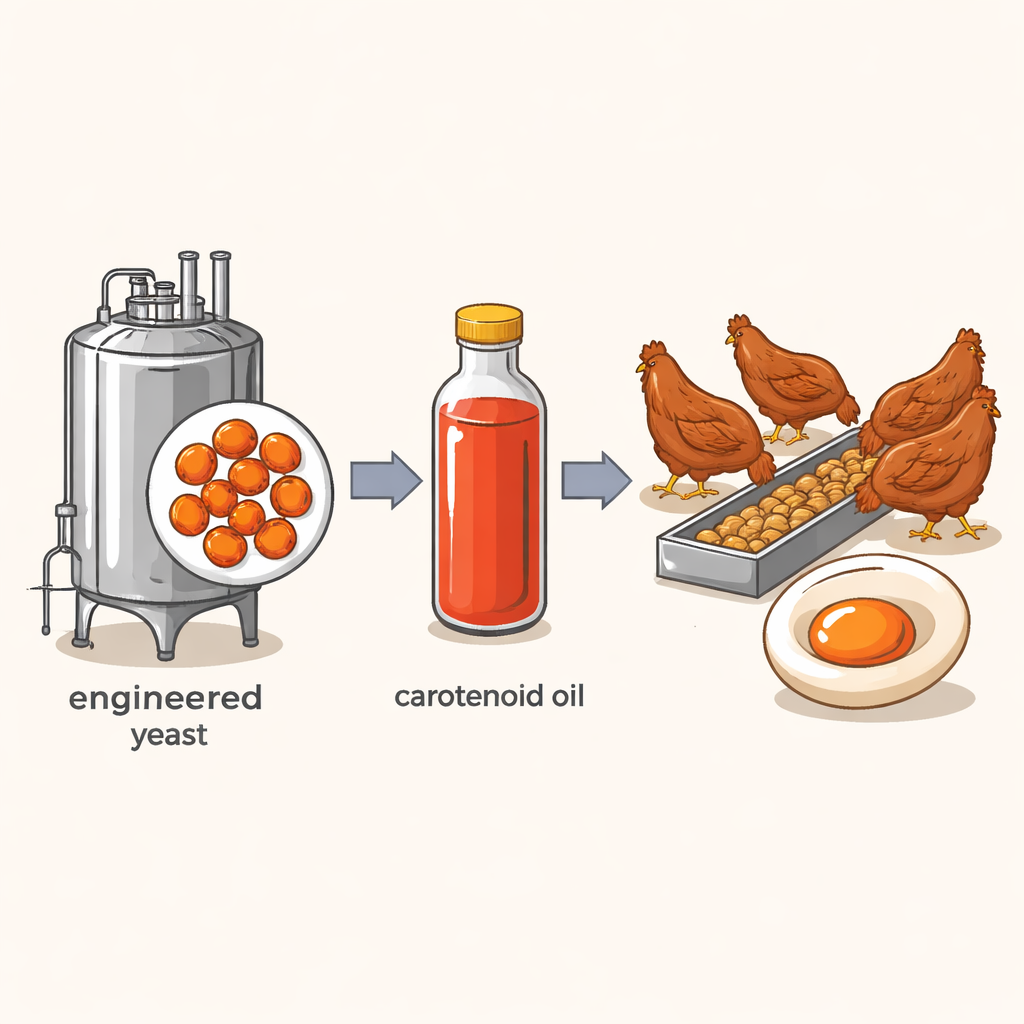
The team began with Saccharomyces cerevisiae, the same yeast used in baking and brewing, which is already considered safe in animal feed. They rewired its metabolism so it could make large amounts of two red‑orange pigments, lycopene and beta‑carotene, normally found in tomatoes and other bright produce. Several genetic tweaks boosted production step by step, until the yeast turned a strong orange‑red. Using a carefully controlled extraction method, the pigments were pulled out of the yeast and concentrated, then mixed into soybean oil to create a carotenoid‑rich oil that could be sprayed onto standard poultry feed pellets.
Testing new feeds in real chicken houses
To find out whether this new ingredient actually changed eggs, the researchers ran three feeding trials with Hy‑Line Brown laying hens. First, they mixed dried, pigment‑producing yeast directly into a loose mash feed. Hens that received high doses of this powdered yeast laid eggs with slightly darker yolks—about two color‑fan points deeper than birds on plain feed—but the improvement was modest. In addition, the yeast powder did not mix well into the mash, and hens tended to avoid some of the smaller particles, making the approach less practical for large farms.
Oil-coated pellets make a big difference
The more successful approach used regular pellet feed with no built‑in color additives. The team sprayed these pellets with soybean oil alone, or with the new carotenoid‑rich oil, or with oil containing intact or broken yeast cells. This allowed a clean comparison between natural pigments locked inside yeast and pigments already dissolved in oil. Hens eating pellets coated with lycopene-rich oil produced eggs whose yolk color jumped by as much as 4.5 points on the standard DSM color scale, reaching a score of about 10—similar to eggs laid by hens fed commercial synthetic dyes. In contrast, pellets coated with intact or broken yeast in oil produced only small increases in yolk color, showing that freeing the pigment from the yeast cell wall was key.
Building eggs that act like functional foods
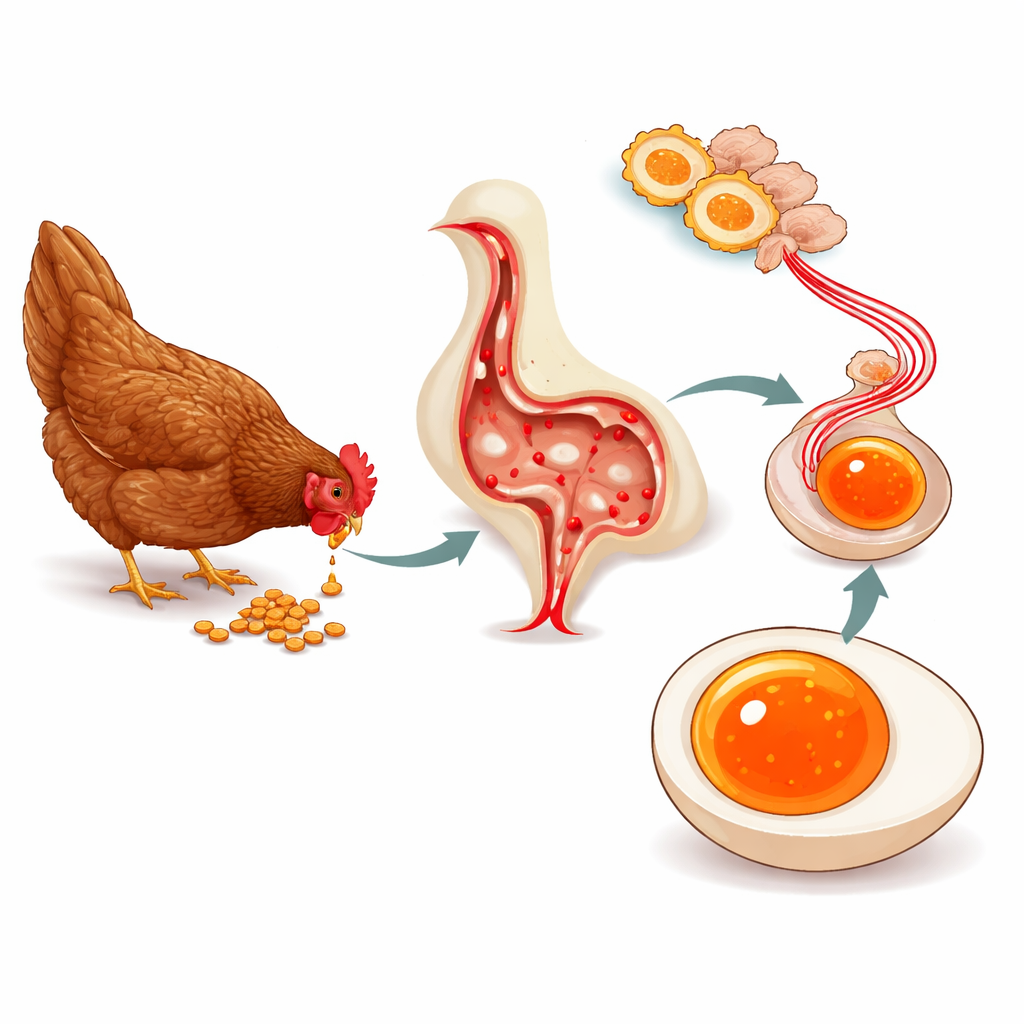
Beyond appearance, the researchers measured how much lycopene actually ended up in the yolks. In the best-performing feed, which supplied 70 mg of carotenoids per kilogram of feed (about 80% lycopene), egg yolks contained up to 32.5 micrograms of lycopene per gram of dry yolk—roughly eight times higher than the best values previously reported for lycopene-enriched eggs. Beta‑carotene, by contrast, did not build up in the yolks, suggesting that hens metabolized it differently. Importantly, the hens stayed healthy: feed intake, egg production, shell strength, and albumen quality were all comparable to, or slightly better than, those seen with commercial diets.
What this means for your breakfast plate
For consumers, the work points toward eggs that are not only more visually appealing but may also carry extra nutritional value. Lycopene is a powerful antioxidant linked in human studies to lower risks of some cancers and heart disease, and it is especially well absorbed from the fat-rich yolk. This study shows that a natural, yeast‑derived oil can replace synthetic colorants in feed while packing yolks with unusually high amounts of lycopene, without harming hens or egg quality. With further safety, regulatory, and taste‑testing work, such lycopene‑fortified eggs could become an everyday functional food, quietly turning a familiar breakfast item into a vehicle for added health benefits.
Citation: Chhay, C., Lohitnawin, M., Wongphatcharachai, M. et al. Enhanced lycopene fortification in eggs using poultry feed containing a carotenoid-oil preparation derived from metabolically engineered baker’s yeast. Sci Rep 16, 7354 (2026). https://doi.org/10.1038/s41598-026-38825-9
Keywords: lycopene-fortified eggs, engineered yeast feed, egg yolk color, natural carotenoid pigments, functional foods