Clear Sky Science · en
Cone-beam CT-based age-specific risk prediction model for maxillary anterior supernumerary teeth
Why extra front teeth matter
Most people expect to have a fixed number of teeth, but some grow "extra" teeth in the upper front of the mouth. These surprise guests, called supernumerary teeth, can look harmless on routine X‑rays yet quietly cause crooked smiles, trapped adult teeth, or even damage to the surrounding jawbone. This study uses 3D dental scans to ask a practical question that concerns patients and dentists alike: at what ages, and in which situations, do these extra teeth truly require surgery, and when is careful watching enough?
Looking inside the jaw in three dimensions
Instead of relying on flat X‑rays, the researchers turned to cone‑beam CT, a type of low‑dose 3D scan widely used in modern dental clinics. They reviewed scans from 217 people with extra teeth behind or between the upper front teeth, ranging from school‑age children to adults. This technology let them see not only how many extra teeth were present, but also their shapes, whether they had straight or curved roots, and how deeply they were buried in the bone. The team then linked these features to real‑world problems such as gaps between front teeth, failure of adult teeth to come in, cysts, and erosion of the surrounding bone.
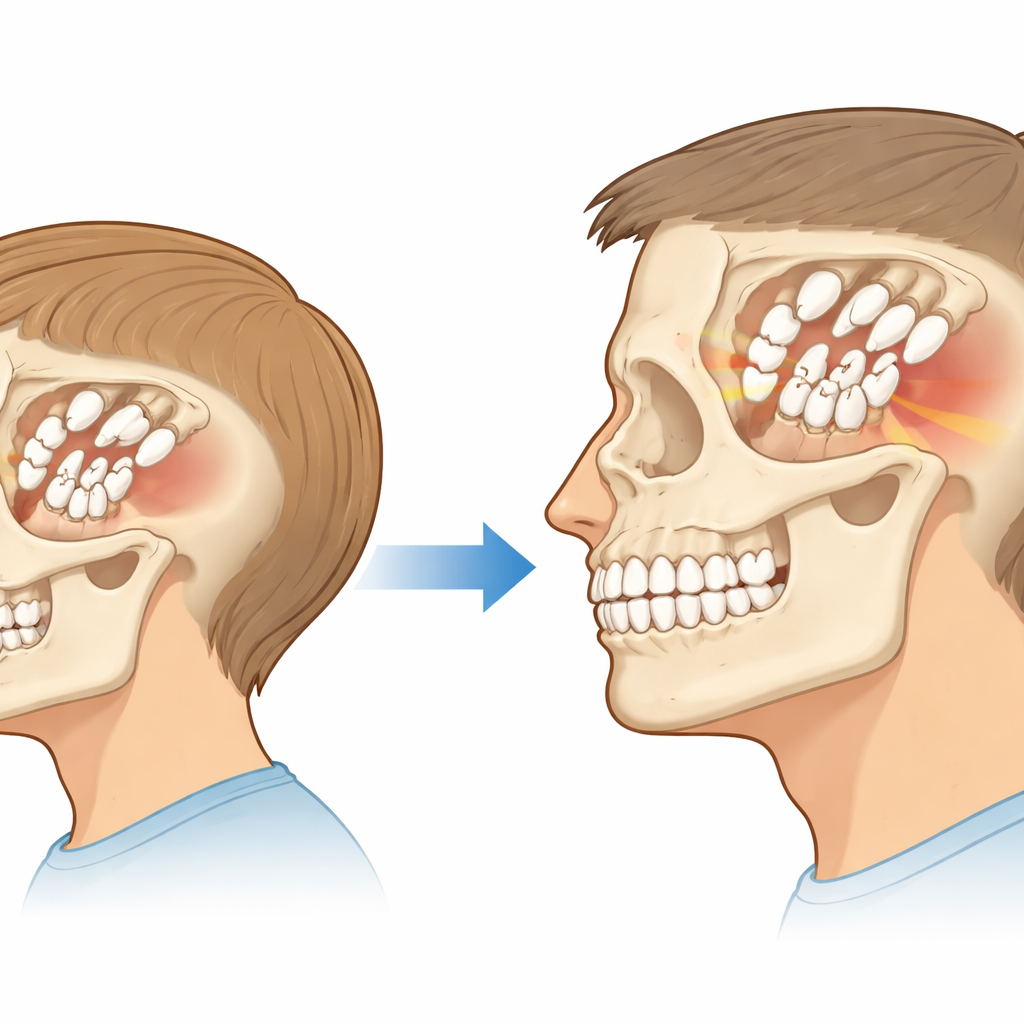
Different ages, different kinds of trouble
The study found that age strongly shaped the kind of trouble extra teeth caused. In children and teenagers (under 19), the main issues were crowding and eruption problems. Extra teeth acted like pebbles in a narrow stream, blocking or deflecting the path of growing front teeth and creating crooked alignment or midline gaps. Here, the simple fact of having two or more extra teeth was the standout warning sign: these youngsters were about four times more likely to develop dental irregularities than those with just one extra tooth. Root shape mattered less at this stage, probably because the jawbone and tooth roots were still forming and could remodel over time.
When long‑term pressure harms the bone
In adults, the pattern shifted from mechanical blockage to genuine disease. People who had lived for years with extra teeth buried in the front of the upper jaw were far more likely to show signs of bone destruction and cyst formation around these teeth. Two features tended to travel together in the highest‑risk adults: having at least two extra teeth and having curved roots on those teeth. Curved roots concentrate pressure on small areas of bone; over many years this appears to invite inflammation and bone loss. Adults with both multiple extra teeth and curved roots had several‑fold higher odds of destructive changes compared with those with a single, straight‑rooted extra tooth.
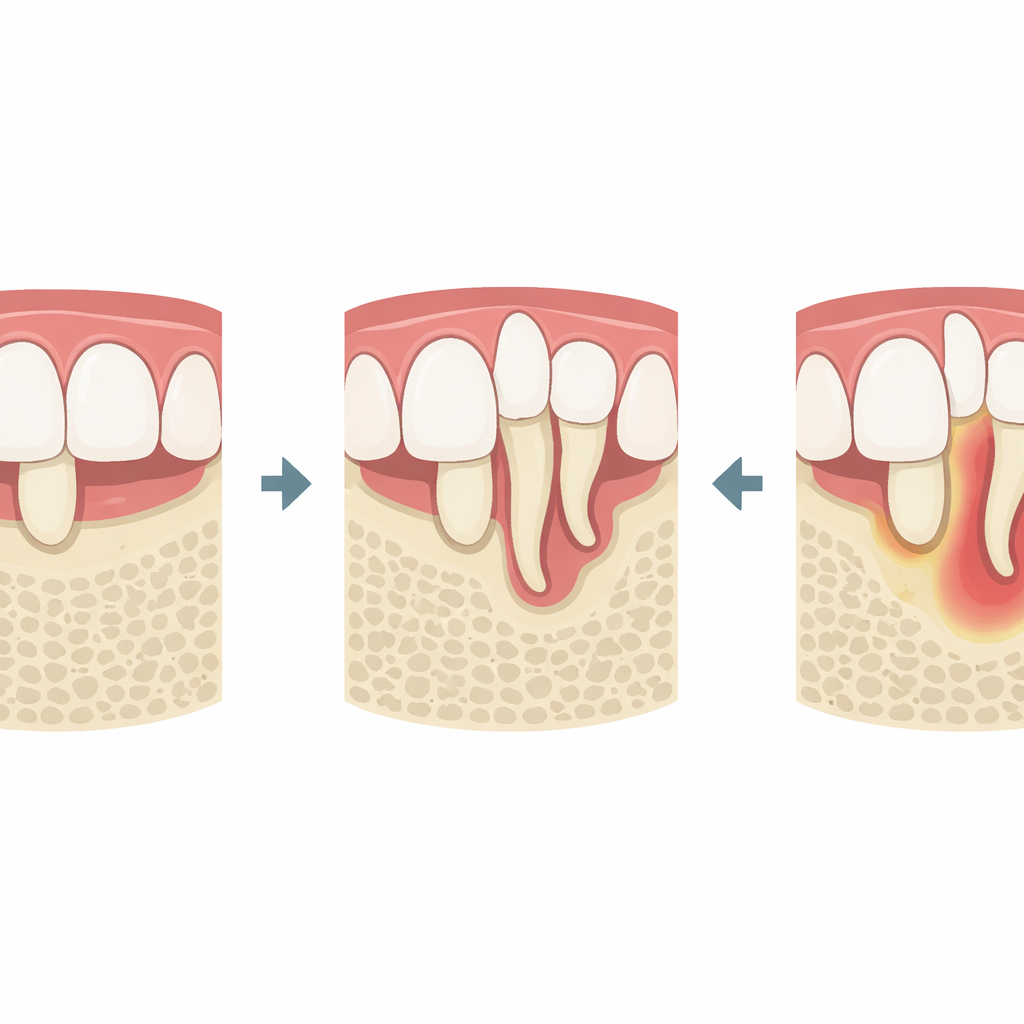
Building age‑specific risk calculators
Using these patterns, the researchers built simple prediction models tailored to children and to adults. For children, the model estimates the chance of future alignment problems mainly from the number of extra teeth. Its accuracy was modest, reflecting the natural unpredictability of growing jaws, but it still helps flag children who likely benefit from early elective removal. For adults, a companion model combined tooth number and root curvature to forecast the risk of bone damage around the extra teeth. This adult model performed well, correctly separating higher‑ and lower‑risk cases in most instances, and did better than a previous one‑size‑fits‑all approach that did not fully account for age or root shape.
What this means for treatment decisions
For patients and clinicians, the message is that extra front teeth are not all equal, and age matters. In school‑age children with several extra teeth, early removal is often justified to prevent crooked or trapped permanent teeth, while those with a single, straight‑rooted extra tooth can often be monitored with regular check‑ups and scans. For adults, the emphasis shifts to protecting the jawbone: people with multiple extra teeth that have curved roots should be prioritised for surgery before long‑term pressure leads to bone loss or cysts, while adults with a solitary, straight‑rooted extra tooth may be safely followed over time. The study does not replace clinical judgment, but it offers a clearer, scan‑based roadmap for deciding who needs intervention now and who can safely wait.
Citation: Li, M., Mao, J., Huang, Y. et al. Cone-beam CT-based age-specific risk prediction model for maxillary anterior supernumerary teeth. Sci Rep 16, 8384 (2026). https://doi.org/10.1038/s41598-026-38822-y
Keywords: supernumerary teeth, cone-beam CT, dental risk prediction, jaw bone damage, age-specific treatment