Clear Sky Science · en
Morphological, biochemical, and SSR molecular insights of jamun (Syzygium cumini Skeels)
A Future Superfruit Hiding in Plain Sight
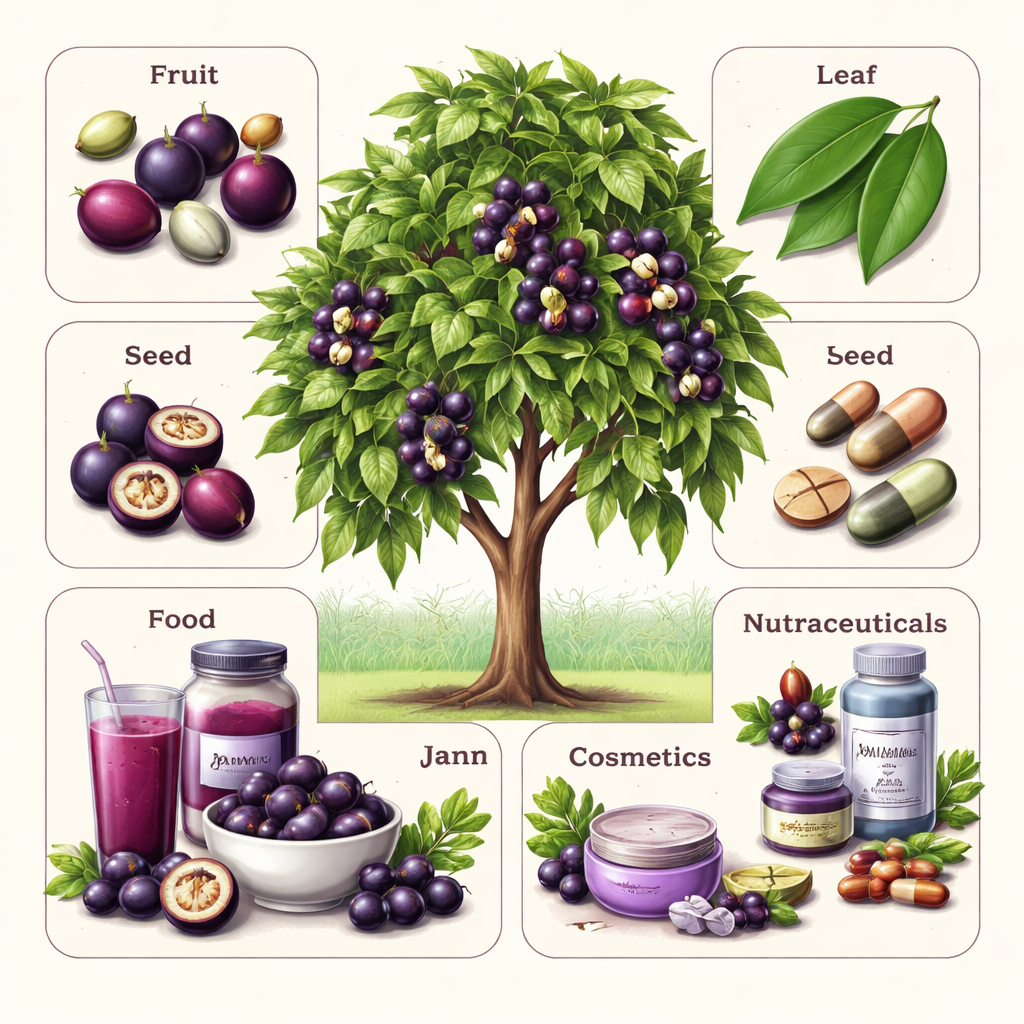
Jamun, also known as Indian blackberry or Java plum, may look like an ordinary roadside fruit, but this study reveals it as a nutritional powerhouse with untapped potential for health foods, medicine, and cosmetics. By carefully comparing 23 different jamun types from Indian research orchards, scientists show just how much these trees differ in fruit size, taste, color, and health‑boosting compounds—and even in their DNA. The work points the way toward better jamun varieties for farmers, food companies, and people seeking natural ways to support their health.
One Tree, Many Local Faces
Although jamun is familiar across South Asia, most trees grown today come from chance seedlings, not planned breeding. The researchers began by documenting how 23 genotypes differed in visible traits: tree height and canopy shape, leaf size and color, flowering time, and fruit appearance. Some trees were tall and spreading, others compact and better suited to small orchards. Fruits ranged from tiny to large, mostly oblong and deep purple or black, but with one striking white‑fruited type. Pulp color was usually red‑purple, reflecting pigment richness. These contrasts show that, even before looking inside the fruit, there is substantial natural diversity to work with.
From Sweetness to Super‑Pigments
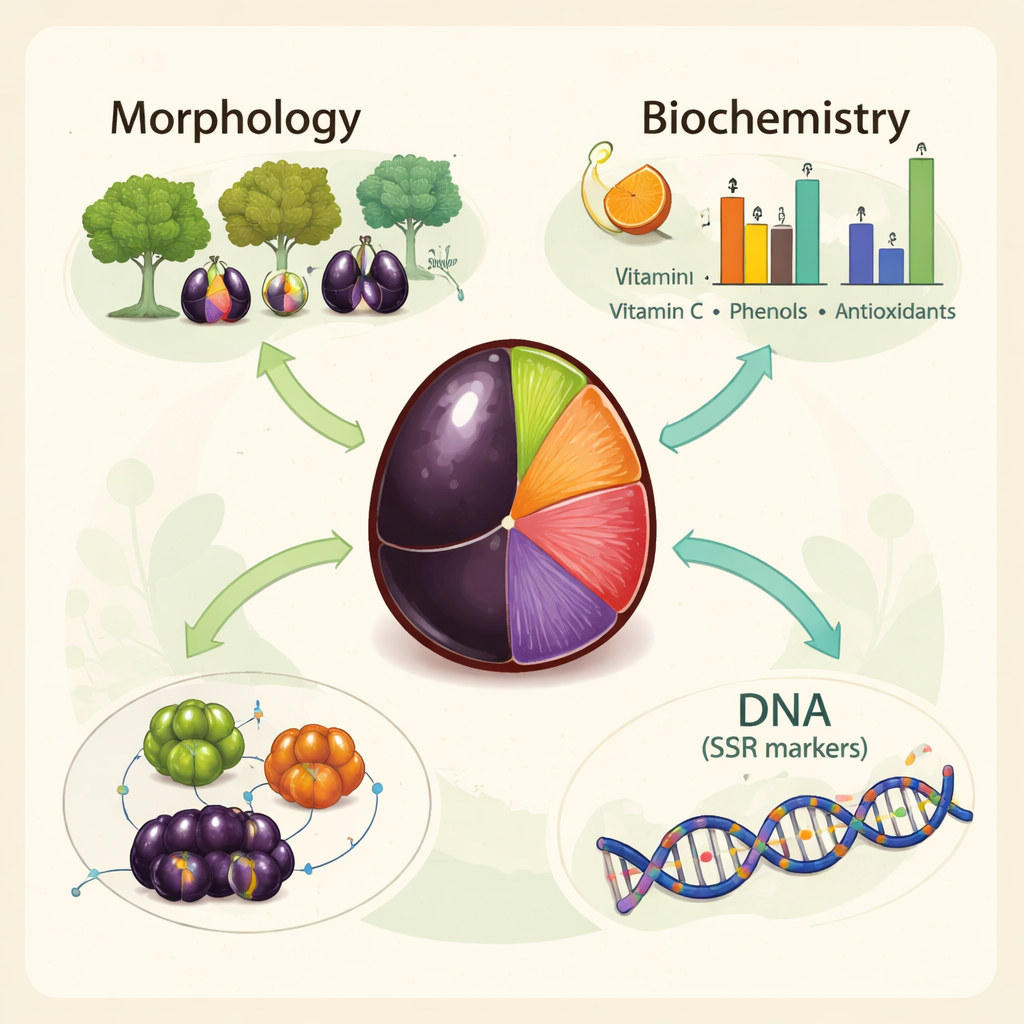
The team then measured what makes jamun attractive to both taste buds and health‑conscious consumers. They analyzed sugars (total, reducing, and non‑reducing), acidity, vitamin C, total phenols, antioxidant activity, and anthocyanins—the pigments that give jamun its deep color. Fruit sweetness varied notably, with some genotypes reaching high sugar levels and others remaining modestly sweet. Acidity also ranged widely, shaping whether a fruit tastes more tart or mild and influencing how well it works in juices, jams, and wines. Vitamin C levels in the best lines were comparable to or higher than many popular fruits, and total phenols and antioxidant capacity in the top performers approached those of well‑known “superfruits.” One genotype, CHESHJ‑Wd‑1, had nearly six times more anthocyanins than the least pigmented type, underlining just how strongly health‑related compounds depend on genetic background.
Matching Fruit Traits to Real‑World Uses
By combining dozens of measurements, the scientists used statistical tools to group genotypes into clusters that reflect their strengths. Some lines, such as Kaithnal and AJG‑85, produced large, high‑pulp fruits ideal for fresh eating and juice. Others, including CHESHJ‑XI/3 and CHESHJ‑V/1, stood out for their vitamin C, phenols, and overall antioxidant power, making them prime candidates for nutraceuticals and functional foods. CHESHJ‑Wd‑1 offered exceptional antioxidant and pigment levels, while CHESHJ‑Wt‑1 was naturally dwarf with high sweetness, a combination attractive for high‑density orchards and home gardens. Seed‑rich lines, though less appealing for fresh fruit, are valuable for industries that use jamun seed extracts for managing blood sugar and oxidative stress.
Reading Jamun’s Genetic Barcode
To look beneath the surface, the team examined DNA using 50 simple sequence repeat (SSR) markers—short, repeated segments that act like barcodes across the genome. These markers revealed high genetic diversity: an average of about seven alleles per marker and strong “polymorphic information content,” meaning the markers are excellent for telling genotypes apart. DNA‑based family trees and coordinate plots showed that some genotypes, especially CHESHJ‑Wd‑1 and CHESHJ‑Wt‑1, were genetic outliers, while others were closely related. Importantly, patterns from DNA largely agreed with those from fruit and biochemical traits, suggesting that specific DNA regions could eventually be linked to desirable qualities such as large fruit size or high antioxidant content.
Turning Wild Variety into Everyday Benefits
For a non‑specialist, the main message is that jamun is far from a single, uniform fruit: it is a diverse resource waiting to be refined. This study pinpoints specific jamun lines suited to fresh markets, processed foods, health supplements, and dense orchards, and shows that their differences are rooted in both chemistry and DNA. With this knowledge, breeders can design crosses—such as pairing large‑fruited types with antioxidant‑rich ones—to create future varieties that are tastier, healthier, and easier to grow. In short, the humble jamun has all the ingredients to become a major functional food crop, supporting nutrition, medicine, and industry from the same tree.
Citation: Saini, K., Ganesan, K., Reddy, L. et al. Morphological, biochemical, and SSR molecular insights of jamun (Syzygium cumini Skeels). Sci Rep 16, 7536 (2026). https://doi.org/10.1038/s41598-026-38816-w
Keywords: jamun, Syzygium cumini, antioxidants, fruit breeding, functional foods