Clear Sky Science · en
Geopolymer concrete production by utilizing unprocessed pond ash as fine aggregate and ground pond ash as binder
Turning Power Plant Waste into a Building Resource
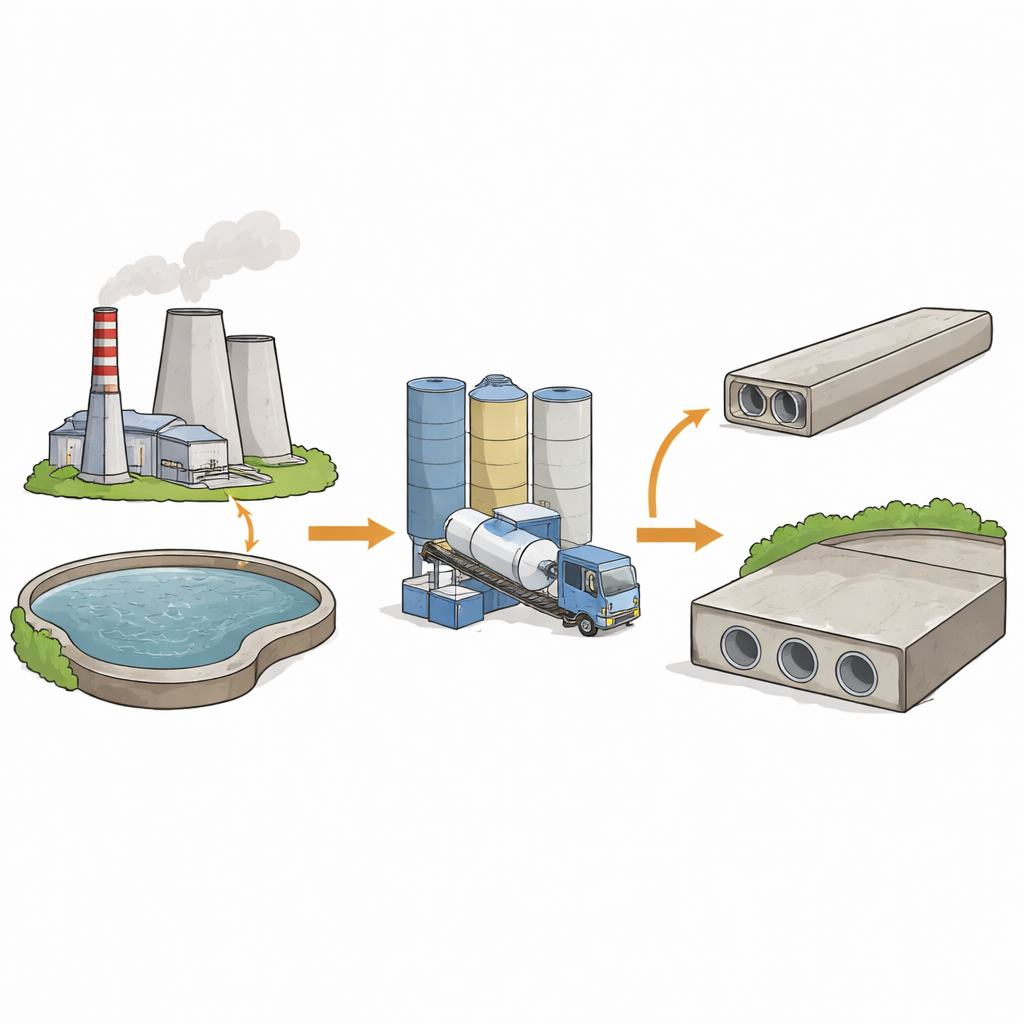
Coal-fired power plants leave behind mountains of ash that are often sluiced into large ponds and left there for years. These ash lagoons take up land, leach pollutants and represent a vast, underused resource. This study explores whether that pond ash can be transformed into a key ingredient of a more climate-friendly concrete, potentially cutting carbon emissions while cleaning up a stubborn industrial waste.
From Ash Ponds to New Concrete
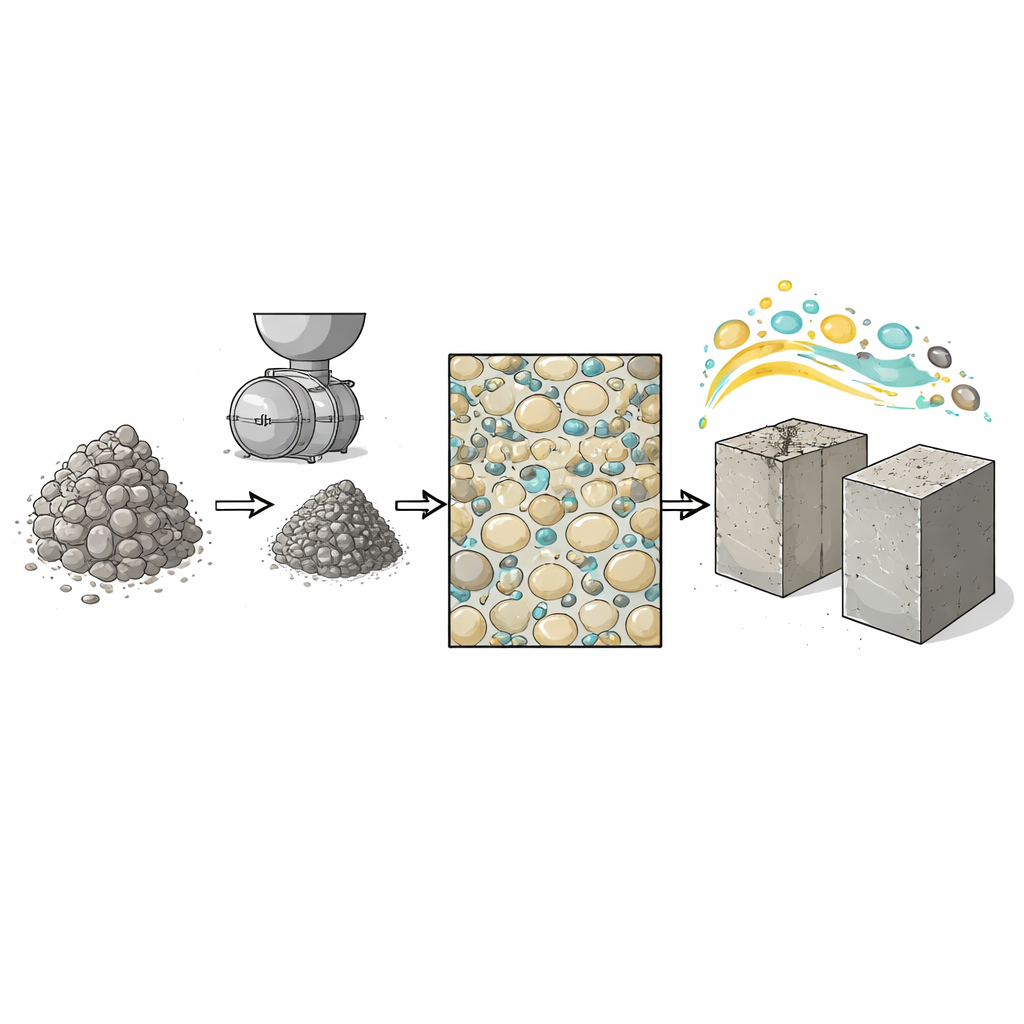
Coal ash stored in ponds is a mix of fine and coarse particles that have soaked in water for long periods. The authors call the material scooped directly from these ponds "unprocessed pond ash" and examine two ways to use it in geopolymer concrete, a type of concrete that relies on industrial by-products instead of traditional cement. First, they replace the natural sand normally used in concrete with unprocessed pond ash, in steps from a small fraction up to 100 percent. Second, they mechanically grind part of the pond ash into a finer powder, termed ground pond ash, and use it to partially or fully replace fly ash, a common binder in geopolymer mixes.
Designing a Greener Mix
In all mixes, the binding glue is formed by activating aluminosilicate powders with a solution of sodium hydroxide and sodium silicate, while a fixed proportion of blast furnace slag supplies extra calcium to speed hardening. The researchers cast many batches of concrete, varying how much natural sand was swapped for unprocessed pond ash and how much fly ash binder was replaced by its ground counterpart. They then cured the specimens at normal room temperature, avoiding the energy-intensive heat curing often associated with geopolymers, and measured how easy the fresh concrete was to handle, how strong it became over time and how well it stood up to aggressive chemical exposure.
Strength with Less Natural Sand
Replacing natural sand with unprocessed pond ash made the fresh concrete stiffer and harder to work with, mainly because the ash particles are very porous and much finer than conventional sand, soaking up more liquid. However, the impact on strength was surprisingly modest: even when pond ash fully replaced natural sand, the 28-day compressive strength dropped by only about 7 percent and reached roughly 40 megapascals after longer curing—adequate for many structural applications. Microscopic and infrared analyses revealed that the pond ash is not entirely inert; its reactive components join the geopolymer network over time, filling pores and helping the concrete continue to gain strength between 28 and 56 days.
Grinding Ash and Facing Harsh Conditions
Grinding the pond ash into a finer powder increased its reactive silica content, but it still lagged behind conventional fly ash as a binder. When fly ash was progressively replaced by ground pond ash, early-age strengths stayed similar because the slag component dominated the early reaction. At later ages, however, mixes with more ground pond ash developed slightly lower strength and a somewhat coarser internal structure. Durability tests told a nuanced story: all geopolymer concretes showed higher resistance to sulfuric acid than ordinary cement concrete, which suffered heavy mass and strength loss as gypsum and other expansive products formed. Yet in a test of how easily chloride ions could pass through, the cement concrete performed best, with the geopolymer mixes—especially those rich in ground pond ash—showing moderate permeability.
What This Means for Future Building
For non-specialists, the take-home message is that much of the ash languishing in power plant ponds can be turned into a useful ingredient for greener concrete. By using unprocessed pond ash as all of the sand and ground pond ash as part of the binder, the researchers produced a room-temperature-cured geopolymer concrete of moderate structural strength, with up to about 37 percent of its solid ingredients coming from this waste. It is less workable and somewhat more open to salt penetration than standard concrete, but it stands up far better to acidic environments, making it promising for industrial floors or sewer pipes. With further refinements—such as more reactive additives and safer, easier-to-handle dry activators—this approach could help turn a large pollution problem into a valuable construction resource.
Citation: Vidyadhara, V., Gowda, T.S. & Ranganath, R.V. Geopolymer concrete production by utilizing unprocessed pond ash as fine aggregate and ground pond ash as binder. Sci Rep 16, 9041 (2026). https://doi.org/10.1038/s41598-026-38814-y
Keywords: geopolymer concrete, pond ash, coal ash reuse, sustainable construction, acid-resistant concrete