Clear Sky Science · en
DMH1 improves palmitic acid-Induced insulin resistance in cardiomyocytes via PP2A inhibition and AKT/AMPK signaling activation
Why Heart Cells Struggle With Sugar
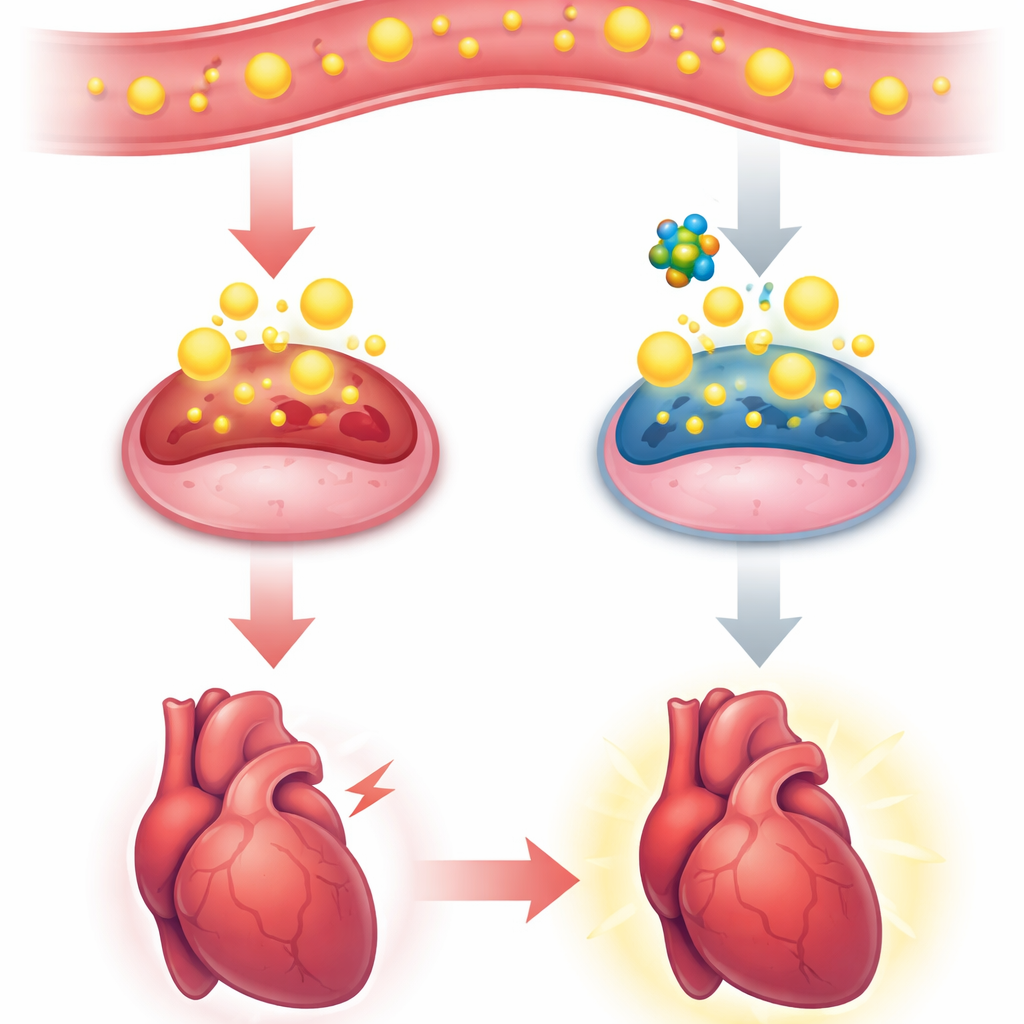
People with obesity or type 2 diabetes often develop hearts that cannot use sugar efficiently, a problem known as insulin resistance. When heart muscle cells ignore insulin’s signal, they burn fuel poorly, produce more harmful by-products, and become more vulnerable to damage. This study explores whether a small laboratory-made molecule called DMH1 can help heart cells regain their ability to respond to insulin and use sugar properly when they are stressed by high levels of a common dietary fat.
Fat Overload and Stubborn Heart Cells
The researchers focused on palmitic acid, a saturated fat abundant in many animal products and processed foods. In the lab, they exposed rat heart–derived cells to high doses of palmitic acid to mimic the fatty environment seen in obesity. Under this fat overload, the cells consumed and took up much less glucose, showed more cell death, and produced excess reactive oxygen species—chemically aggressive molecules that damage cell structures. At the same time, key internal switches that normally help cells handle sugar and energy were turned off, mirroring the insulin resistance observed in diseased hearts.
A Small Molecule With a Big Helping Hand
DMH1 had previously been shown to boost sugar use in skeletal muscle cells, so the team asked whether it could rescue fat-stressed heart cells. When they added DMH1 to the palmitic acid–treated heart cells, glucose use and glucose uptake rebounded, and markers of cell injury dropped. The mitochondria—the cell’s power plants—maintained their electrical charge better and produced fewer damaging oxygen by-products. DMH1 also helped insulin work more effectively again, both in the heart-derived cell line and in primary heart cells taken from newborn rats, suggesting that its benefits are not limited to one model system.
Switching Cell Signals Back On
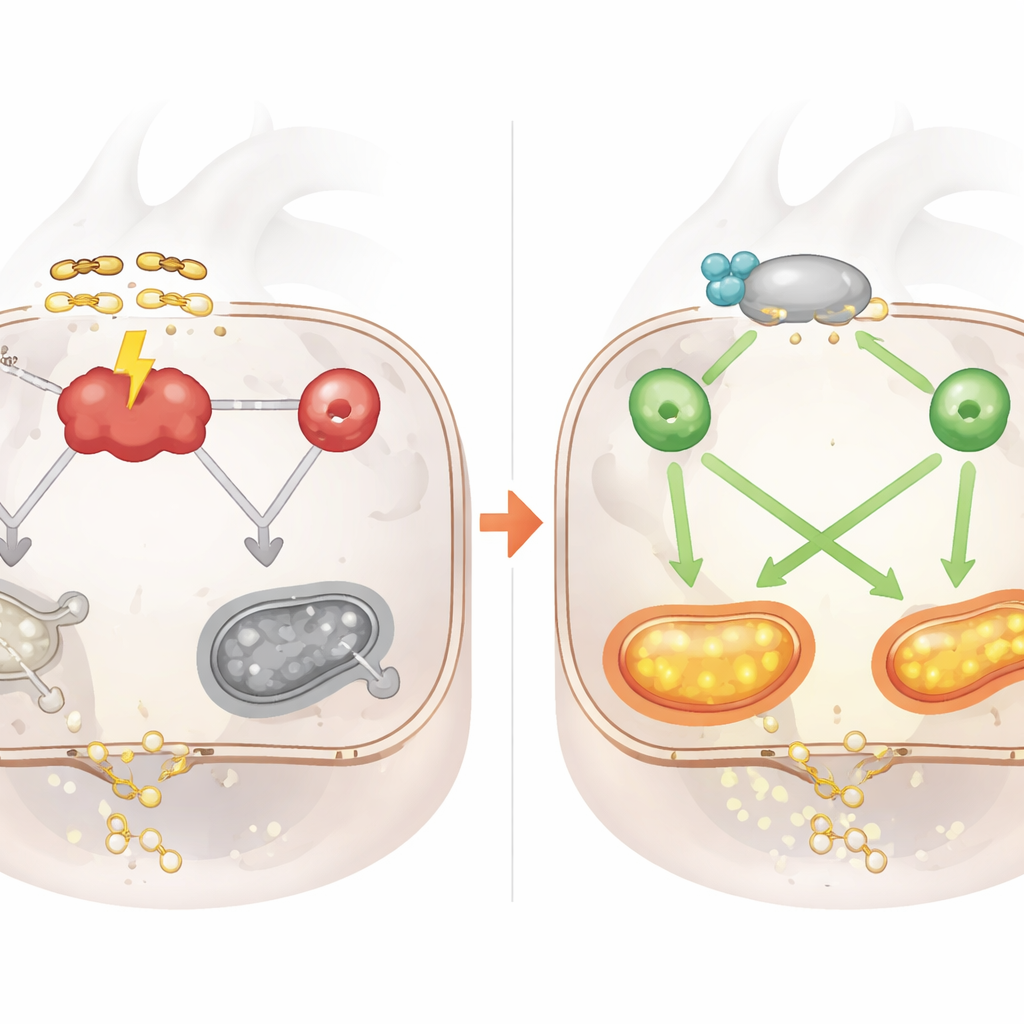
To understand how DMH1 works, the scientists examined two crucial signaling hubs inside the cells. One, often called AKT, is strongly linked to insulin’s ability to drive glucose into cells. The other, known as AMPK, senses the cell’s energy state and promotes sugar burning and fat breakdown when energy is low. Palmitic acid exposure dulled both of these switches, reducing their active, phosphorylated forms. DMH1 reversed this effect, restoring their active states. When the researchers applied drugs that specifically blocked AKT or AMPK, DMH1 could no longer improve glucose use, showing that both switches are required for its protective action.
Taking the Brakes Off Cell Metabolism
The study then turned to a third player: PP2A, an enzyme that acts like a brake by removing phosphate groups and shutting down many signaling proteins, including AKT and AMPK. Palmitic acid is known to ramp up PP2A activity, which can deepen insulin resistance. The researchers found that DMH1 lowered PP2A activity in a dose-dependent fashion. When they deliberately reactivated PP2A with another compound, the benefits of DMH1 on glucose use and on AKT and AMPK activation were largely lost. Network-based computer analyses and molecular docking further supported the idea that DMH1 can physically interact with PP2A, helping explain how it eases this molecular brake.
What This Could Mean for Future Heart Care
Together, these experiments outline a simple story: excess saturated fat pushes heart cells toward insulin resistance by turning on PP2A, which in turn shuts down the AKT and AMPK switches and weakens glucose handling. DMH1 appears to cut PP2A’s influence, allowing these switches to turn back on, restoring sugar use and reducing cellular stress. While this work was done in cell cultures rather than in animals or people, it highlights PP2A as a promising target and suggests that DMH1, or drugs like it, might one day help protect hearts in metabolic diseases by making their cells listen to insulin again.
Citation: Li, XT., Liu, JY., Liu, J. et al. DMH1 improves palmitic acid-Induced insulin resistance in cardiomyocytes via PP2A inhibition and AKT/AMPK signaling activation. Sci Rep 16, 8822 (2026). https://doi.org/10.1038/s41598-026-38810-2
Keywords: insulin resistance, cardiomyocytes, palmitic acid, AKT AMPK signaling, PP2A inhibition