Clear Sky Science · en
Unveiling key pathways and potential biomarkers for high-altitude hypertension: a pilot multi-omics study
Why Blood Pressure Rises on the Roof of the World
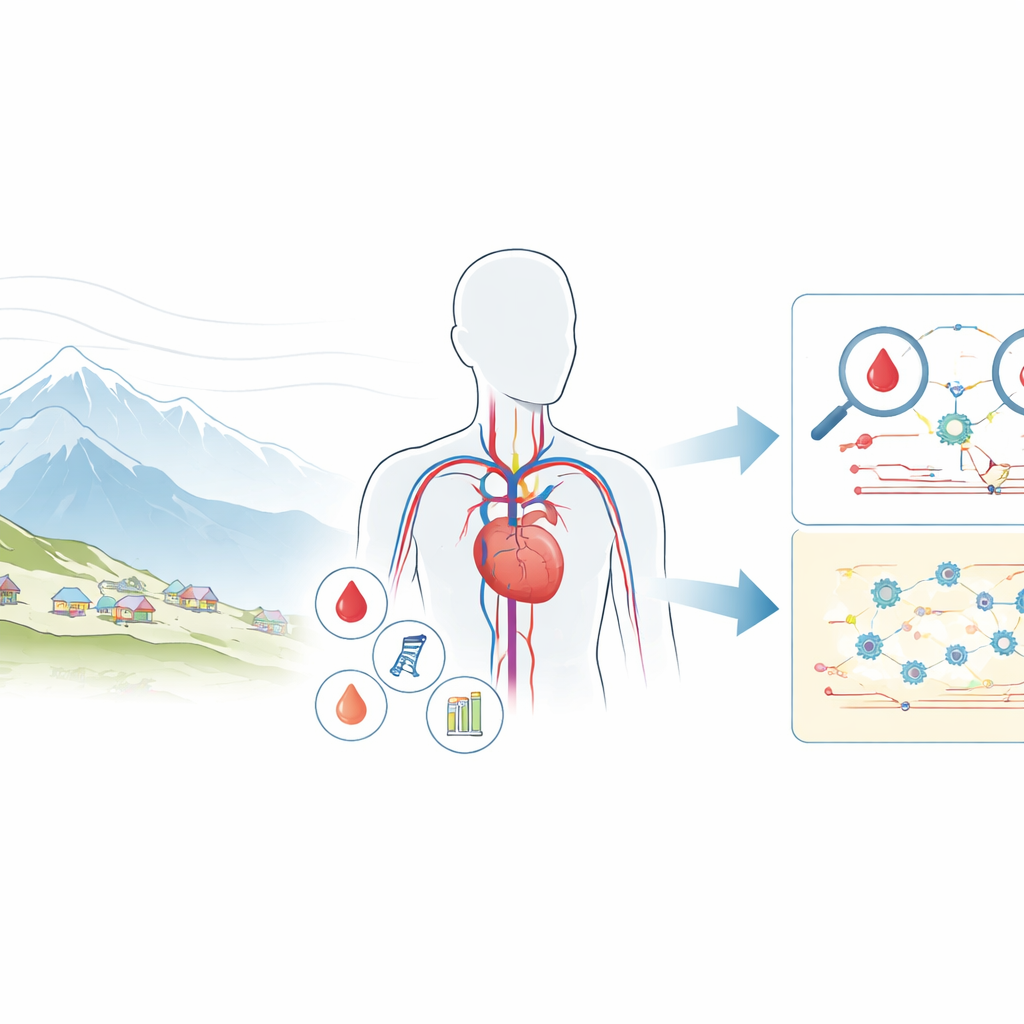
More and more people live, work, or travel at very high altitudes, where thin air strains the heart and blood vessels. On the Tibetan Plateau, many long-term residents develop high blood pressure, even though their bodies are famously adapted to life in the mountains. This study asks a simple but important question: what is happening inside their blood that makes hypertension more likely, and can those hidden changes be turned into early warning signs for doctors and patients?
A Closer Look at Mountain Life and Blood Pressure
The researchers focused on Tibetan adults living above 4,500 meters, an elevation where oxygen levels are much lower than at sea level. They enrolled 30 people with high blood pressure and 30 healthy neighbors of similar age, sex, and altitude. Everyone gave a blood sample, which became a kind of chemical snapshot of how their bodies were coping with the demanding environment. Instead of looking at just one or two substances, the team cast a very wide net, measuring more than a thousand small molecules and hundreds of proteins in the blood.
Reading the Body’s Chemical Fingerprints
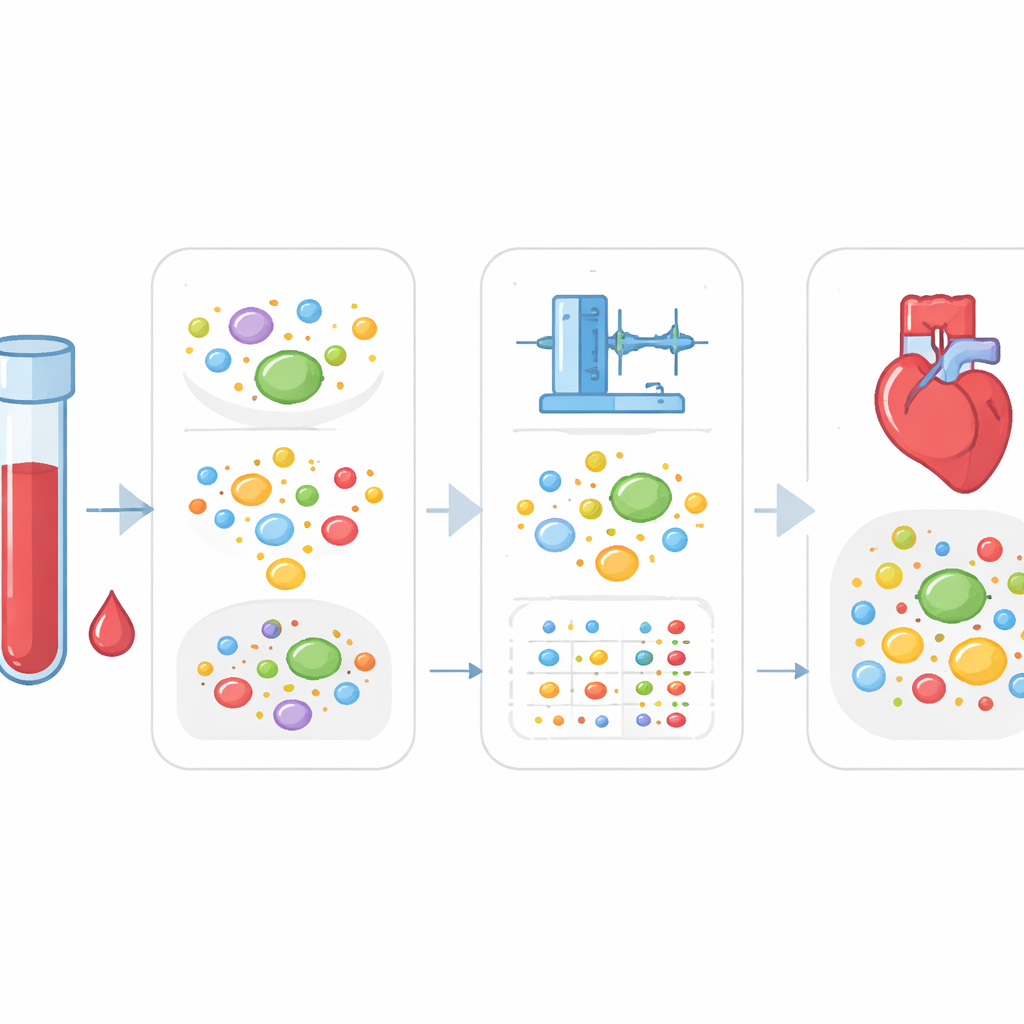
To decode these snapshots, the scientists used two powerful techniques: metabolomics and proteomics. Metabolomics tracks tiny molecules that come from food, metabolism, and cell activity, while proteomics surveys the proteins that carry out the body’s work. By comparing people with and without hypertension, they identified 87 small molecules and 61 proteins whose levels differed between the groups. Many of these changes pointed toward disturbed fat handling in the blood, especially in families of fats that help build cell membranes and carry chemical signals. Pathways related to certain dietary and signaling fats, such as those derived from linoleic and arachidonic acids, appeared to be especially active in people with high blood pressure at altitude.
Hidden Warning Signals in the Blood
Among all the altered molecules, a handful stood out as particularly strong candidates for blood-based warning signals, or biomarkers. On the metabolite side, a specific phospholipid called PI(16:0/16:0), along with caffeine and three other uncommon plant-related molecules, was consistently higher in hypertensive participants. When these five markers were considered together, they separated people with and without hypertension with high accuracy. In the protein survey, a muscle- and energy-related enzyme known as creatine kinase B (CKB) and a signaling protein called YWHAZ were clearly elevated in those with high blood pressure. These proteins are involved in how cells use energy and transmit internal messages, hinting that both energy demand and signaling balance are altered in the stressed, low-oxygen environment.
Piecing Together a Multi-Layered Story
The real strength of the study came from combining the two layers of information. When the researchers analyzed metabolites and proteins together, they saw that many of the changes converged on signal-transduction routes inside cells and on pathways that manage fats and inflammatory messengers in the blood. Importantly, when they pooled their top five metabolites with the two standout proteins, the resulting seven-part signature almost perfectly distinguished hypertensive from healthy individuals. This suggests that, even in a small pilot group, the body leaves a clear biochemical trail as blood pressure climbs in the thin air of the plateau.
What This Means for People Living High Above Sea Level
For non-specialists, the main message is that high-altitude hypertension is not just “regular” high blood pressure happening in a new place. It appears to involve a specific pattern of changes in blood fats, energy use, and cell signaling, which can be detected long before they are visible to the naked eye. If confirmed in larger and more diverse groups, the newly highlighted molecules—especially the protein YWHAZ and the combination of several metabolites and proteins—could become the basis for blood tests that flag early risk, guide treatment choices, and help explain why some high-altitude residents develop hypertension while others stay healthy. In short, this work turns the invisible chemistry of mountain life into clues that could protect hearts at the top of the world.
Citation: Huang, J., Danzeng, Z., Gesang, L. et al. Unveiling key pathways and potential biomarkers for high-altitude hypertension: a pilot multi-omics study. Sci Rep 16, 10324 (2026). https://doi.org/10.1038/s41598-026-38806-y
Keywords: high-altitude hypertension, Tibetan plateau, multi-omics, biomarkers, lipid metabolism