Clear Sky Science · en
Thyme and cinnamon essential oils inhibit multidrug resistant Escherichia coli and Klebsiella pneumoniae and alter virulence transcripts
Spice Rack Meets Superbugs
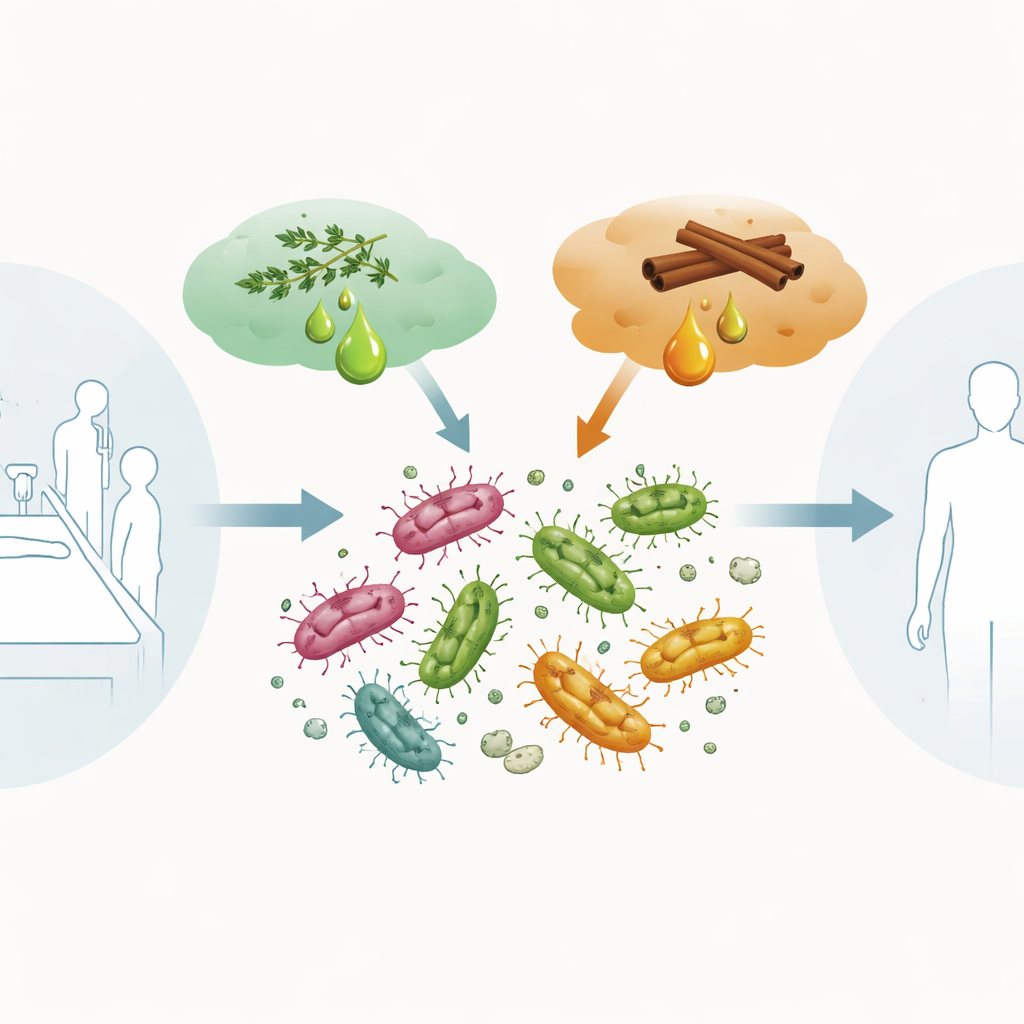
Antibiotic resistance is turning once-routine infections into serious threats, especially in hospitals. This study asks a simple, intriguing question: can everyday herbs like thyme and cinnamon help fight hard-to-treat bacteria? By testing their fragrant oils against stubborn strains of Escherichia coli and Klebsiella pneumoniae, the researchers explore whether these kitchen staples might someday support antibiotics and slow the rise of superbugs.
Why These Germs Are So Hard to Treat
E. coli and K. pneumoniae commonly cause urinary tract, wound, and lung infections. Many hospital strains now shrug off several major antibiotic classes, leaving doctors with fewer options when patients fall ill. On top of drug resistance, these microbes carry special tools that help them cling to tissues, form protective films, and dodge the immune system. Together, resistance and these “tricks of the trade” make infections more severe and harder to clear.
Testing the Power of Plant Oils
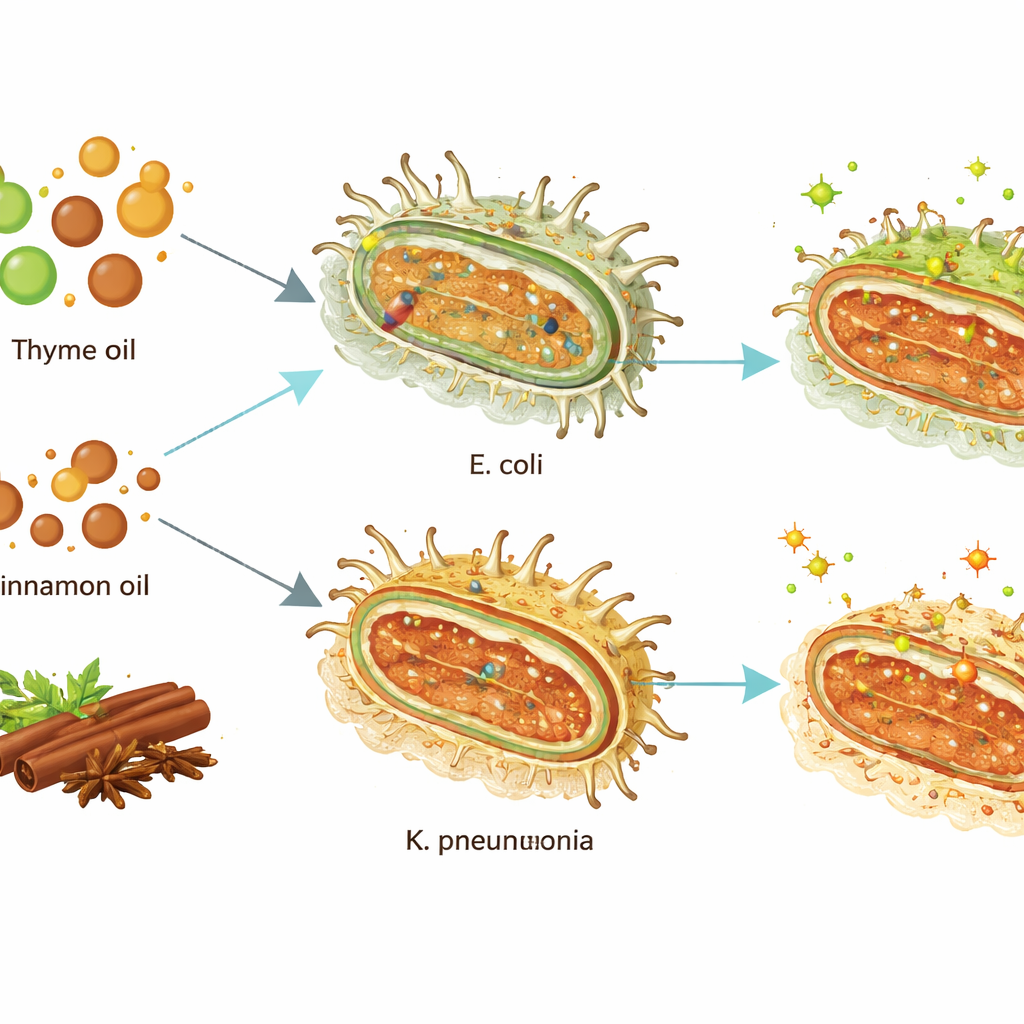
The team collected drug-resistant E. coli and K. pneumoniae from patients and challenged them with 33 different plant essential oils. In simple plate tests, a few oils stood out: thyme and cinnamon created some of the largest clear halos where bacteria could not grow, signaling strong killing ability. Follow-up tests in liquid culture showed that only tiny amounts of these oils were needed to halt growth, with cinnamon effective at the same low dose against all tested strains. Chemical analysis revealed that thyme oil was rich in carvacrol and thymol, while cinnamon oil was dominated by cinnamaldehyde and eugenol—compounds already known for punching holes in bacterial membranes and disturbing vital processes.
Dialing Down Bacterial Aggression
Beyond simply stopping growth, the researchers asked whether cinnamon oil might also dampen the microbes’ aggressive behavior. They exposed the bacteria to a concentration just below the level that fully stopped growth and measured activity of several genes involved in sticking to cells, forming protective coats, and coordinating group behavior. Under this stressful exposure, both E. coli and K. pneumoniae showed lower levels of many of these virulence-related messages. Because the dose was close to the killing threshold, the authors stress that these changes likely reflect a general stress response rather than a clean “anti-virulence” effect, and they call for careful follow-up at truly growth-permitting levels.
Peeking Under the Hood with Computers
To better understand how major oil components might interact with bacterial parts, the team used molecular “docking” simulations. These computer models estimate how small molecules such as cinnamaldehyde or eugenol might fit into grooves on key bacterial proteins linked to adhesion, surface structure, and communication. The simulations suggested plausible, reasonably stable contacts between the plant compounds and several virulence-related proteins. The study also used prediction tools to get a first-pass look at how these small molecules might be absorbed, processed, and tolerated in the human body, with no major safety alarms flagged at this early, theoretical stage. The authors emphasize that such digital results are hypothesis-generating only and must be tested in real biological systems.
More Than Just Flavor
Thyme and cinnamon oils also showed notable antioxidant activity, meaning they could help mop up damaging free radicals—a feature that might be useful in food preservation or future therapeutic blends. Taken together, the findings suggest that these familiar spices pack a multitarget punch: under certain conditions, their oils can inhibit growth of tough hospital bacteria, nudge down some of their harmful traits, and provide antioxidant benefits. However, the work is an early step. The authors call for stricter experiments using clearly non‑inhibitory doses, direct comparisons to standard drugs, and tests in living systems. For now, the message to lay readers is that nature’s spice rack holds promising chemical tools—but turning them into reliable helpers against superbugs will require careful, rigorous development.
Citation: Magdy , N., Ezzat, D.T., Dawood, M.E.A. et al. Thyme and cinnamon essential oils inhibit multidrug resistant Escherichia coli and Klebsiella pneumoniae and alter virulence transcripts. Sci Rep 16, 8265 (2026). https://doi.org/10.1038/s41598-026-38791-2
Keywords: essential oils, antibiotic resistance, thyme oil, cinnamon oil, Escherichia coli and Klebsiella