Clear Sky Science · en
Comparative analysis of polymerization efficiency and degradation indicators of adhesive resin cements and preheated restorative composites
Why the Glue Under Your Crowns Matters
When you get a ceramic crown or onlay, the visible part is only half the story. Hidden underneath is a thin layer of “glue” that locks the restoration to your tooth. This layer is made of plastic-like materials that harden when cured with light, but they can slowly break down in the warm, wet, and chemically active environment of the mouth. This study asks a simple but important question: can a newer, preheated tooth-colored filling material used as glue last longer and stay more stable than traditional dental cements?
Three Ways to Stick Ceramic to a Tooth
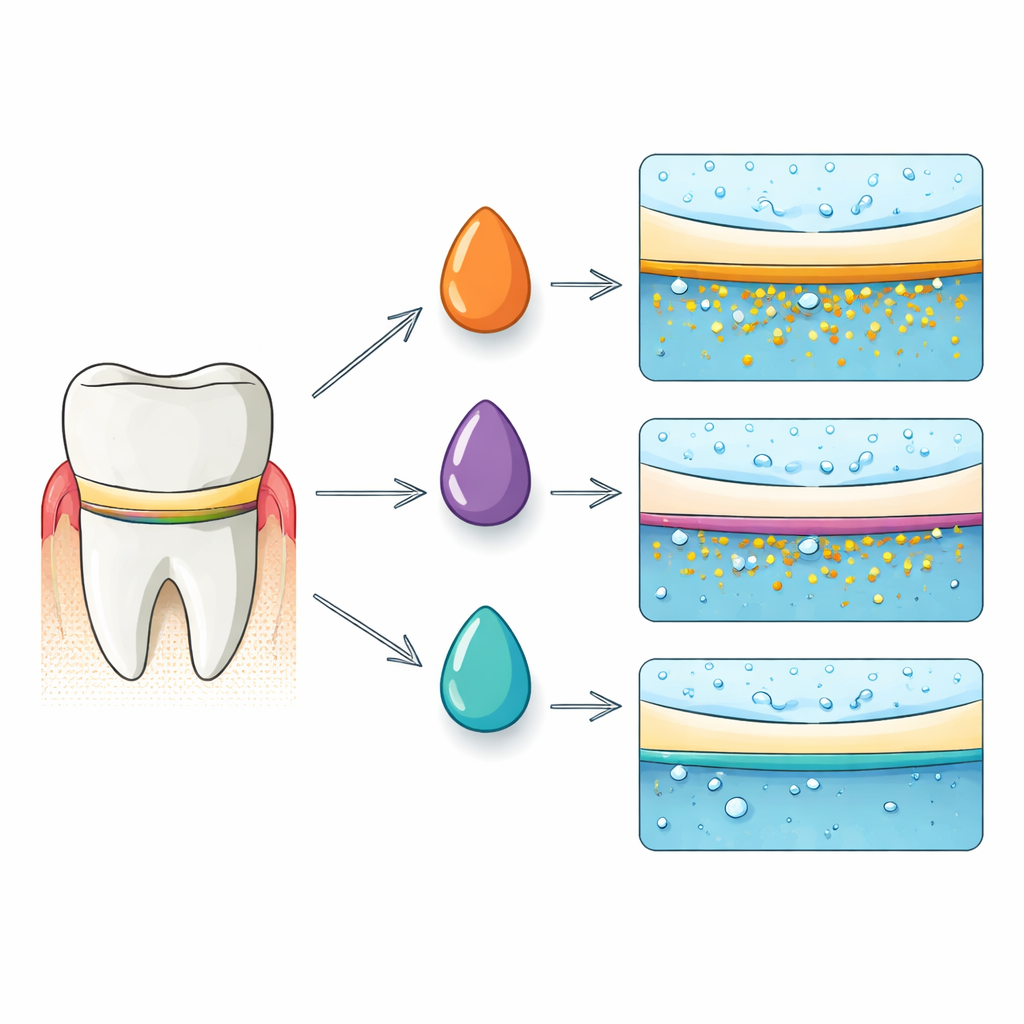
The researchers compared three modern materials used to fix lithium disilicate ceramic overlays onto tooth-like ceramic abutments. Two were conventional resin cements—one hardens only with light and the other uses both light and a built-in chemical reaction. The third was a standard tooth-colored filling material that was gently heated before use so it would flow like a cement. All three were placed in a highly controlled model that mimicked real dental work: same ceramic, same thickness, same gap, same curing light, and the same very thin glue layer. This careful setup allowed the team to focus on how the materials themselves behaved, rather than on variations in teeth or technique.
How Well They Harden and What Leaks Out
Once set, these materials form a plastic network built from small building blocks called monomers. The team measured how completely these monomers linked together—a property called degree of conversion—using micro-Raman spectroscopy through a 2 mm ceramic layer, similar to a real restoration. The dual-cure cement hardened the most, followed by the light-cure cement; the preheated filling material converted slightly less. At first glance, this would suggest that the dual-cure cement should be the most robust. But the story changed when the researchers looked at what seeped out of the hardened layer. By soaking bonded samples in an alcohol–water mixture and analyzing the liquid with high-performance liquid chromatography, they tracked how much unlinked monomer escaped over 3, 10, and 17 days. Both conventional cements released far more monomers early on—roughly several times more than the preheated material—although all three showed decreasing release over time.
Water, Swelling, and Slow Breakdown
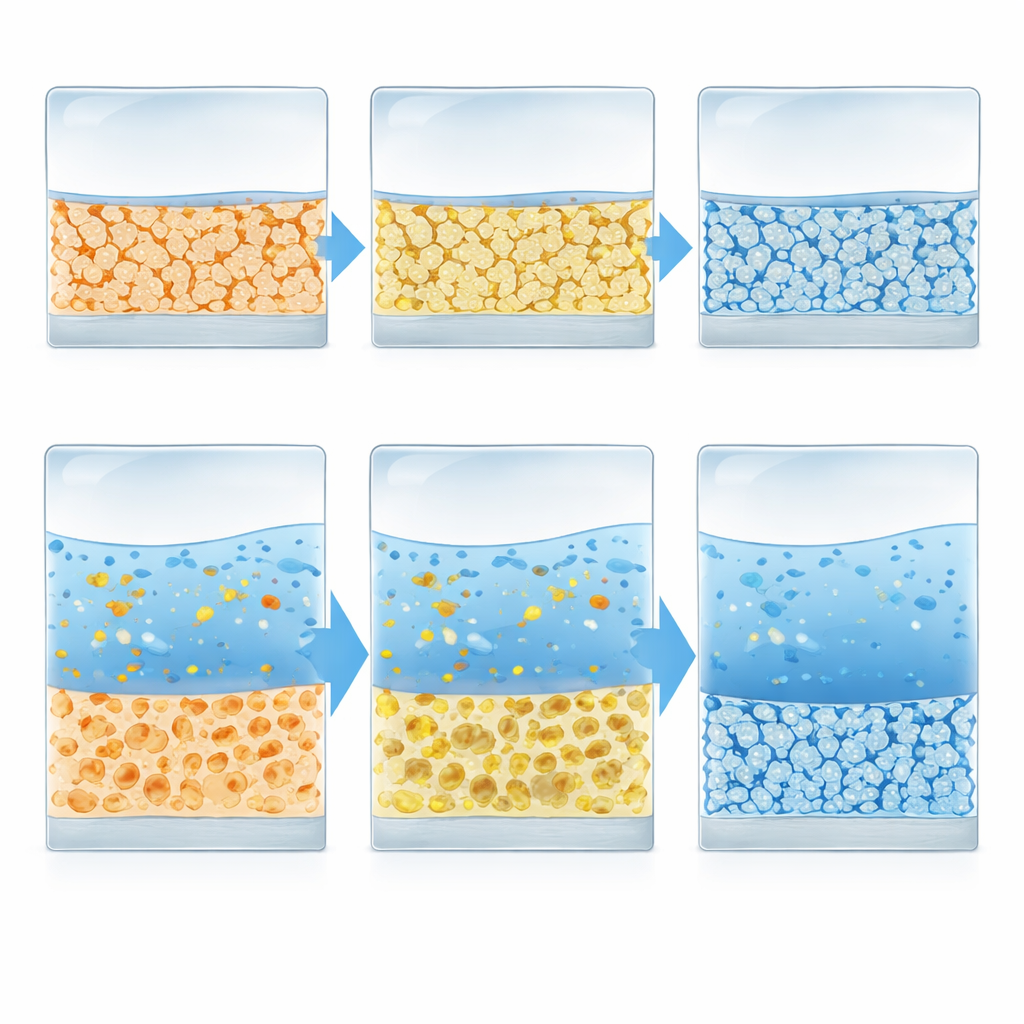
Because the mouth is a wet environment, the team also studied how much water the materials absorbed and how much of their mass they lost over 90 days in water. Water uptake can swell and soften the glue layer, while loss of material signals components dissolving out. Using standardized discs, they weighed specimens repeatedly to calculate water sorption and solubility. The dual-cure cement consistently showed the highest water uptake and material loss, the light-cure cement sat in the middle, and the preheated filling material showed the lowest values. Interestingly, the material that hardened the most—the dual-cure cement—also turned out to be the most water-loving and prone to gradual breakdown, while the more heavily filled, preheated material resisted moisture better despite its slightly lower hardening.
Why Composition Beats a Single Number
The results reveal that a single score for how well a material hardens does not tell the whole story about its long-term behavior. The two cements contain more resin and more flexible, water-friendly monomers, helping them cure quickly and thoroughly but also making them more vulnerable to water and chemical attack. The preheated filling material packs in more solid particles and uses a somewhat different resin mix, leading to a denser, more water-resistant structure that lets fewer small molecules escape over time. Correlation tests showed that higher hardening sometimes went hand in hand with more early leakage and greater water-related changes, underscoring that network structure, filler content, and chemistry matter as much as, or more than, the curing percentage alone.
What This Could Mean for Your Dental Work
For patients, the practical message is that the hidden glue layer under a ceramic restoration can differ markedly in how it ages. In this controlled laboratory setting, the preheated tooth-colored filling material released fewer potentially harmful components and resisted water-related damage better than the traditional cements, even though it did not cure quite as completely. This suggests that, in some cases, such preheated materials could offer a more stable bond and help ceramic work last longer. The study does not replace real-world trials in the mouth, where temperature control, saliva, and chewing forces add further complexity, but it points dentists and material designers toward options that balance strong initial hardening with better long-term resistance to moisture and breakdown.
Citation: Jordáki, D., Böddi, K., Őri, Z. et al. Comparative analysis of polymerization efficiency and degradation indicators of adhesive resin cements and preheated restorative composites. Sci Rep 16, 8469 (2026). https://doi.org/10.1038/s41598-026-38779-y
Keywords: dental resin cement, preheated composite, ceramic restorations, monomer release, water sorption