Clear Sky Science · en
Near-care assay of plasma glial fibrillary acid protein and ubiquitin carboxyl-terminal hydrolase isozyme L1 with shorter and prolonged duration exercise
Why Exercise Can Complicate Head-Injury Tests
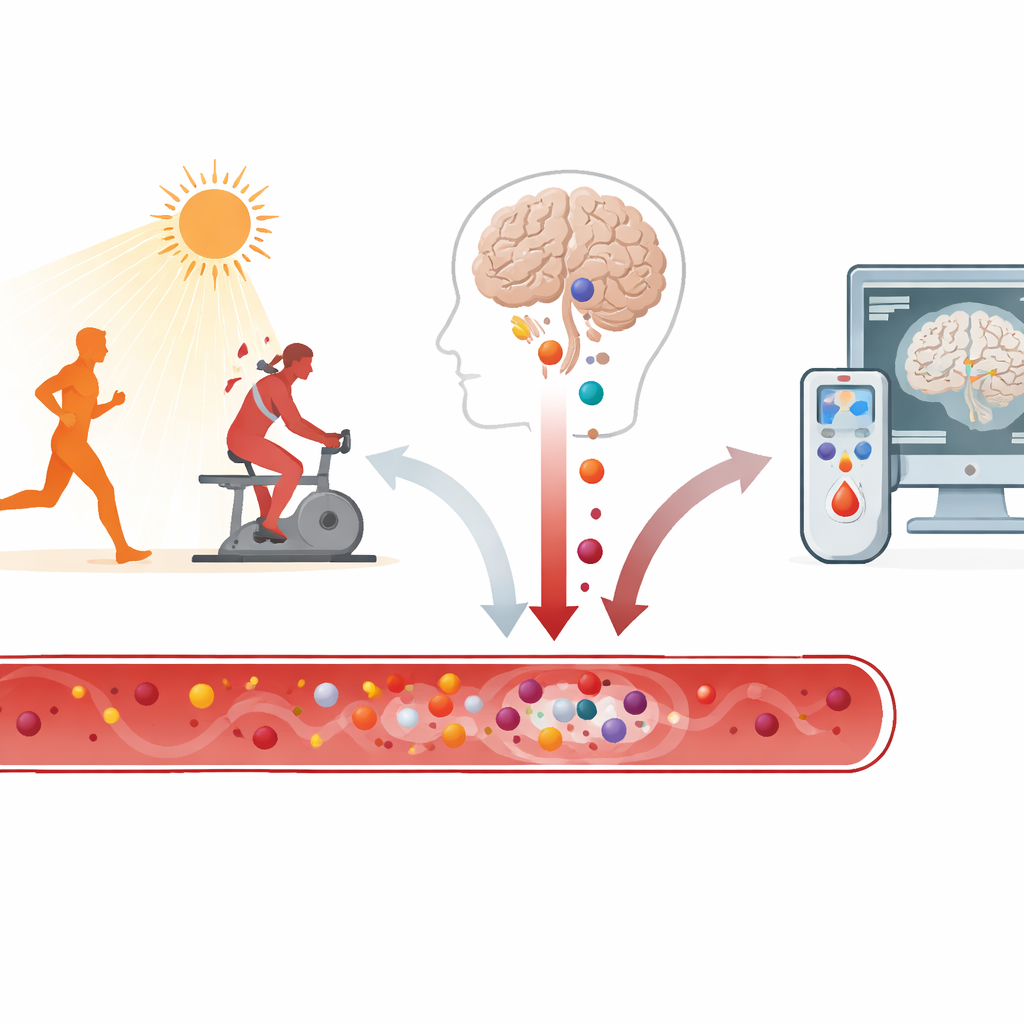
When someone takes a hard hit to the head, doctors increasingly turn to quick blood tests that look for telltale molecules linked to brain damage. But many head injuries happen during sports or military activity, when people are also hot, exhausted, and pushing their bodies hard. This study asks a simple but important question: can strenuous exercise and heat, by themselves, make these brain injury blood tests light up even when there is no concussion at all?
Blood Clues After a Blow to the Head
Modern concussion care is moving beyond simple checklists of symptoms toward blood “fingerprints” of brain stress. Two such molecules, called GFAP and UCHL1, can leak from brain cells into the bloodstream after a traumatic brain injury. A portable testing device, designed for use near the bedside or on the sidelines, measures these molecules within about 15 minutes and helps doctors decide who really needs a brain scan. If either GFAP or UCHL1 rises above preset cut-off values, the test suggests that a scan is warranted to look for internal bleeding or other serious damage.
Putting the Test Through Real-World Stress
The researchers examined how these blood markers behave during two very different types of tough but non-injurious exercise in healthy adults. In one setting, trained volunteers cycled steadily for 45 minutes in a hot laboratory chamber, reaching body core temperatures a bit above 38 °C, similar to a hard workout in summer heat. In the other, recreational runners completed a full marathon taking around four hours, outdoors in cool weather but with a bigger overall rise in body temperature and far longer strain on the body. In both groups, the team drew blood before and after exercise, and again the next day for a subset of marathoners, then used the same near-care cartridge system used in emergency departments to measure GFAP and UCHL1.
Short Workouts Look Safe, Long Races Do Not
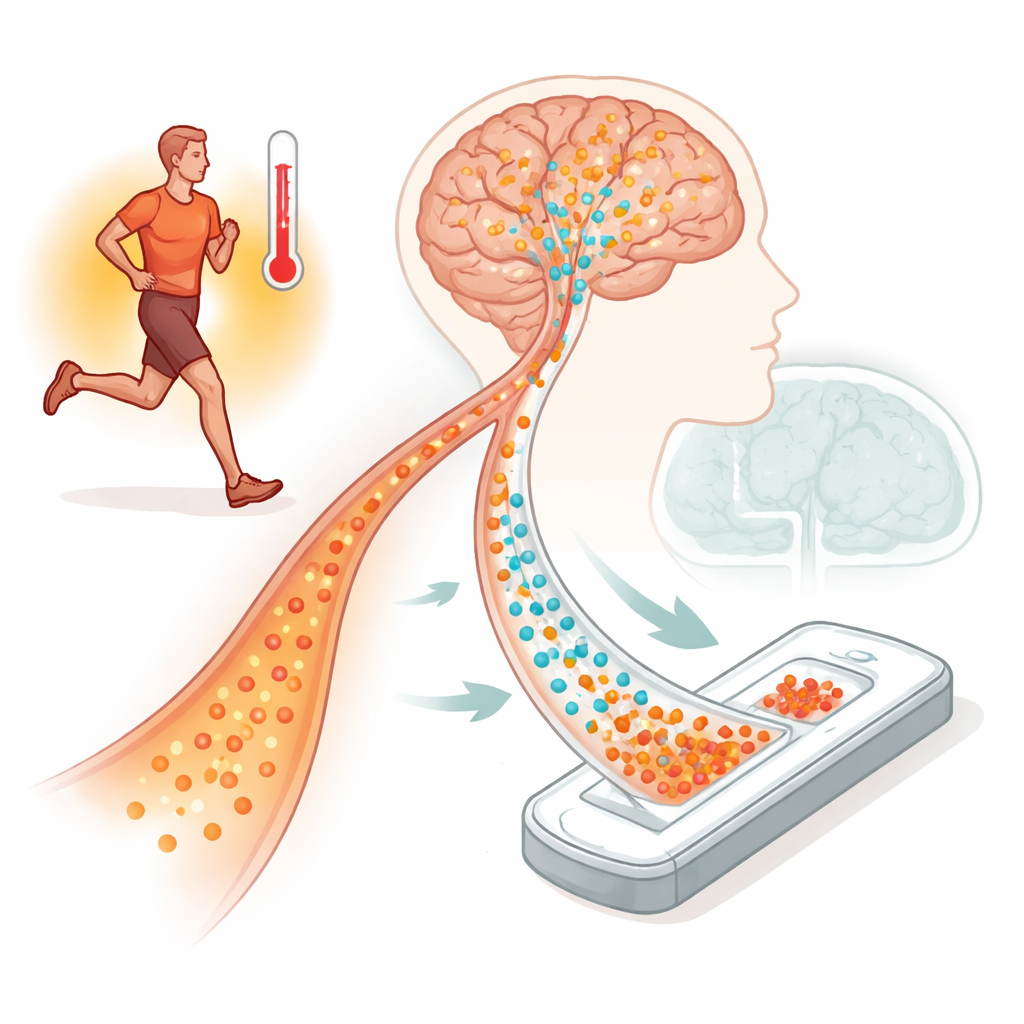
After the shorter hot cycling test, both GFAP and UCHL1 stayed below the device’s lowest reportable range in every participant. In practical terms, this means the machine would judge every one of these hard but routine workouts as “no concern” for brain injury. The picture changed sharply for the marathon runners. GFAP remained steady and generally stayed below the decision threshold, with only one runner showing a slight bump the following day. UCHL1, however, more than doubled right after the race. In 18 of the 25 finishers, UCHL1 levels climbed high enough that, if they had walked into an emergency department with a minor head knock, the blood test alone would have pushed strongly toward ordering a brain scan—despite no actual head injury.
Why One Marker Rises and the Other Does Not
The split behavior of the two molecules hints that they tell different biological stories. GFAP, largely made by support cells in the brain, tends to rise several hours after true brain injury and may move from brain to blood through slow fluid-clearance pathways rather than a leaky blood–brain barrier. That pattern may explain why even heavy exercise and body heating did not noticeably boost it in this study. UCHL1, in contrast, is found in nerve cells and in some tissues outside the brain. Long, pounding exercise with rising core temperature could stress nerve cells, loosen the barrier between blood and brain, or release the molecule from other organs, allowing more of it to spill into the circulation. The authors also consider the possibility that the portable test might pick up interfering substances that appear after extreme exertion, though the assay was validated against many common drugs and conditions.
What This Means for Athletes and First Responders
For doctors, medics, and trainers using rapid blood tests to guide concussion care, these findings carry a clear warning. In healthy adults without head injury, a relatively brief but intense workout in the heat does not seem to disturb the readings. However, a long endurance event such as a marathon—even in cool air—can push UCHL1 high enough to cross the usual action line for brain scans. In other words, the test may confuse the aftermath of prolonged exercise with the chemical signature of a mild brain injury. The authors conclude that clinicians should interpret near-care UCHL1 results cautiously when someone has recently completed strenuous, heat-stressing activity, and they call for more research to fine-tune how and when these promising blood tools should be used.
Citation: Stacey, M.J., Barden, A., Snape, D. et al. Near-care assay of plasma glial fibrillary acid protein and ubiquitin carboxyl-terminal hydrolase isozyme L1 with shorter and prolonged duration exercise. Sci Rep 16, 8079 (2026). https://doi.org/10.1038/s41598-026-38768-1
Keywords: traumatic brain injury, concussion biomarkers, endurance exercise, marathon running, near-care blood testing