Clear Sky Science · en
CD3+RUNX3+ lymphocyte density; an independent prognostic factor in colon and lung adenocarcinoma but not in lung squamous cell carcinoma
Why your immune cells matter in common cancers
Cancers of the colon and lung are among the most common and deadly worldwide, yet people with the “same” diagnosis can have very different outcomes. This study looks beyond the tumor cells themselves and asks a simple question: can the types and behavior of immune cells inside a tumor help predict who is likely to survive—and who might safely avoid extra treatment?
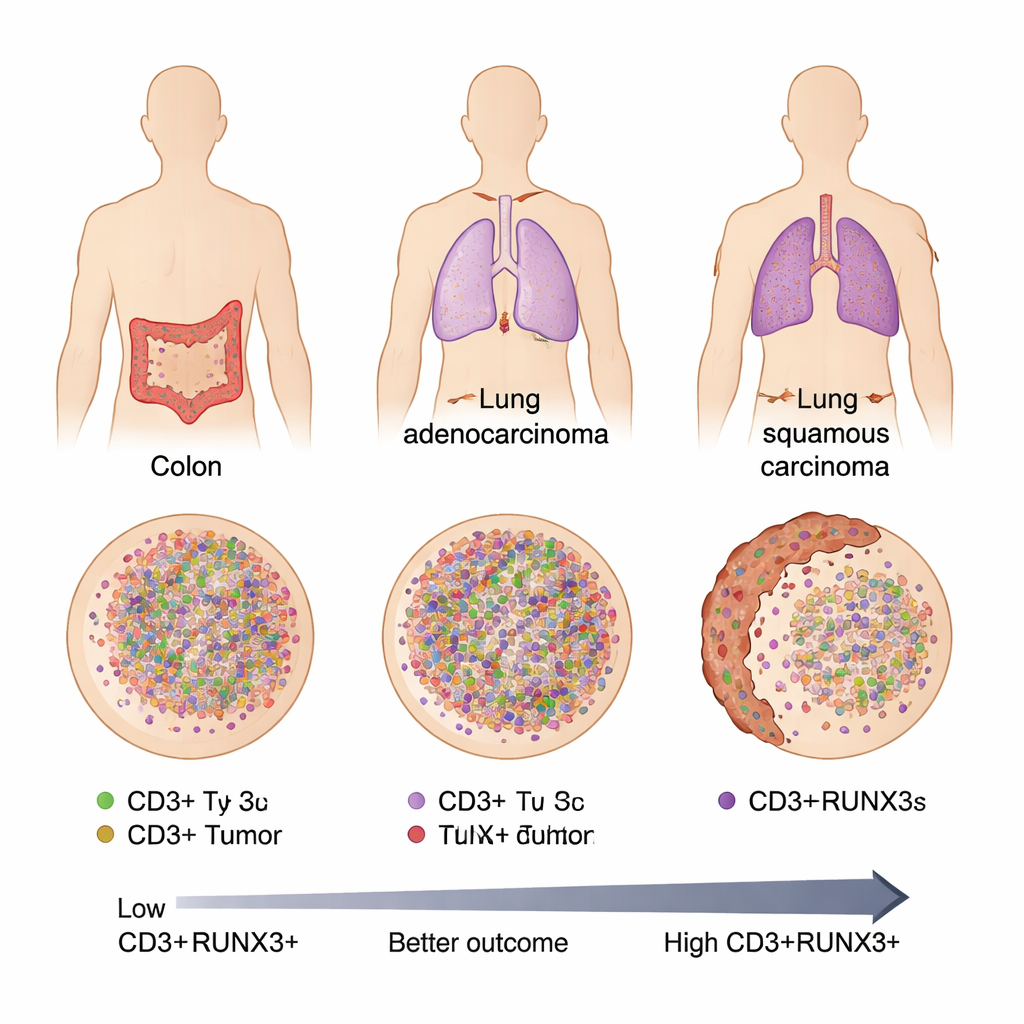
A closer look at helpful defender cells
The researchers focused on a group of immune cells called T cells, which patrol the body and can recognize and attack cancer. Two markers were important in this work. One, called CD3, identifies T cells in general. The other, RUNX3, is a protein that helps guide how certain T cells develop and how strongly they respond. By looking for cells that carried both markers at once—CD3 and RUNX3—the team aimed to pinpoint a subset of T cells that might be particularly important for controlling tumors.
Comparing three major tumor types
The study examined tumor samples from three large groups of patients who had surgery meant to cure their cancer: 452 with colon adenocarcinoma, 239 with lung adenocarcinoma, and 307 with lung squamous cell carcinoma. Using advanced staining techniques and computer-assisted image analysis, the scientists counted how many CD3+RUNX3+ cells were present in small, standardized pieces of each tumor. They then compared these counts with how long patients lived without dying from their cancer, while also considering known factors such as tumor stage, tumor grade, and patient age or general health.
Stronger immune presence, better survival
In both colon and lung adenocarcinoma, patients whose tumors contained many CD3+RUNX3+ cells had clearly better survival than those with few of these cells, even after adjusting for traditional risk factors. In other words, a rich infiltration of this particular T cell subset was an independent sign of a more favorable outlook. The effect was especially striking in colon cancer: patients with both high CD3+RUNX3+ cell counts and high levels of another T cell marker called CD8 rarely died from their disease during follow-up. By contrast, this immune signal did not meaningfully predict outcome in lung squamous cell carcinoma, underlining that not all lung cancers behave the same way.
Rethinking where a key protein really acts
Earlier research had suggested that RUNX3 might act mainly inside the cancer cells themselves as a kind of built-in brake on tumor growth. However, in this study the investigators saw RUNX3 almost exclusively in immune cells, not in the tumor’s epithelial cells where the cancer starts. This supports a different picture: RUNX3 may help orchestrate a more effective immune attack on cancer rather than directly controlling tumor cell behavior. The team also found that RUNX3-positive T cells tended to appear alongside other immune markers linked to strong anti-tumor responses, particularly in colon and lung adenocarcinoma.
What this could mean for future treatment choices
For colon cancer, especially stages II and III where decisions about chemotherapy can be difficult, the presence of many CD3+RUNX3+ (and CD8+) cells identified a subgroup of patients with an excellent prognosis. In these patients, the risk of dying from their cancer was so low that some may safely skip additional, potentially toxic treatment. For early-stage lung adenocarcinoma, high CD3+RUNX3+ density also marked patients with better survival and could one day help guide who might benefit from extra therapy and who might not. The authors caution that more studies are needed before this marker is used in everyday practice, but their findings highlight how reading the “immune footprint” inside tumors can refine risk estimates beyond what standard staging provides.
Citation: Kilvaer, T.K., Førde, D., Paulsen, EE. et al. CD3+RUNX3+ lymphocyte density; an independent prognostic factor in colon and lung adenocarcinoma but not in lung squamous cell carcinoma. Sci Rep 16, 7361 (2026). https://doi.org/10.1038/s41598-026-38765-4
Keywords: tumor immune microenvironment, colon cancer prognosis, lung adenocarcinoma, T cell biomarkers, RUNX3