Clear Sky Science · en
Non-targeted metabolomics reveals liver metabolome changes in broiler chickens fed diets supplemented with fermented brewer’s grain
Turning Brewery Leftovers into Better Chicken Feed
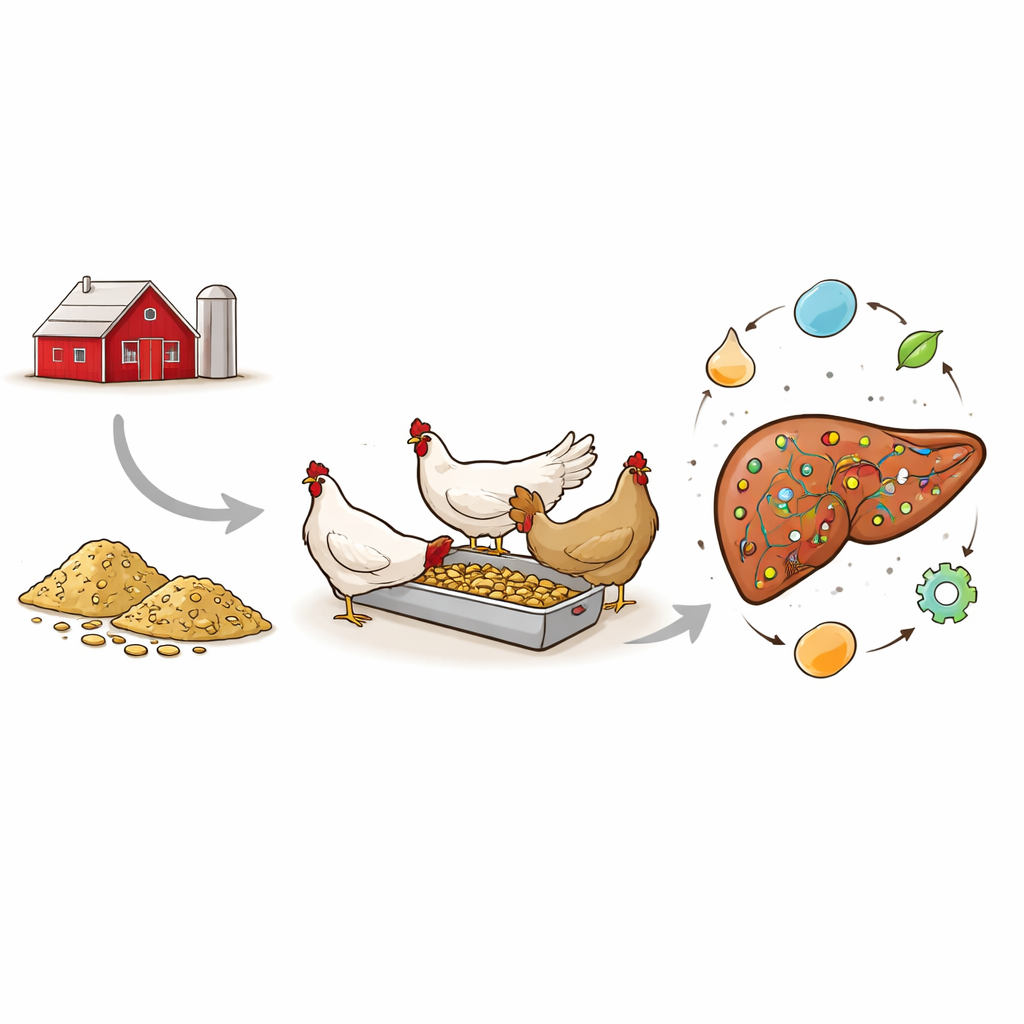
What if a by-product from brewing beer could help raise healthier chickens and make poultry farming more sustainable? This study explores exactly that idea by looking at how adding fermented brewer’s grain—a moist, fiber-rich residue from beer production—to chicken feed changes the chemistry of the liver, the body’s main processing plant for nutrients and toxins.
Why Chicken Livers Matter to Our Food
Modern broiler chickens are bred to grow quickly, which puts heavy demands on their metabolism and on farmers to find efficient, reliable feeds. The liver is central in this story because it digests and redistributes nutrients, manages fats and sugars, and helps detoxify harmful compounds. Fermented brewer’s grain is attractive as a feed ingredient because it is rich in fiber, protein, and beneficial fermentation products such as organic acids and helpful microbes. While earlier work showed that this ingredient can improve growth, gut health, and nutrient use, much less was known about how it rewires the liver’s internal chemistry. Understanding these liver changes can reveal whether this recycled feed truly supports long‑term health rather than simply pushing animals to grow faster.
How the Experiment Was Set Up
The researchers raised 240 young male broiler chickens for three weeks, dividing them into two groups. One group received a standard commercial diet, while the other ate a similar diet in which one fifth of the feed was replaced with wet-fermented brewer’s grain prepared with a beneficial bacterium. At the end of the trial, carefully selected birds from each group were humanely euthanized, and small pieces of their livers were rapidly frozen for analysis. Instead of looking for just a few known chemicals, the team used a broad, non-targeted metabolomics approach, which scans for thousands of small molecules at once. Powerful instruments separated and weighed these molecules, while statistical methods compared patterns between the standard and brewer’s-grain diets.
What Changed Inside the Liver
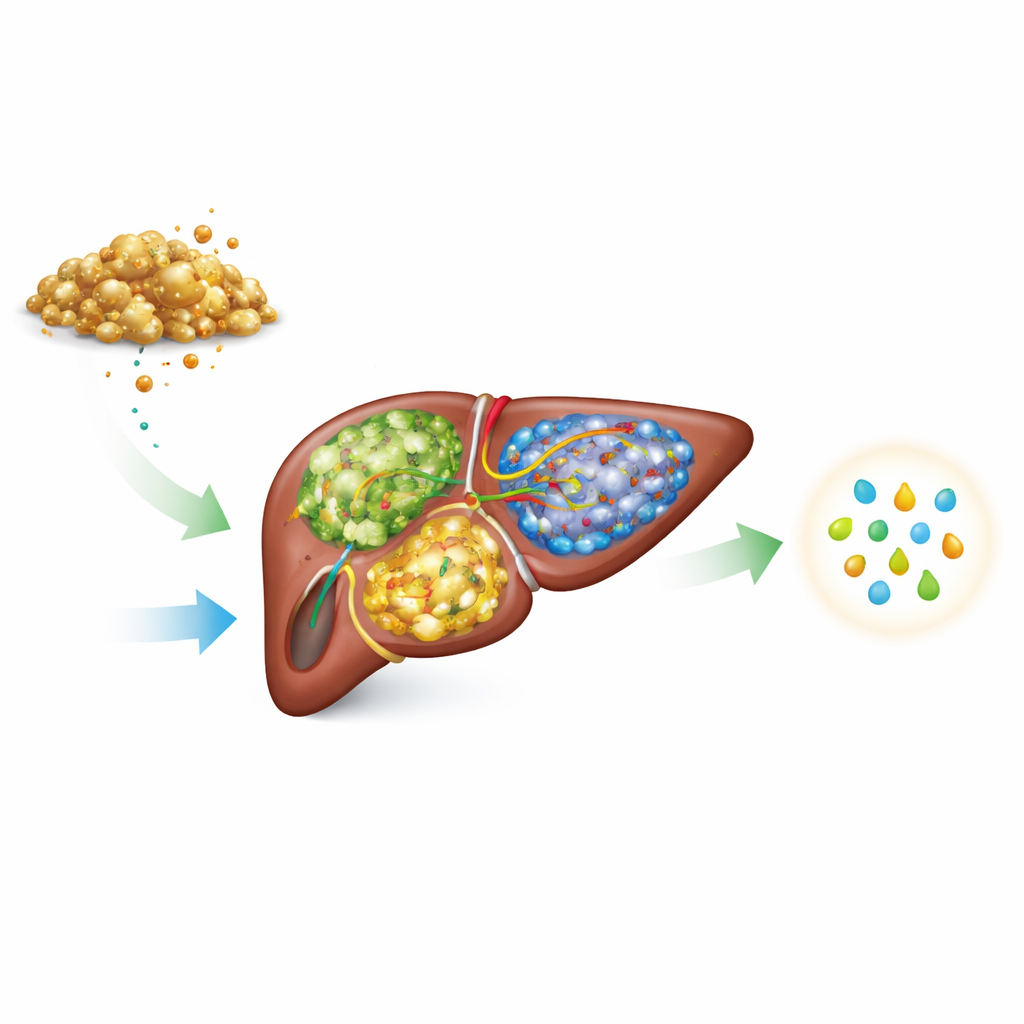
The livers of chickens fed fermented brewer’s grain showed a clearly different chemical fingerprint compared with those on the standard diet. The team identified 202 liver molecules whose levels shifted significantly: 174 increased and 28 decreased. Many of the boosted molecules were linked to how the body handles amino acids—the building blocks of protein—especially those related to a trio called glycine, serine, and threonine that help supply “one‑carbon” units used in DNA building and antioxidant defenses. Others were tied to fat construction, including key building blocks such as malonic, myristic, and palmitic acids that support the making and elongation of fat chains. At the same time, some molecules involved in cell membranes, antioxidant vitamins, and energy-related cofactors went down, suggesting the liver was adjusting how it maintains its structure and redox, or oxidation–reduction, balance.
Linked Pathways of Fuel and Protection
When the researchers mapped these changing molecules onto known biological routes, several themes emerged. Pathways for glycine, serine, and threonine were more active, supporting enhanced production of compounds that feed DNA synthesis and antioxidant systems such as glutathione. Fatty acid biosynthesis was also more engaged, pointing toward stronger fat-building activity that could contribute to meat quality through intramuscular fat. Another affected group, the ABC transporters, consists of molecular “pumps” that move nutrients, drugs, and waste products in and out of cells. Elevated levels of certain amino acids and drug-like compounds within this pathway suggested that the liver was ramping up its capacity to traffic both useful nutrients and unwanted chemicals. The authors propose that these liver changes are closely tied to earlier findings that fermented brewer’s grain reshapes gut microbes, which in turn produce acids and vitamins that influence liver metabolism along a gut–liver axis.
What This Means for Poultry and Sustainability
In plain terms, feeding chickens wet-fermented brewer’s grain did not just tweak a few liver chemicals—it broadly rebalanced multiple interconnected systems that handle protein, fat, and transport of substances. These shifts point to a liver that is more actively building fats, adjusting amino acid use, and fine-tuning how it moves and disposes of compounds, all of which can support growth and resilience when managed correctly. Because brewer’s grain is a plentiful by‑product of the beer industry, using it in this way could both reduce waste and improve poultry production. The study lays a biochemical foundation for viewing fermented brewer’s grain as a functional feed ingredient that helps keep the chicken liver’s inner workings in balance, while also highlighting the need for future work to fine‑tune doses and link these molecular changes directly to animal health and meat quality.
Citation: Gong, Z., Wang, Q. & Li, Y. Non-targeted metabolomics reveals liver metabolome changes in broiler chickens fed diets supplemented with fermented brewer’s grain. Sci Rep 16, 7824 (2026). https://doi.org/10.1038/s41598-026-38762-7
Keywords: broiler nutrition, fermented brewer’s grain, liver metabolism, metabolomics, poultry feed