Clear Sky Science · en
Transcriptional activation of LINGO1 facilitates proliferation and immune escape in colorectal cancer
Why a brain protein matters in colon cancer
Colorectal cancer is one of the most common and deadly cancers worldwide, and many patients still relapse or develop spread disease despite surgery, chemotherapy, and new immune-based drugs. This study focuses on a little-known molecule called LINGO1, originally studied in the brain, and shows that it can help colon tumors grow and hide from the body’s defenses. Understanding this new player could improve how doctors predict outcomes and eventually open doors to more precise treatments.
A hidden switch turned up in tumor cells
The researchers first asked whether LINGO1 levels differ between healthy and cancerous bowel tissue. Using large public gene databases and several independent patient groups, they found that LINGO1 is consistently much higher in colorectal tumors than in nearby normal tissue. Patients whose tumors carried more LINGO1 tended to have more advanced disease, involvement of lymph nodes, distant spread, and shorter survival. Even after accounting for other clinical factors, LINGO1 remained an independent warning sign, suggesting it acts like a "volume knob" that, when turned up, marks more aggressive cancer.
From gene activity to faster growth and spread
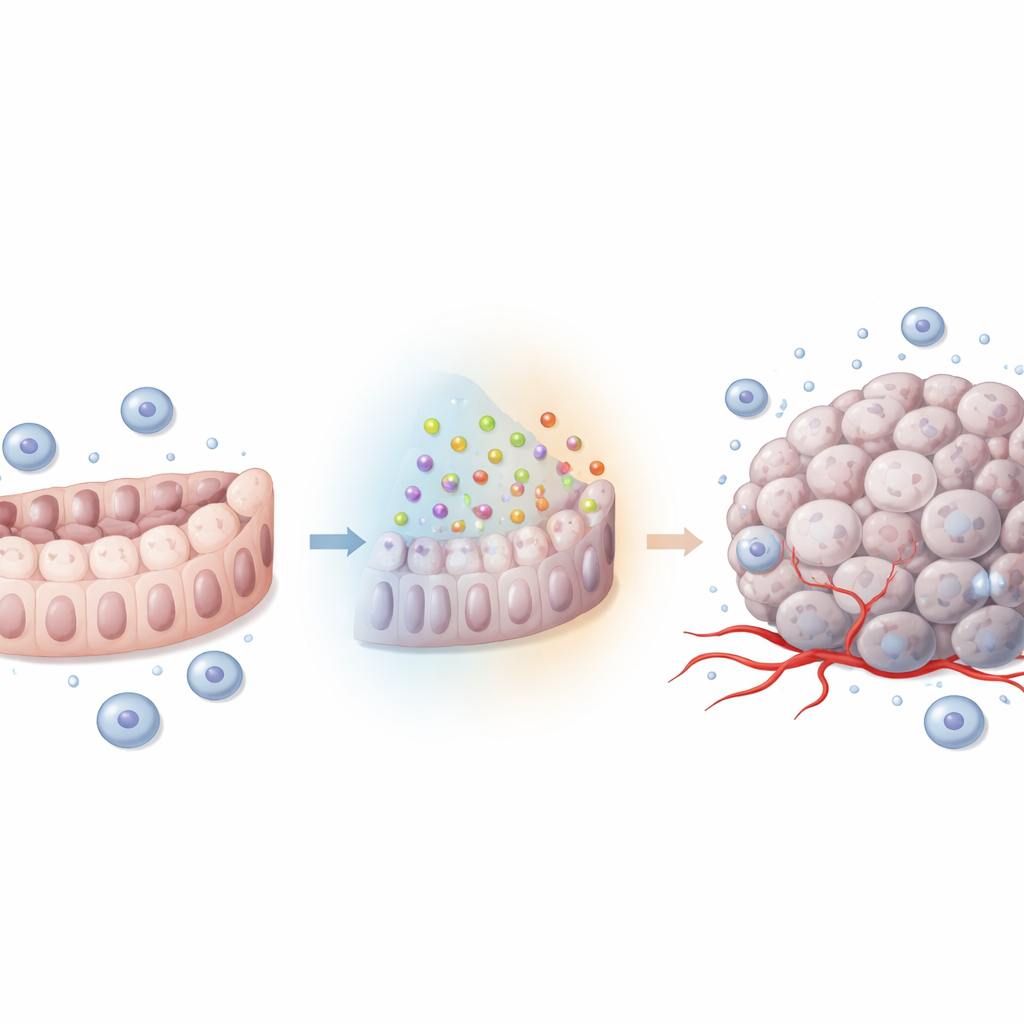
To move beyond statistics, the team tested what happens when they dial LINGO1 up or down in colon cancer cells grown in the lab. When they reduced LINGO1, tumor cells divided more slowly, formed fewer colonies, and were less able to move through artificial membranes that mimic tissue barriers. They also became worse at encouraging the growth and movement of blood vessel cells, hinting that tumors with less LINGO1 may be less able to feed themselves. When LINGO1 was boosted in another colon cancer cell line, the opposite occurred: growth, movement, invasion, and blood-vessel-stimulating ability all increased. In mice, implanted tumors with LINGO1 switched off grew more slowly and showed fewer cells in active division, directly tying this molecule to tumor expansion in living animals.
How LINGO1 reshapes the tumor’s neighborhood
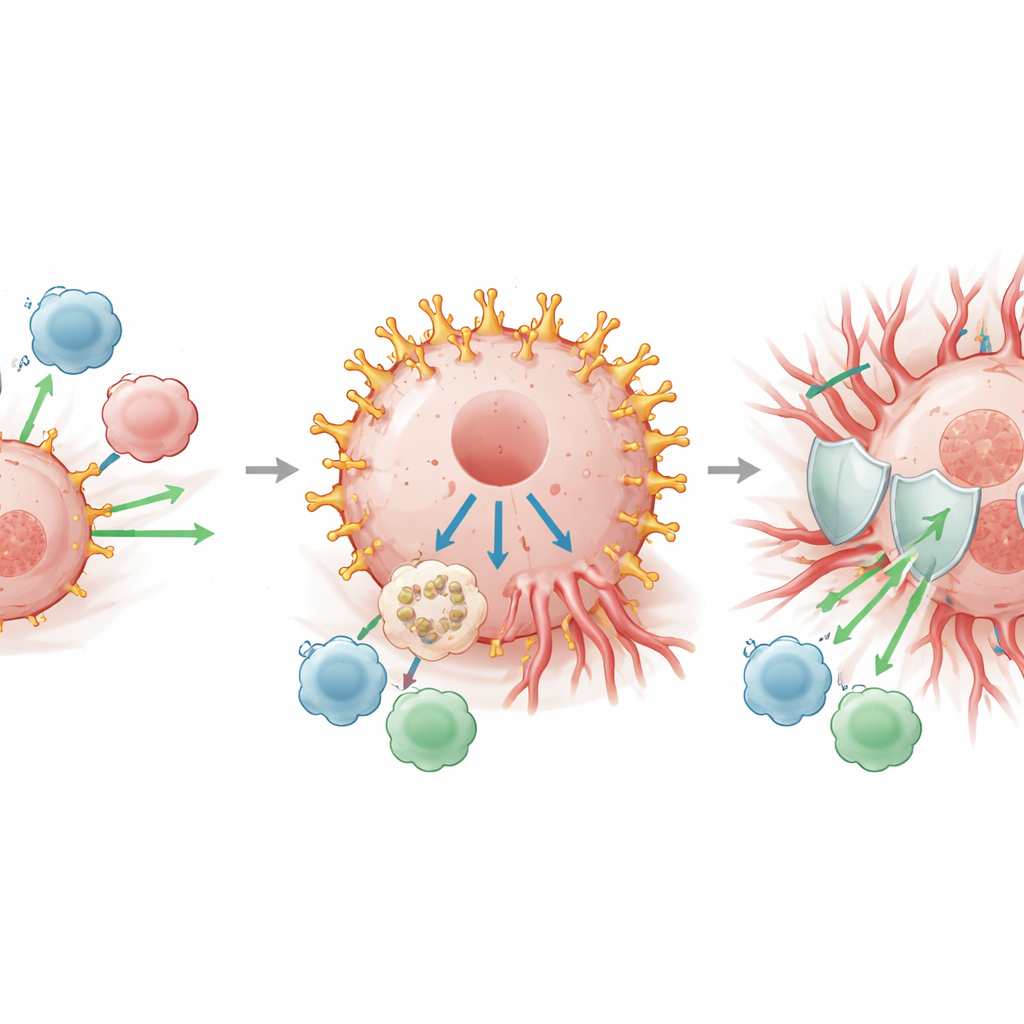
The study also looked at what kinds of genes and pathways are more active when LINGO1 is high. Patterns of gene activity pointed to well-known cancer programs, including those that loosen cell-to-cell contacts so cells can migrate, and those that drive formation of new blood vessels. Just as importantly, high LINGO1 was linked to changes in the tumor’s surrounding “ecosystem.” Tumors rich in LINGO1 contained fewer killer T cells—the immune cells that can directly attack cancer—and more cell types known to dampen immune responses, such as certain macrophages and regulatory T cells. Many molecular “brakes” that shut down immune attack, commonly called immune checkpoints, were also more active when LINGO1 was elevated. Clinical tumor samples confirmed that areas with high LINGO1 had sparse killer T cells and weak signs of cell-killing activity, while low-LINGO1 areas were packed with active immune fighters.
A possible control point upstream
To understand why LINGO1 is so high in these tumors, the authors searched for upstream control proteins that might act like on–off switches at its gene. They identified a factor called USF1 that can bind directly to the LINGO1 control region. In reporter experiments, adding more USF1 significantly boosted the activity of this region, but only when its docking site was intact. This suggests that in at least some colorectal cancers, USF1 helps crank up LINGO1, which in turn fuels faster tumor growth and a more hostile environment for immune cells. The work also showed that LINGO1 is abnormally high and often linked to worse outcomes in several other cancer types, hinting that its influence may extend beyond the colon.
What this means for patients and future care
Overall, the study paints LINGO1 as a double-edged contributor to colorectal cancer: it pushes tumor cells to grow, move, and encourage new blood vessels, while at the same time helping the tumor wall itself off from immune attack. Because its levels predict more advanced disease and poorer survival, LINGO1 could serve as a biomarker to flag higher-risk patients. In the long run, drugs that lower LINGO1 activity—or disrupt its control by USF1—might not only slow tumor growth but also make cancers more visible to the immune system and more responsive to immunotherapy.
Citation: Ma, P., Yao, F., Yue, P. et al. Transcriptional activation of LINGO1 facilitates proliferation and immune escape in colorectal cancer. Sci Rep 16, 9360 (2026). https://doi.org/10.1038/s41598-026-38760-9
Keywords: colorectal cancer, tumor immunity, biomarkers, tumor microenvironment, cancer progression