Clear Sky Science · en
Academic Tangping scale for college students in China: scale development, validation and application
Why Students Are Choosing to Step Back
Across China and around the world, many young people are quietly deciding that the race for top grades and glittering careers is not worth the cost to their well‑being. This trend, often called “lying flat” or “Tangping,” has sparked fierce debate: are these students simply lazy, or are they sending an important message about unhealthy pressures? This study focuses on how Chinese college students “lie flat” in their studies and introduces a new tool to measure this attitude so educators and policymakers can respond more thoughtfully. 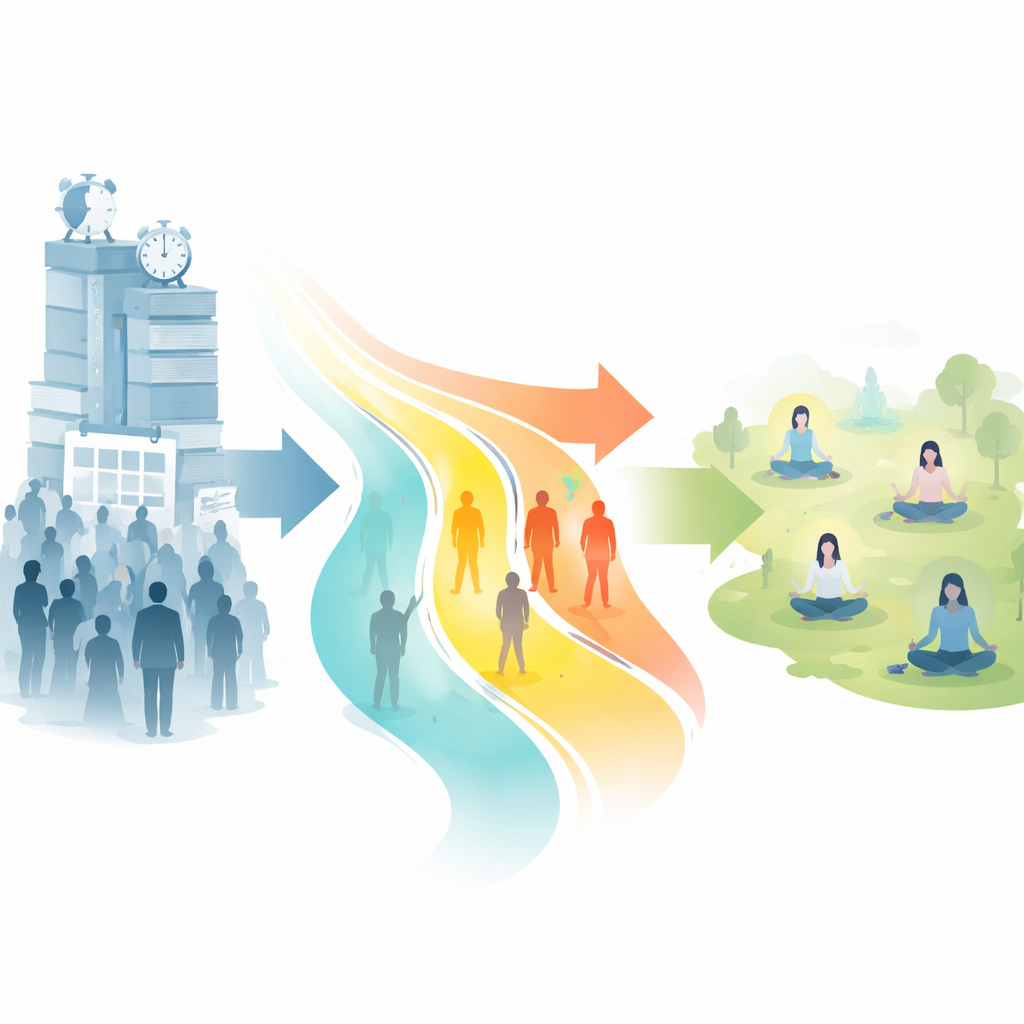
A New Way to Understand Stepping Back
The authors argue that academic Tangping is not just skipping homework or daydreaming in class. Instead, it is a deliberate mindset and lifestyle choice: students consciously pull back from traditional academic pressure and narrow definitions of success. This pullback shows up in three intertwined parts—how students feel, what they believe, and how they act. Emotionally, some students prize calm and refuse to pile on extra stress. In their thinking, they may decide that effort brings too little reward in a system stacked against them. Behaviorally, they do just enough to get by rather than striving for top performance. By framing Tangping as an attitude with affective, cognitive, and behavioral sides, the researchers set the stage for a more nuanced and fair assessment of this phenomenon.
How the Scale Was Built
To turn this idea into something measurable, the team first interviewed university students known for their “lying flat” approach to school. They listened for recurring themes in the students’ stories: feelings of relief when letting go, beliefs about limited personal ability, and choices like meeting only basic course requirements. These themes were translated into potential survey statements, such as being satisfied with a modest study pace, refusing to invest extra time for higher grades, or believing that hard work will not change academic outcomes. Eight university counselors with first‑hand experience guiding students then reviewed the draft items, checking whether they were clear, relevant, and representative. Because the expert ratings were very high, the research team kept all 15 items—five for each of the three dimensions.
Testing the Tool With Real Students
The new Academic Tangping Scale was then tested online with 644 college students in northern China. The sample was split into two groups. With one group, the researchers explored how the items naturally clustered and confirmed that they indeed fell into three distinct groups matching feelings, thoughts, and behaviors. With the second group, they used more advanced statistical checks to see how well the three‑part model fit the data overall. Indicators of reliability, which show how consistently the items measure the same idea, were very high. Measures of validity, which show whether the scale captures what it claims to capture and distinguishes between related but different aspects, were also strong. Importantly, scores on this new scale were strongly linked to an existing “lying flat tendency” measure, suggesting that both tools tap into the same broader lifestyle stance. 
Links to Mental Health and Daily Life
Beyond pure measurement, the authors wanted to know what academic Tangping means for students’ well‑being. They compared Tangping scores with levels of depression, anxiety, and stress. Students who scored higher on the Tangping scale, especially on the cognitive and behavioral parts, also tended to report more emotional difficulties. This does not prove that lying flat causes poor mental health—or the other way around—but it shows that the two are meaningfully connected. The scale therefore offers a practical way for universities to spot students who may be at higher risk, design tailored support, and evaluate whether counseling or course changes actually help. It can also guide future research on how schooling systems, social expectations, and personal beliefs push young people toward withdrawal versus engagement.
What This Means for Students and Schools
In simple terms, this study gives educators a sensitive “thermometer” for detecting when students are quietly opting out of the academic race. By capturing how they feel, think, and behave, the Academic Tangping Scale moves the discussion beyond blaming individuals and toward understanding the pressures that shape their choices. Used wisely, it can help schools notice early signs of disengagement, support students’ mental health, and rethink what a healthy and meaningful education should look like in an era of intense competition.
Citation: Lu, S., Yang, Y., Li, W. et al. Academic Tangping scale for college students in China: scale development, validation and application. Sci Rep 16, 7897 (2026). https://doi.org/10.1038/s41598-026-38759-2
Keywords: academic lying flat, student mental health, college disengagement, youth pressure, minimalist lifestyle