Clear Sky Science · en
Protective effects of Demethylfuropinnarin on porcine pre-implantation embryos under Tunicamycin-induced oxidative stress and endoplasmic reticulum stress during in vitro culture
Helping embryos thrive in the lab
As more people and breeders turn to assisted reproductive technologies, a big challenge is keeping tiny embryos healthy while they grow in the lab. Outside the body, these early embryos face harsh conditions that can damage their cells and lower the chances of a successful pregnancy. This study explores whether a little-known natural compound, extracted from a traditional Chinese medicinal herb, can shield developing pig embryos from two major kinds of cellular stress and help them grow better in laboratory culture.
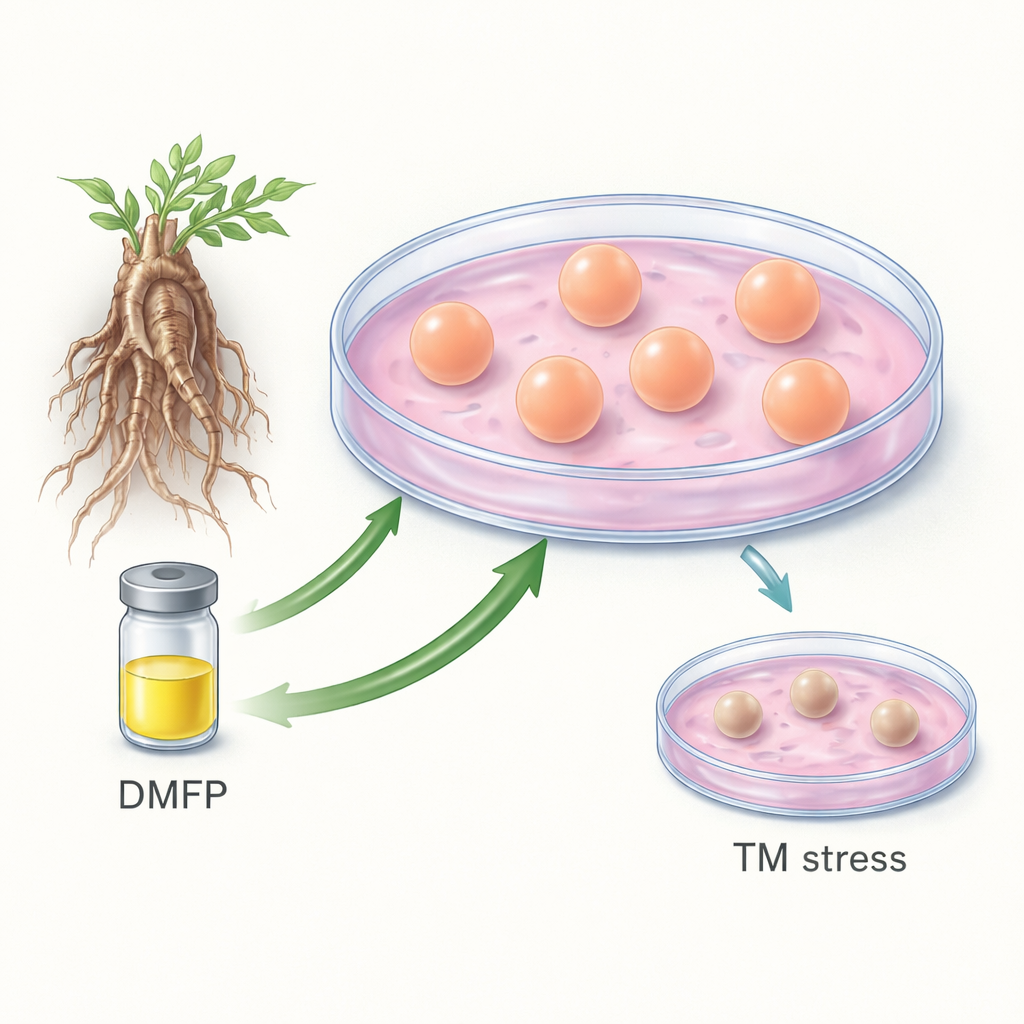
When lab conditions overwhelm young life
Embryos developing in a dish experience swings in temperature, oxygen, and other factors that differ from the protected environment of the uterus. These shifts can generate excessive “reactive oxygen species,” or ROS—highly reactive molecules that, in small amounts, are useful signals but, in excess, damage DNA, energy-producing mitochondria, and other vital structures. At the same time, the cell’s protein-folding factory, the endoplasmic reticulum (ER), can become overloaded, triggering an emergency response called ER stress. If oxidative stress and ER stress persist, the embryo’s cells may stop dividing properly and activate self-destruct programs, sharply reducing the number that reach the blastocyst stage, when they are ready to implant.
A protective molecule from a mountain herb
The researchers focused on Demethylfuropinnarin (DMFP), a furocoumarin isolated from the roots of Notopterygium incisum, a high-altitude herb long used in traditional Chinese medicine, including for reproductive health. DMFP has a chemical structure suggesting strong antioxidant power, but its biological effects had not been tested. The team carefully extracted and purified DMFP to more than 95% purity, then added it to the culture medium of pig embryos produced by in vitro fertilization. They also used a drug called tunicamycin (TM) to deliberately induce ER stress and oxidative stress, creating a tough test of DMFP’s protective abilities.
Better growth, stronger defenses, calmer cells
Embryos grown with DMFP at an optimal low dose (1 mg/L) showed higher rates of early cell division and blastocyst formation than control embryos. Under TM-induced stress, development was severely impaired: fewer embryos divided, fewer formed blastocysts, and many cells underwent apoptosis, or programmed cell death. When DMFP was added alongside TM, embryos still suffered damage but fared noticeably better than with TM alone, indicating partial protection. Measurements of cell chemistry revealed why. DMFP-treated embryos produced less ROS and carried more of the antioxidant glutathione. Key protective enzymes that detoxify harmful molecules—superoxide dismutase and catalase—were more active, and the balance of two regulatory proteins, Nrf2 and Keap1, shifted in a direction associated with switching on the cell’s own antioxidant defenses.
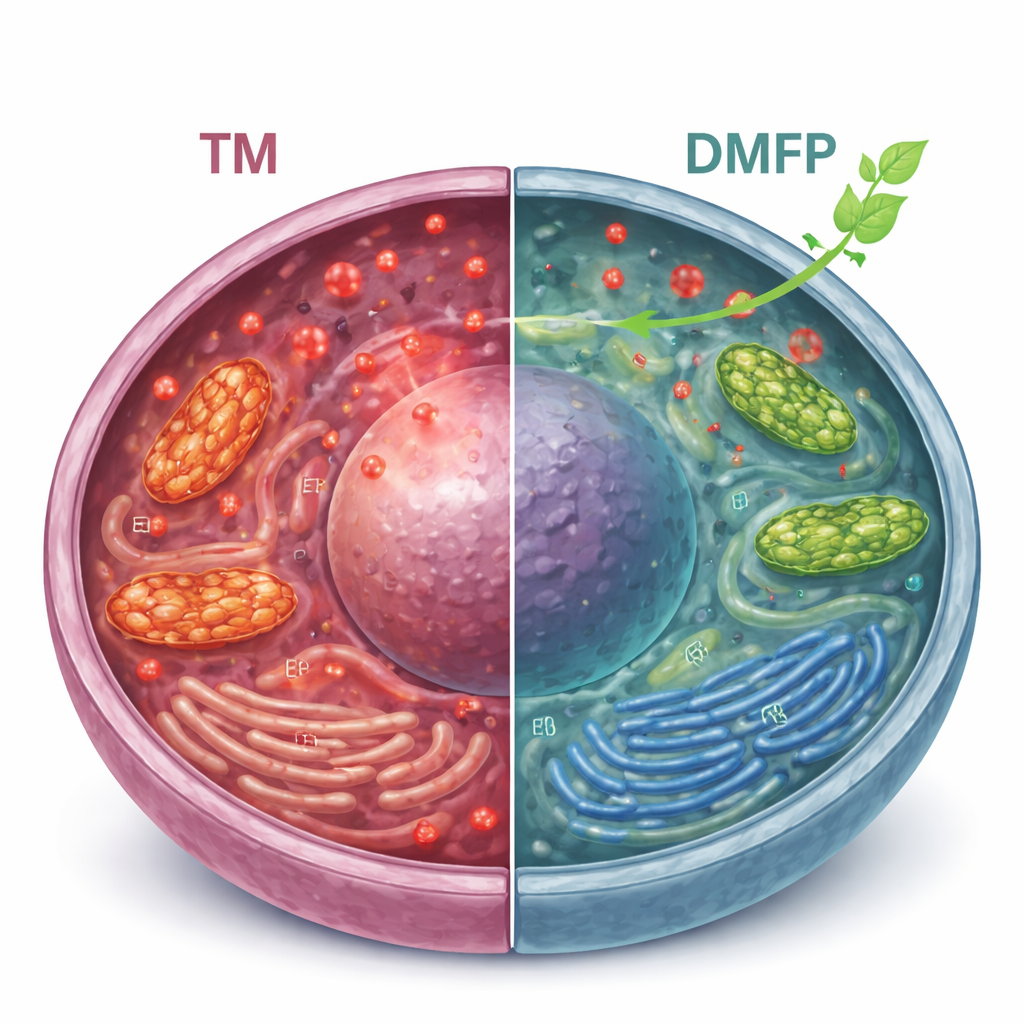
Safeguarding the embryo’s power plants and factories
The team also looked inside the embryos’ energy centers and protein factories. With TM alone, mitochondria lost their normal membrane potential, a sign of failing energy production, and the ER network appeared disrupted. Stress-related genes linked to the ER’s emergency response were strongly switched on. DMFP reversed many of these changes: mitochondrial function and structure were better preserved, ER staining patterns improved, and stress-marker genes were expressed at lower levels. At the same time, genes that promote cell survival rose, while those that drive cell death dropped. Although DMFP did not fully erase the damage caused by TM, it significantly reduced it across multiple measures.
What this means for future fertility tools
For non-specialists, the takeaway is that a purified molecule from a traditional herb helped early pig embryos cope with hostile lab conditions by boosting their internal “antioxidant shield” and easing pressure on their protein-folding machinery. The compound did not make embryos invincible, and the work was done only in vitro and in animals, so any translation to human fertility treatments will require extensive further testing. Still, the study offers a proof of concept: carefully chosen natural products can be engineered into modern embryo culture systems to improve cell health and survival, potentially raising the success and safety of assisted reproduction in both agriculture and medicine.
Citation: Teng, P., Yu, S., Yang, F. et al. Protective effects of Demethylfuropinnarin on porcine pre-implantation embryos under Tunicamycin-induced oxidative stress and endoplasmic reticulum stress during in vitro culture. Sci Rep 16, 7408 (2026). https://doi.org/10.1038/s41598-026-38755-6
Keywords: oxidative stress, assisted reproduction, embryo culture, antioxidants, traditional medicine