Clear Sky Science · en
Sexual and reproductive health consequences of COVID-19 pandemic in Nigeria: an infodemiological survey
Why Online Searches During Lockdown Matter
When COVID-19 lockdowns swept across the world, people stayed home—and went online. In Nigeria, as in many countries, the internet became a quiet place to ask sensitive questions about sex, relationships, and health. This study digs into millions of anonymous Google searches to see how the pandemic changed what Nigerians wanted to know about sexual and reproductive health. The findings reveal shifts in curiosity, fear, and behavior that could shape how health services and education respond after COVID-19.
Looking at Google to Read the Room
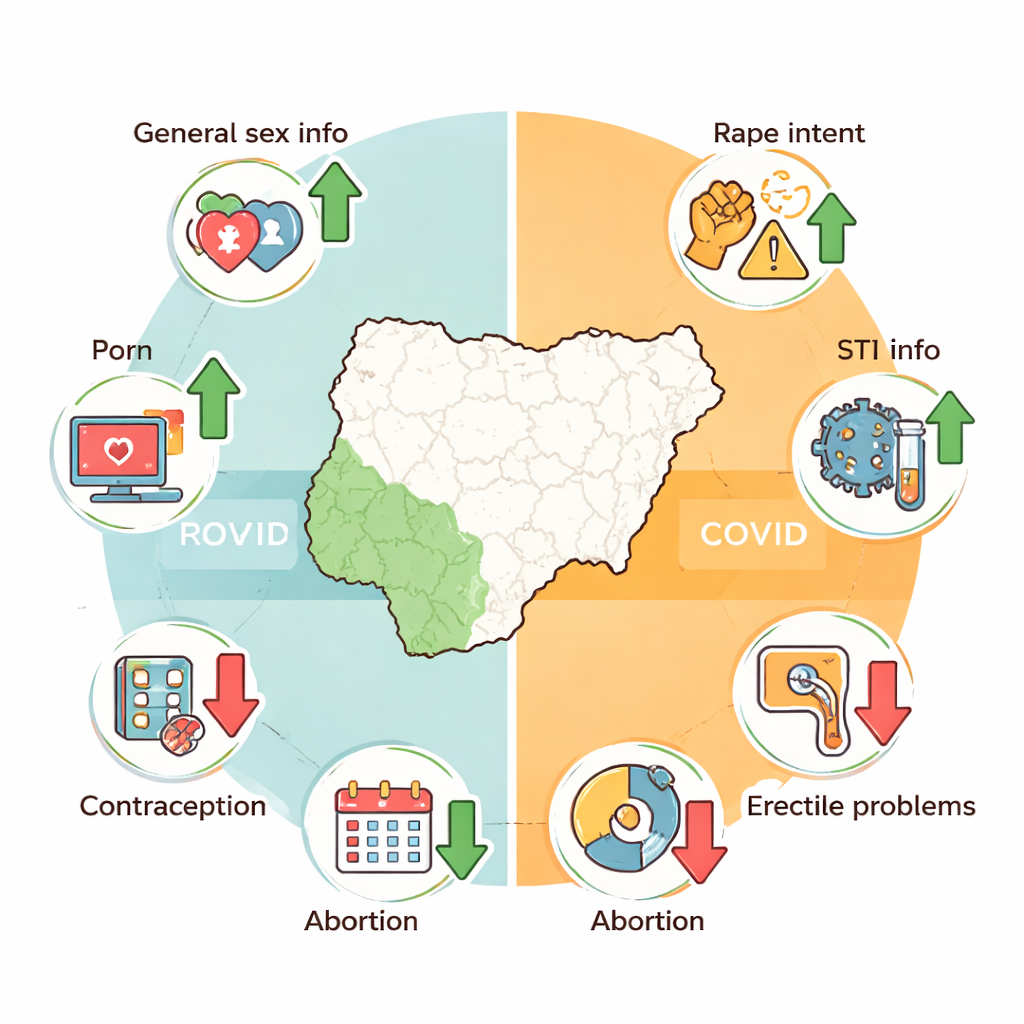
Instead of interviewing people directly about very private topics, the researchers turned to Google Trends, a tool that tracks how often specific words are searched over time. They examined searches made in Nigeria between October 2018 and August 2021, splitting the timeline into a “before COVID” period and a “during COVID” period starting in March 2020, when the World Health Organization declared a pandemic and Nigeria introduced lockdown measures. They focused on common terms linked to sexual and reproductive health—such as sex, porn, rape, contraceptive, abortion, sexually transmitted infection (STI), and erectile dysfunction (ED)—and compared how search interest changed across the two periods.
What People Searched for More
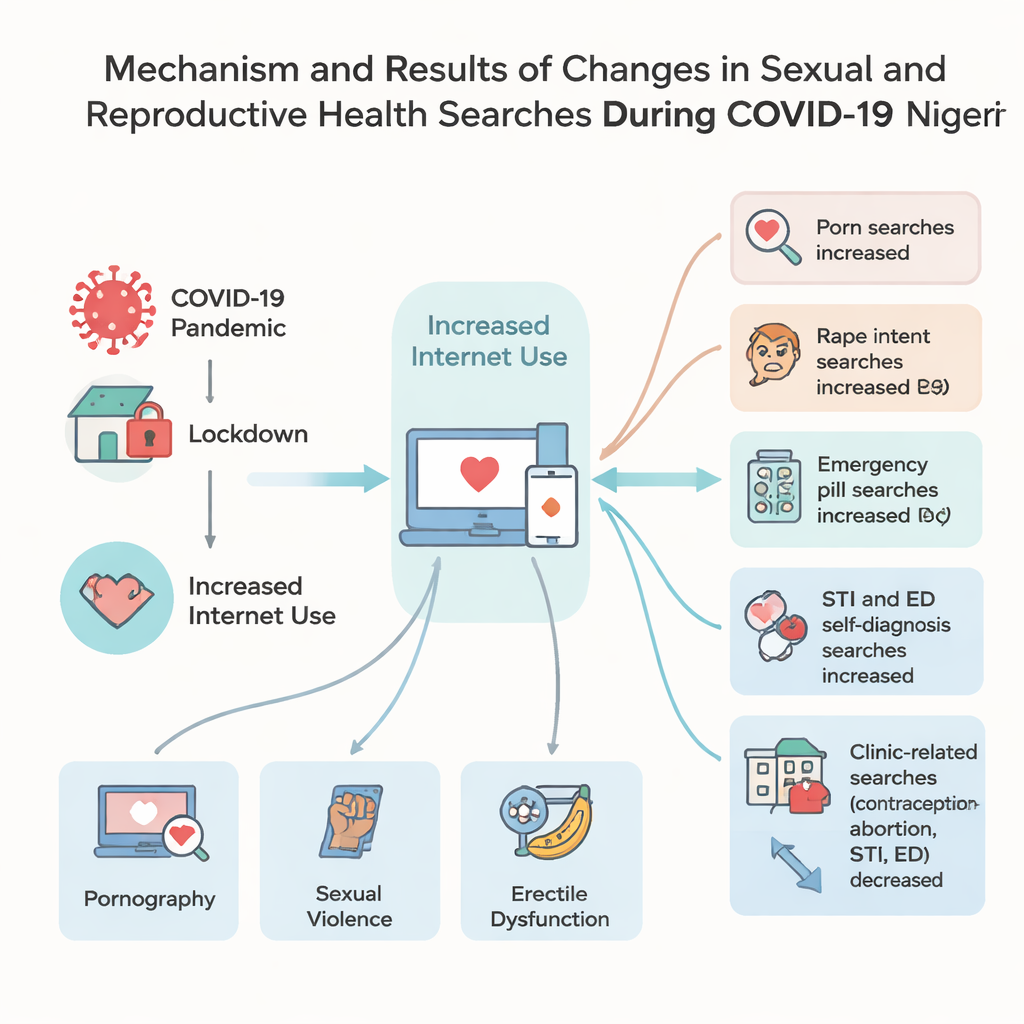
Some of the sharpest changes appeared in searches that hinted at distress or urgent needs. During the pandemic, more Nigerians searched phrases like “how to rape,” “what is rape,” and “rape case,” suggesting a disturbing rise in interest around sexual violence. Searches for “postinor,” a widely known emergency contraceptive pill, also climbed, which may reflect attempts to prevent pregnancy after forced or unprotected sex. At the same time, people increasingly looked up basic explanations of STIs and erectile problems—typing queries like “what is STI,” “meaning of STI,” “what is erectile dysfunction,” and “erectile dysfunction treatment.” These patterns point to more self-diagnosis and a growing desire to understand and manage intimate health problems privately, from home.
What People Searched for Less
Surprisingly, general searches for words like rape, contraceptive, abortion, STI, and ED actually fell when averaged over time, even though some specific questions about these topics increased. For instance, broad searches such as “abortion pills” and “abortion drugs” dropped noticeably during COVID-19 compared with the earlier period. The authors suggest that lockdowns, fear of infection, and reduced visits to hospitals and clinics may have discouraged people from seeking in-person care, which would normally go hand in hand with more generic health searches. Instead, people might have turned to targeted questions about particular products or symptoms—often as a substitute for professional advice. Meanwhile, interest in the word “sex” itself stayed roughly the same, hinting that overall sexual activity may not have changed dramatically, even as other aspects of sexual health shifted.
Porn, Boredom, and Hidden Health Problems
One of the clearest findings was a strong rise in searches for porn during the pandemic, which closely tracked searches for COVID-19 itself. With people confined at home, facing boredom, stress, and isolation, pornography may have become a common outlet. The researchers note that previous work has linked boredom with heavier porn use and that increased viewing can be tied to sexual difficulties, including erectile problems, for some individuals. In this study, while general interest in ED as a topic dropped overall, detailed questions about what erectile dysfunction is and how to treat it went up, suggesting that more men may have been quietly struggling with sexual performance and turning to the internet instead of clinics for answers.
What This Means for Health and Policy
Because the study relies on search data rather than medical records, it cannot prove exactly what people did offline. Nor can it separate searches made by health professionals from those made by the general public. Still, the trends paint a worrying picture: growing interest in sexual violence, more reliance on emergency contraception, and increasing self-diagnosis of infections and erectile problems, paired with less visible engagement with formal reproductive health services. For policymakers and health workers, this suggests a pressing need to expand trustworthy online information, tackle sexual violence, support mental and sexual health together, and make emergency and preventive services easier to access—even during crises.
The Takeaway in Everyday Terms
Put simply, the pandemic nudged many Nigerians to handle delicate sexual and reproductive health questions alone, from behind their screens. They watched more porn, searched more about how to commit or respond to sexual harm, and looked up quick fixes like emergency pills and home explanations for infections and erection troubles. At the same time, broad interest in regular contraception, abortion services, and STI treatment seemed to fade from view. The authors argue that these hidden online shifts should not be ignored: they are early warning signs that future health education, laws, and services must be ready for the long-lasting sexual and reproductive aftershocks of COVID-19.
Citation: Akhigbe, R.E., Hamed, M.A., Adeyemi, D.H. et al. Sexual and reproductive health consequences of COVID-19 pandemic in Nigeria: an infodemiological survey. Sci Rep 16, 7299 (2026). https://doi.org/10.1038/s41598-026-38746-7
Keywords: sexual health, COVID-19, Nigeria, internet searches, reproductive health