Clear Sky Science · en
Eco-enhanced silicone rubber composites reinforced with micro and nano iron slag and TiO₂ for thermal stability and radiation protection
Turning Waste into Protection
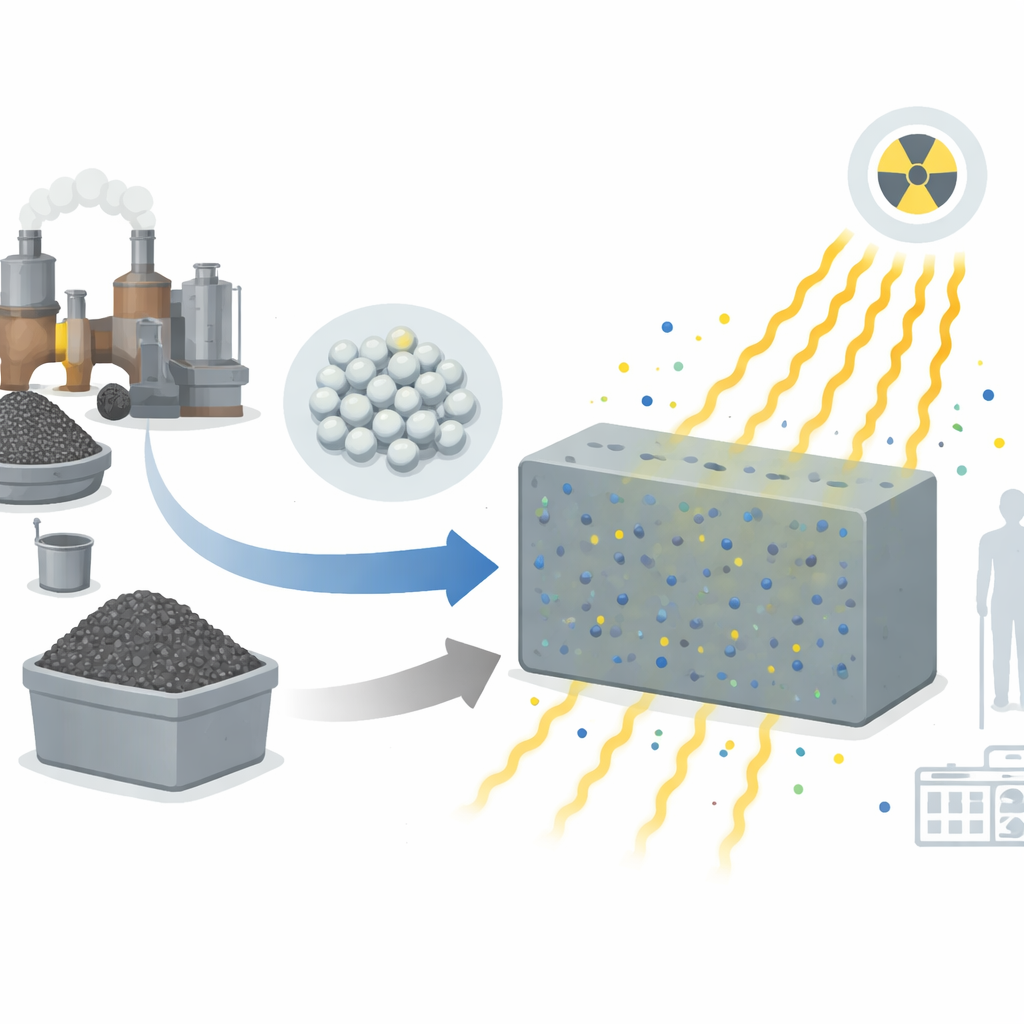
Modern hospitals, power plants, and research labs all rely on beams of high‑energy radiation for imaging and treatment—but that same radiation can be dangerous to people and equipment if it is not properly blocked. For decades, heavy, toxic lead has been the default shielding material. This study explores a very different approach: flexible silicone rubber loaded with tiny particles made from titanium dioxide and recycled iron slag, an industrial waste from steelmaking. The result is a lighter, greener material that can withstand high heat while effectively slowing down harmful gamma rays.
Why New Shields Are Needed
Radiation shielding has to do two jobs at once: stop or weaken incoming rays and remain practical in real settings. Lead is excellent at blocking gamma rays but is toxic, heavy, and rigid, making it a poor fit for wearable protection or portable barriers. Researchers have therefore turned to polymers—plastic‑like materials such as silicone rubber—that are flexible, durable, and easier to handle. By themselves, however, these polymers are poor shields. To boost their performance, scientists mix in dense metal oxides that interact strongly with radiation. The twist in this work is to replace expensive, purified powders with a combination of common titanium dioxide and iron‑rich slag that would otherwise go to waste.
Building a Smarter Rubber
The team prepared several versions of silicone rubber by mixing in different proportions of titanium dioxide and iron slag, in both micro‑sized and nano‑sized forms. After careful grinding in a ball mill to make the nanoparticles, they blended the powders into liquid silicone and cured the mixture into solid discs. Electron microscopy images showed that the nano‑particles—tens of billionths of a meter across—spread more evenly through the rubber than the larger micro‑particles, filling gaps and reducing pores. This uniform distribution is important because it means incoming radiation is more likely to encounter a dense particle rather than slipping through empty space.
Standing Up to Heat
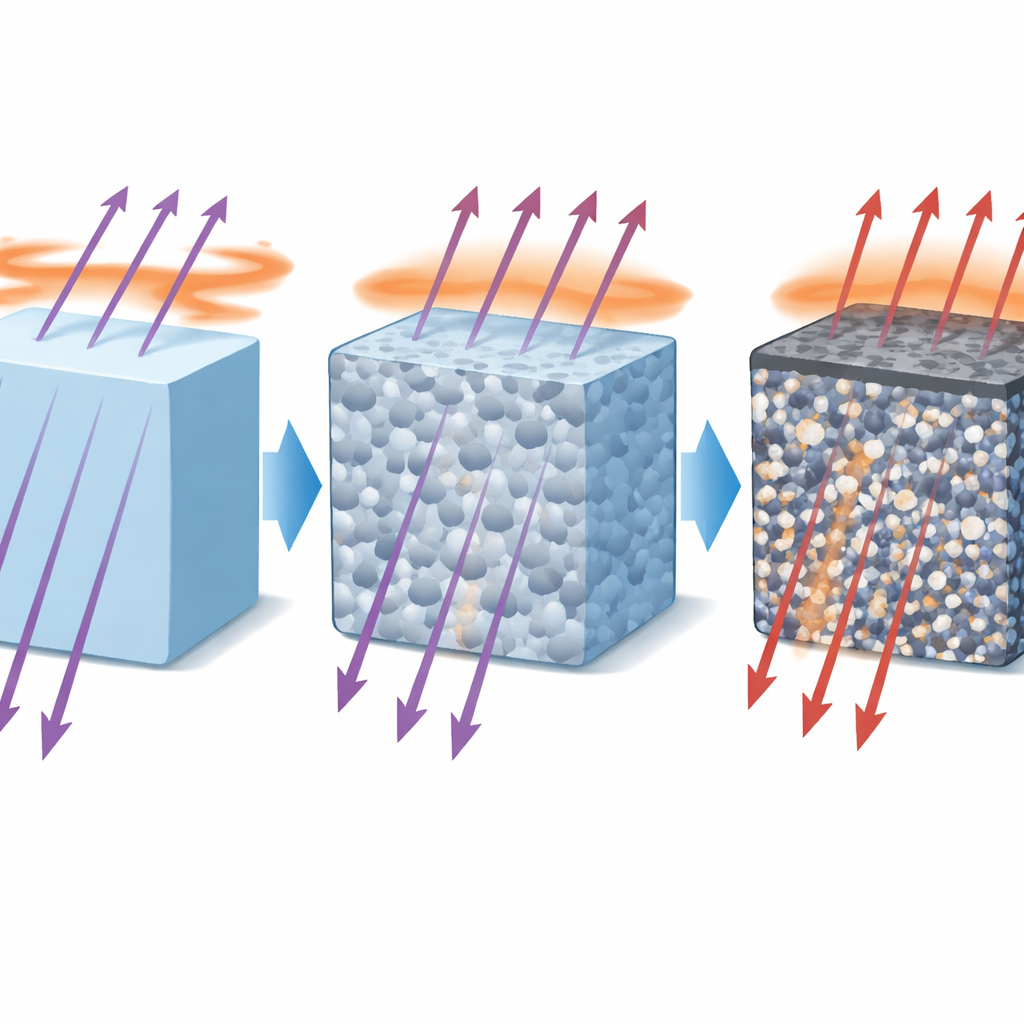
Radiation shields often sit in hot environments, so the researchers tested how their composites behaved when heated from room temperature up to 800 °C. Pure silicone rubber began to degrade around 300 °C and lost most of its mass, leaving only a small residue. When micro‑sized titanium dioxide and slag were added, the rubber held together to higher temperatures and left more inorganic material behind. The best performance came from the nano‑filled samples. These showed the latest onset of decomposition, the slowest mass loss, and the largest remaining “char” at high temperature. The vast surface area of the nanoparticles helps them act as tiny barriers and catalysts, slowing the escape of fragments and forming a more stable, ceramic‑like skeleton.
How Well It Blocks Gamma Rays
To test shielding performance, the team exposed the samples to gamma rays from several common radionuclide sources over a wide energy range. They measured how much the beam weakened after passing through each disc and calculated standard quantities such as the linear and mass attenuation coefficients, as well as the thicknesses needed to cut the radiation in half or to one‑tenth. Across all energies, adding fillers greatly improved shielding compared with pure silicone rubber. Within the same recipe, switching from micro‑ to nano‑particles consistently boosted absorption by up to about 20 percent, especially at lower energies where high‑atomic‑number elements like iron and titanium are most effective. The composite with the highest nano titanium dioxide content, labeled STS4, showed the strongest attenuation and required the least thickness to achieve a given level of protection.
Greener Shields for Everyday Use
In plain terms, this work shows that flexible silicone rubber infused with a smart mix of titanium dioxide and recycled iron slag can block gamma rays better than many earlier polymer shields, while also resisting high temperatures and reusing industrial waste. The nano‑sized particles are especially powerful: by packing the rubber more densely and interacting more strongly with radiation, they let thinner, lighter pieces offer the same protection that previously required bulkier materials. Such eco‑enhanced composites could pave the way for comfortable protective aprons, portable panels, and housings for radiation detectors that avoid the drawbacks of lead yet deliver reliable safety.
Citation: Khalil, M.M., Gouda, M.M., Moniem, M.S.A.E. et al. Eco-enhanced silicone rubber composites reinforced with micro and nano iron slag and TiO₂ for thermal stability and radiation protection. Sci Rep 16, 7839 (2026). https://doi.org/10.1038/s41598-026-38733-y
Keywords: radiation shielding, silicone rubber, nanocomposites, industrial waste recycling, gamma rays