Clear Sky Science · en
Depression and social media addiction among teenagers in a longitudinal study with dual moderation
Why This Matters for Today’s Teens
For many teenagers, scrolling through social media feels as natural as breathing. But when a quick check turns into hours of compulsive swiping, families rightly worry about “addiction.” This study followed more than three thousand Chinese teens over six months to ask a pressing question: when teenagers feel depressed, are they more likely to slip into unhealthy social media use—and if so, which emotional habits make that slide more likely? The answers help parents, teachers, and young people themselves understand why some teens are especially vulnerable and what can be done to protect them.
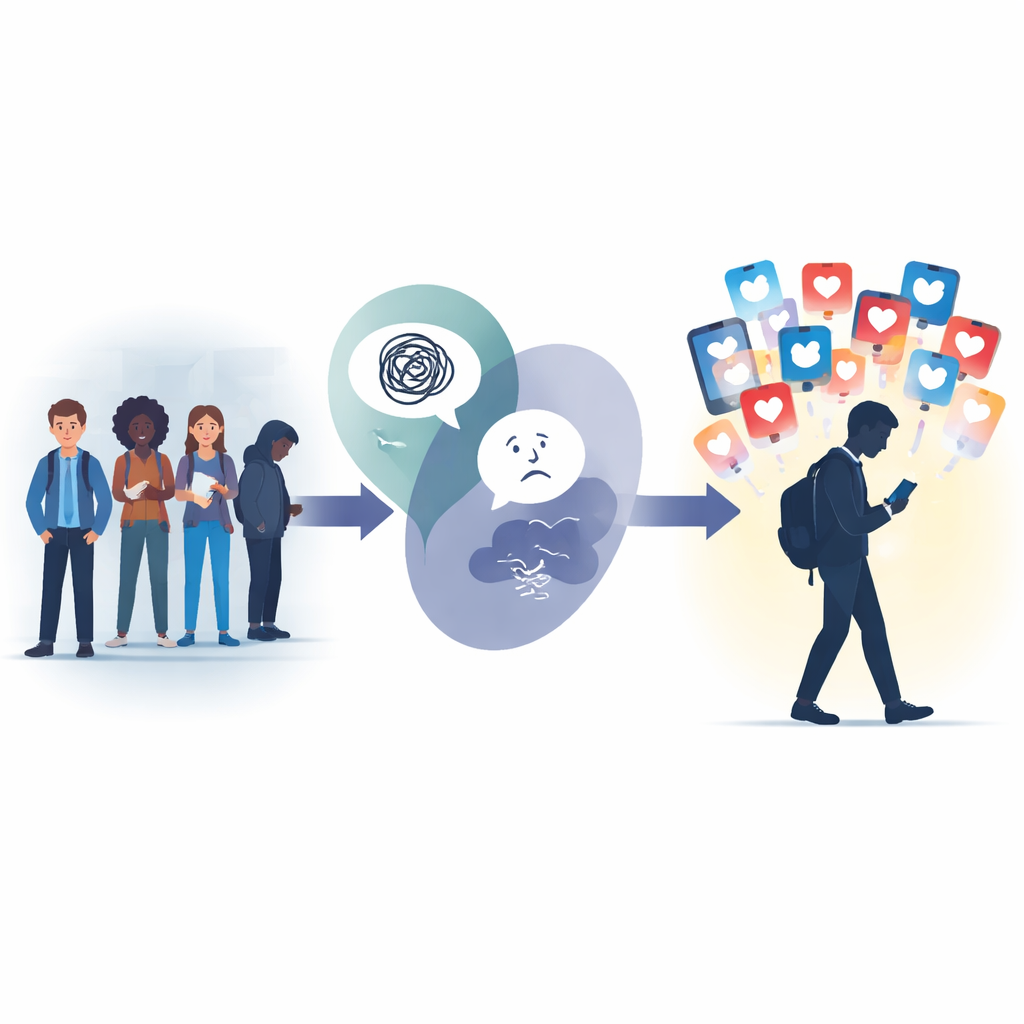
Teens, Low Mood, and Endless Scrolling
Depression is one of the most common mental health problems in adolescence, marked by deep sadness, irritability, and low self-worth. At the same time, social media is woven into teens’ friendships, school life, and entertainment. The researchers drew on ideas that people sometimes turn to the internet to escape painful feelings. If real life feels overwhelming, online spaces can seem like a refuge where distraction, validation, and quick emotional relief are always available. But this escape can backfire: over time, the relief becomes something teens crave, and they begin to use social media in rigid, compulsive ways that interfere with sleep, schoolwork, and mental health.
Following Teens Over Time
To move beyond one-time surveys, the team ran a three-stage study with 3,184 teenagers averaging about 15 years old. At the first stage, students reported how often they had felt depressed in the past two weeks. A few months later, they answered questions about how hard it was for them to put their feelings into words and how strongly they tried to push away or avoid unpleasant thoughts and emotions. At the final stage, the researchers measured signs of social media addiction, such as feeling a strong urge to be online, struggling to cut back, and using social platforms so much that it disrupted daily life. This design allowed the team to see whether earlier depression predicted later problematic social media use, and whether certain emotional patterns changed the strength of that link.
Hidden Emotional Roadblocks
Two inner tendencies turned out to be especially important. The first was difficulty describing feelings: some teens can sense that they are upset but cannot easily explain what they feel or why. The second was experiential avoidance: a strong habit of trying not to think about or feel anything unpleasant. Teens high on either trait may find face-to-face conversations awkward or threatening, and may prefer the relative distance and control of online interactions. In a digital world where you can log on instantly, ignore uncomfortable topics, and present a carefully managed version of yourself, social media offers a tempting way to dodge inner discomfort—at least for a while.
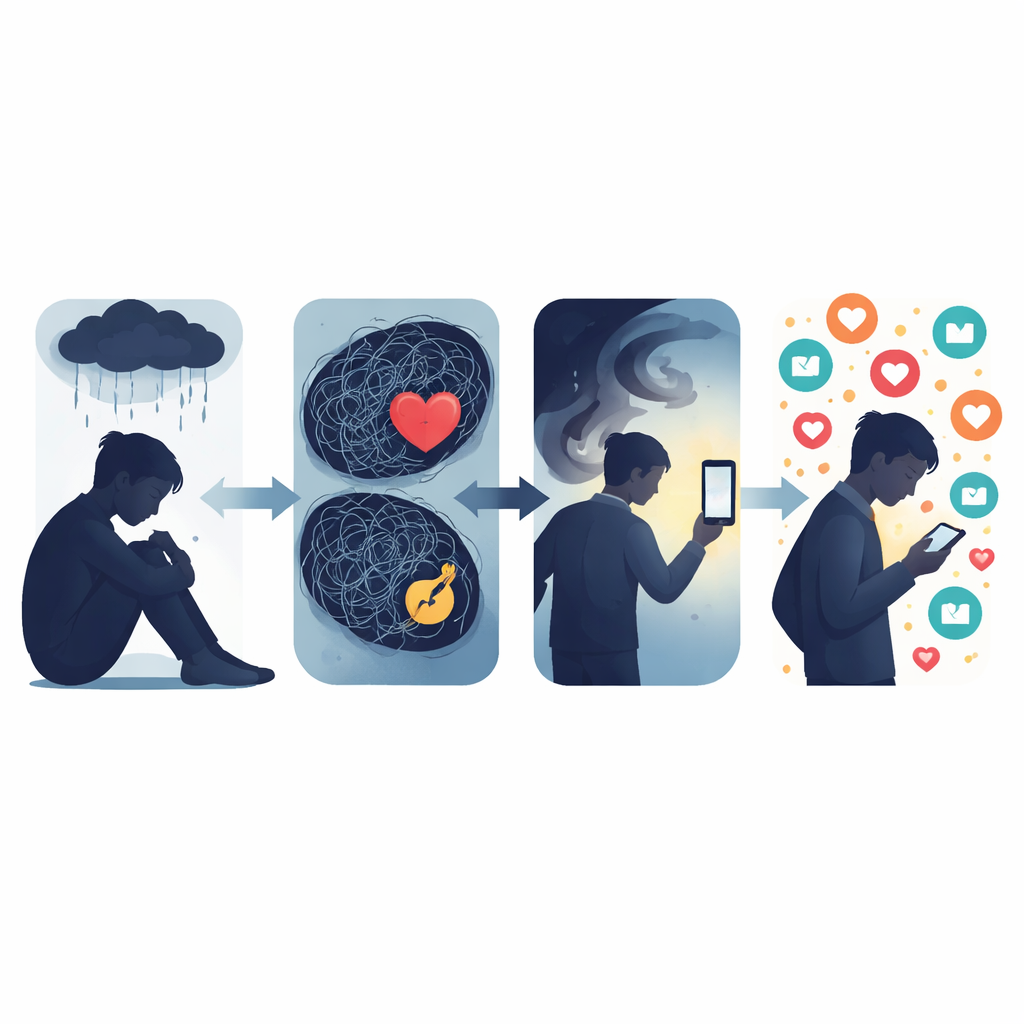
When Depression Meets Avoidance
The analyses showed that teens who felt more depressed at the start of the study were more likely to show signs of social media addiction later on. Crucially, this connection was stronger for teens who struggled to express their emotions or who tended to avoid negative inner experiences. When both traits were high, the link between early depression and later addictive use was strongest of all. In other words, sadness alone did not doom teens to problematic social media habits. Instead, depression seemed most risky when combined with poor emotional awareness and a strong urge to escape from uncomfortable feelings. These patterns held even after taking into account age, gender, and other background factors.
What This Means for Families and Schools
For a layperson, the take-home message is straightforward: depressed teens are more likely to get hooked on social media, especially if they cannot talk about what they feel and tend to run away from emotional pain. Social media then becomes a fast, always-available “emotional bandage” that can quietly turn into dependence. The study suggests that simply limiting screen time is not enough. Helping teens name their feelings, tolerate emotional discomfort, and seek support in the real world may reduce the pull of social media as an escape. Programs that teach emotional awareness and acceptance-based coping skills at school, and open, nonjudgmental conversations at home, could make it easier for young people to face difficult moods without disappearing into their screens.
Citation: Liu, P., Wang, J., Zuo, Q. et al. Depression and social media addiction among teenagers in a longitudinal study with dual moderation. Sci Rep 16, 8569 (2026). https://doi.org/10.1038/s41598-026-38729-8
Keywords: teen social media addiction, adolescent depression, emotional awareness, experiential avoidance, mental health and technology