Clear Sky Science · en
Electromagnetic shielding performance and mechanical properties of vermiculite-based lightweight geopolymer mortars
Keeping Unseen Waves at Bay
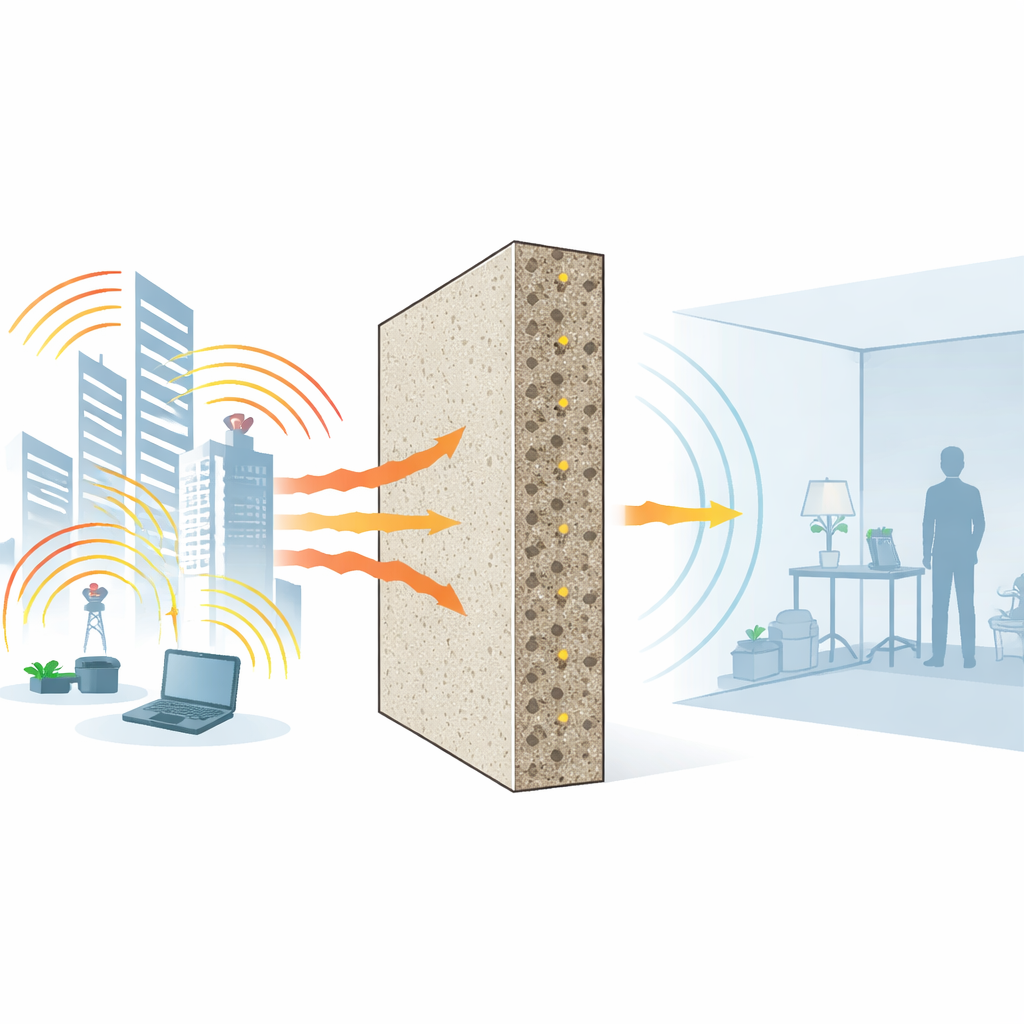
Invisible clouds of electromagnetic waves now surround us, spilling from power lines, wireless networks, and everyday gadgets. While these signals make modern life possible, they can also interfere with sensitive electronics and may pose health concerns, especially in dense cities. This study explores a new kind of lightweight, cement-free building material that can help block unwanted radiation while also cutting the carbon footprint of construction.
A New Kind of Protective Wall
The researchers focus on “geopolymers,” a family of materials that can replace traditional Portland cement. Instead of being fired in energy-hungry kilns, geopolymers are made by activating industrial by-products such as fly ash with alkaline solutions, forming a tough, stone-like network. To this, the team adds vermiculite, a naturally occurring mineral that puffs up into a light, porous material when heated. Vermiculite is already used in fireproof plasters and insulation; here, it is tested as a key ingredient in walls that can both lighten buildings and shield them from stray electromagnetic waves.
Building and Testing the Samples
The team prepared sixteen different mixtures using fly ash, sodium silicate solution, sodium hydroxide solution, and varying amounts of vermiculite, replacing ordinary sand by 0%, 25%, 50%, or 100% on a volume basis. They also tuned how strong the alkaline “activator” was, using sodium hydroxide solutions between 10 and 13 moles per liter. From each recipe they cast small blocks for bending and compression tests, and larger flat slabs for electromagnetic measurements. The slabs were placed between two horn antennas connected to a precision network analyzer, allowing the researchers to track how much of an incoming microwave signal was reflected, transmitted, or absorbed over a wide range from 3 to 40 gigahertz—covering frequencies used in radar, satellite links, and emerging 5G and 6G systems.
How the Material Handles Waves and Loads
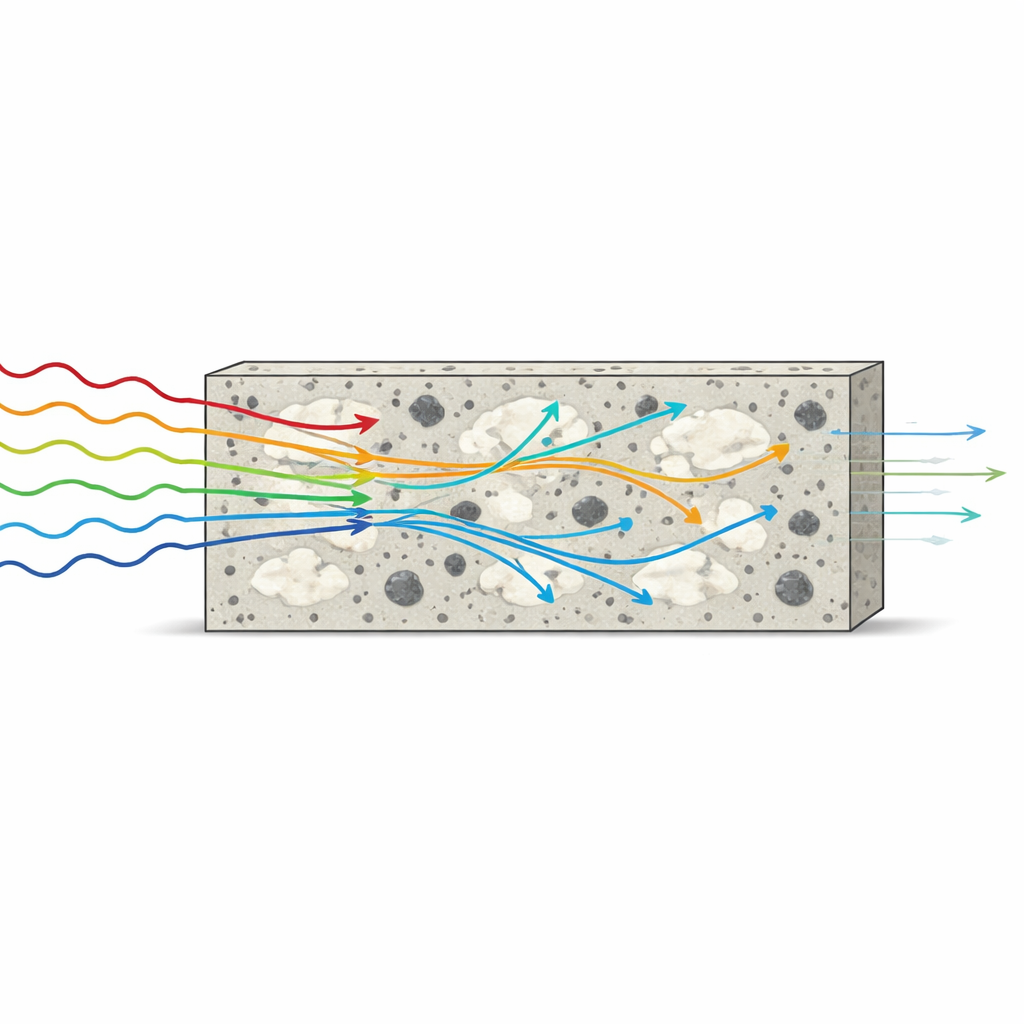
All versions of the vermiculite-based geopolymer showed good “impedance matching,” meaning they did not simply bounce waves away at the surface. Instead, they let waves enter and then gradually weakened them inside the material. At higher microwave frequencies, several mixes produced strong shielding, cutting signal strength by more than 50 decibels—equivalent to reducing the power by a factor of over 100,000. At the same time, adding vermiculite made the blocks significantly lighter, reducing density by up to 17%. Mechanical tests revealed a trade-off: the strongest mixtures in compression contained no vermiculite, but a moderate dose of 25% vermiculite gave the best bending strength, as its plate-like grains helped bridge cracks without making the structure too porous.
Finding the Sweet Spot
To juggle these competing demands, the authors used a statistical design method known as the Taguchi approach. This allowed them to identify combinations of vermiculite content and alkali strength that jointly optimized mechanical performance and shielding power. Their analysis showed that the vermiculite fraction had the biggest influence on strength, while the concentration of the sodium hydroxide solution was more important for high-frequency shielding. The most balanced mix used about 25% vermiculite and an intermediate-to-high activator strength (11–13 molar), which delivered solid structural performance together with strong attenuation in the millimeter-wave band used for advanced communications.
Why This Matters for Future Cities
Microscope and chemical analyses confirmed that these mixes form a dense, interconnected mineral network threaded with carefully controlled pores from the vermiculite. This structure both carries mechanical loads and scrambles incoming electromagnetic waves, causing them to scatter and lose energy as heat. In plain terms, the study shows that it is possible to design wall panels and other non-load-bearing elements that are lighter than conventional concrete, made from industrial waste rather than clinker cement, and still capable of acting as built-in “electromagnetic umbrellas” for indoor spaces. With further work on durability and large-scale production, such materials could help cities manage electromagnetic pollution while moving toward greener construction.
Citation: Çelik, A., Tunç, U., Durmuş, A. et al. Electromagnetic shielding performance and mechanical properties of vermiculite-based lightweight geopolymer mortars. Sci Rep 16, 7865 (2026). https://doi.org/10.1038/s41598-026-38722-1
Keywords: electromagnetic shielding, geopolymer concrete, vermiculite, sustainable building materials, 5G and 6G infrastructure