Clear Sky Science · en
A pilot randomized trial of supervised resistance training plus home-based activity in chronic lymphocytic leukaemia patients
Why exercise matters for people living with blood cancer
Many people diagnosed with chronic lymphocytic leukaemia (CLL) are older adults who face tiredness, muscle loss, poor sleep, and worry on top of their cancer treatment. This study asks a down-to-earth question that matters to patients and families alike: can a carefully supervised strength-training program, added to simple daily activity at home, safely help people with CLL feel and function better while they are still on treatment? 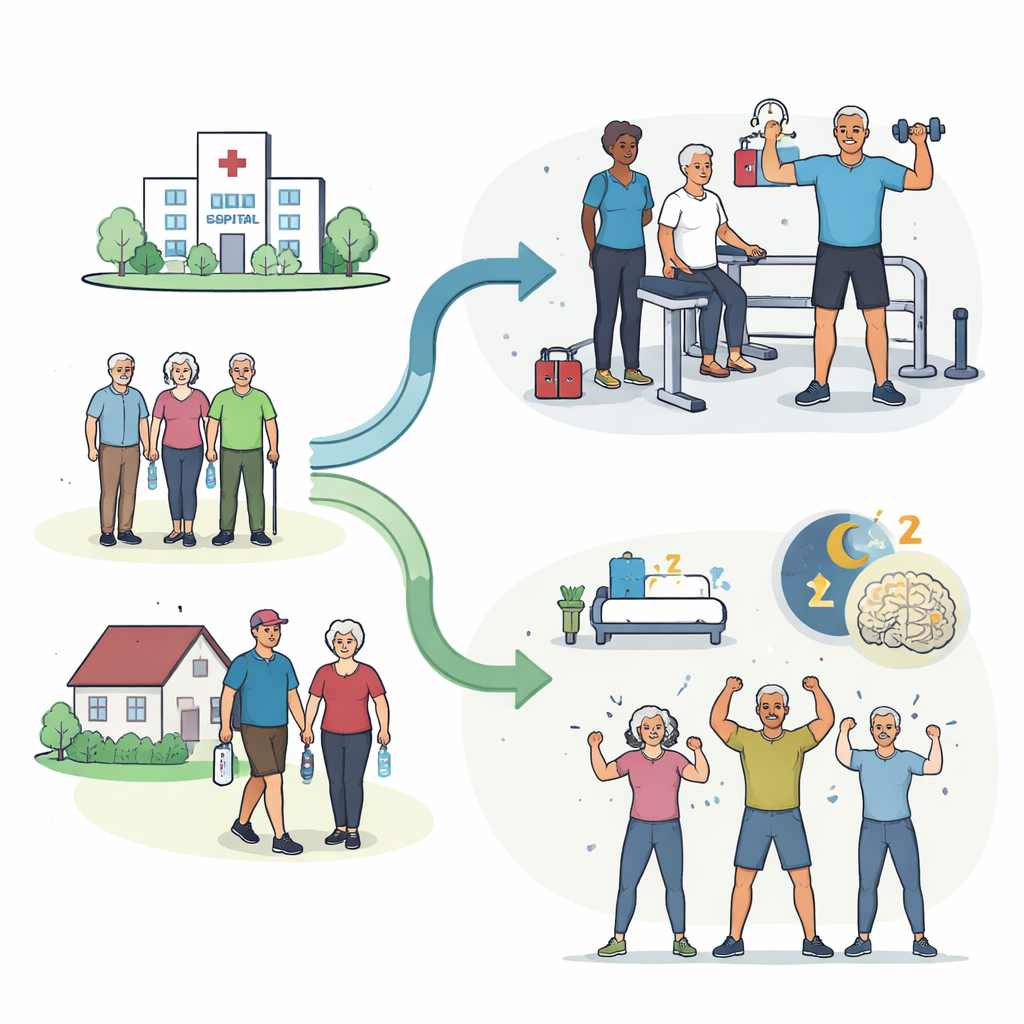
Everyday challenges behind the lab results
CLL is a slow-growing blood cancer that often turns life into a long-distance race rather than a short sprint. Because it mainly affects older adults, many patients enter treatment already feeling physically vulnerable. They may walk more slowly, tire easily, sleep poorly, and feel anxious or low in mood. Doctors call this overall vulnerability “frailty,” and it is linked to a higher risk of complications and loss of independence. Research in other cancers has shown that exercise can ease fatigue, improve strength, and support mental health, but people with CLL have rarely been included in structured exercise trials.
Testing a simple strength and activity plan
To explore what might help, researchers in Spain ran a small randomized clinical trial at a single hospital. Thirty-six adults receiving active treatment for CLL were assigned to one of two groups for eight weeks. Both groups were encouraged to be more active at home, following a walking and movement plan supported by regular phone calls. One group, however, also attended supervised resistance-training sessions twice a week with a physiotherapist, using weights and strength exercises tailored to their abilities. The main outcome the team wanted to change was frailty, measured with a standard test of balance, walking speed, and standing up from a chair. They also tracked muscle mass, hand-grip strength, fatigue, quality of life, mood, and sleep.
What improved and what stayed the same
The supervised strength-training group did not become clearly less frail than the home-activity-only group on the main physical test. But several other changes told a more encouraging story. People who did supervised resistance training gained more lean muscle and improved strength in their dominant hand compared with those who only followed the home plan. Some measures of tired thinking and sleep disturbance also improved in the supervised group, and there were hints of better anxiety and overall sleep quality, though these changes were not strong enough to be certain in such a small study. Importantly, more than 80 percent of scheduled sessions were completed, and no exercise-related injuries or serious problems were reported, showing that the program was practical and safe for this vulnerable group. 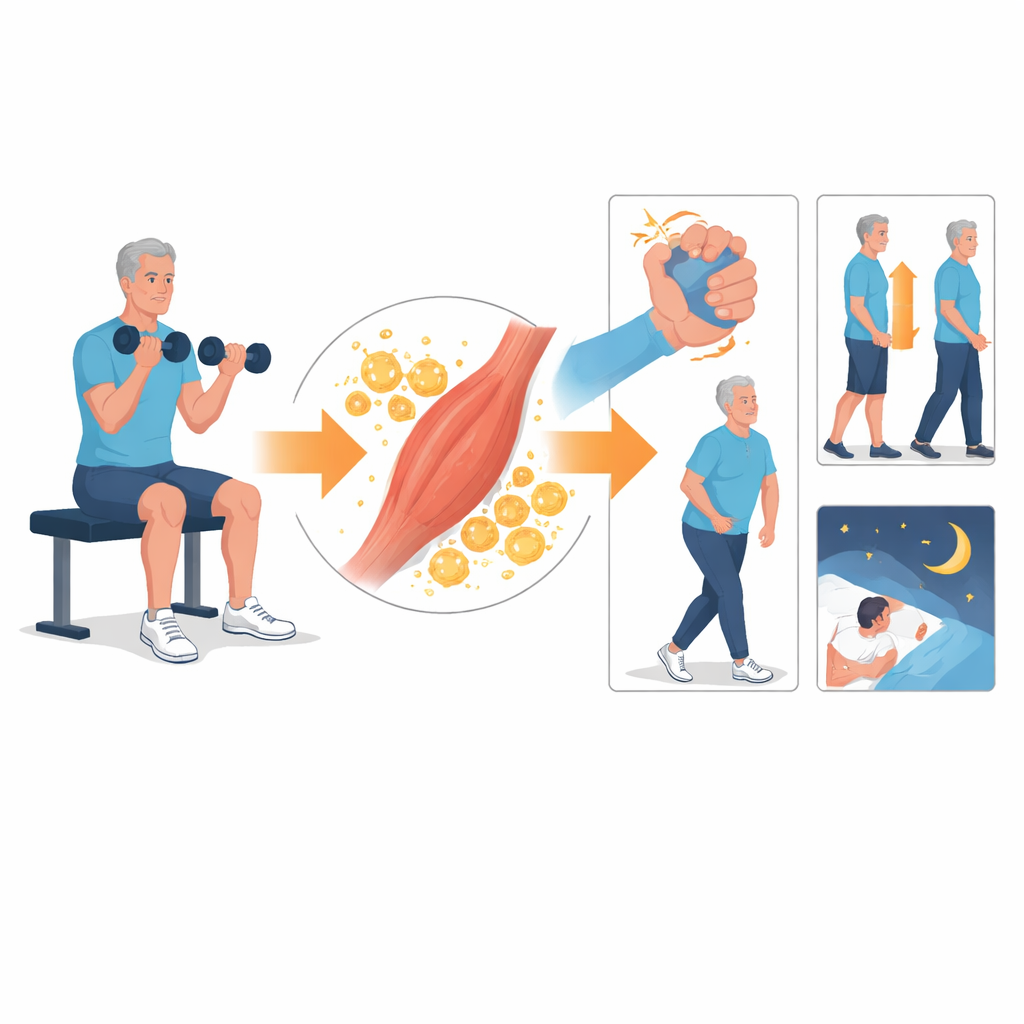
Looking beyond muscles to everyday life
The findings suggest that even within just eight weeks, adding guided strength training to simple home activity can begin to reverse some of the muscle loss and weakness that so often shadow CLL treatment. Gains in lean mass and grip strength are not just numbers on a chart; they may translate into steadier walking, greater confidence with daily tasks, and less risk of falls and disability over time. The study also hints that better physical conditioning may ripple out to softer but crucial areas like mental clarity, mood, and sleep, though the trial was too small and short to settle these questions definitively.
What this means for patients and families
For people living with CLL, this trial offers cautious but hopeful news. It shows that a structured, supervised strength program, combined with modest daily activity at home, is not only safe during active treatment but can lead to early improvements in muscle mass, strength, fatigue, and sleep-related symptoms. While the study was a pilot with limited numbers and cannot yet prove long-term benefits or broad changes in frailty, it supports the idea that exercise should be viewed as an essential part of supportive cancer care, not an optional extra. Larger and longer trials are now needed to fine-tune the best type, intensity, and schedule of exercise so that tailored activity plans can become a routine, evidence-based companion to medical treatment for people with CLL.
Citation: Sánchez-González, J.L., Fernández-Rodríguez, E.J., Méndez-Sánchez, R. et al. A pilot randomized trial of supervised resistance training plus home-based activity in chronic lymphocytic leukaemia patients. Sci Rep 16, 8053 (2026). https://doi.org/10.1038/s41598-026-38721-2
Keywords: chronic lymphocytic leukemia, exercise, resistance training, frailty, quality of life